Advertisement
Electric & new energy vehicles
BusinessChina Business

China’s state-owned car giants embrace home-grown tech to dominate EV market

State-owned carmakers like SAIC and FAW are tying up with domestic firms to recover market share from nimble privately owned rivals

Reading Time:3 minutes
Why you can trust SCMP
The 200,000th vehicle of Voyah, a Chinese EV brand, rolls off the assembly line in Wuhan, central China’s Hubei province, on April 9, 2025. Photo: Xinhua
Daniel Renin Shanghai

China’s state-owned carmakers are realigning their operations on the mainland, forming tie-ups with domestic partners after relying on foreign marques for decades, as they focus on electric vehicles (EV) in the world’s largest market for clean-energy cars.

Juggernauts from FAW Group, mainland China’s oldest carmaker, to SAIC Motor, the country’s largest carmaker until 2023, are taking steps to adopt home-grown technologies like autonomous driving software and digital cockpit systems to grow their market share.
As digital bells and whistles become game-changers and foreign brands lose their lustre on the mainland, the state-controlled carmakers are playing catch-up with privately owned rivals such as BYD and Geely Auto.
Advertisement

“Young consumers are no longer convinced of the foreign auto brands’ design and performance,” said Zhao Zhen, a sales director at Shanghai dealer Wan Zhuo Auto. “Their changing tastes have prompted state-owned carmakers to enlist the help of Chinese technology groups and smaller counterparts.”

Only four state-backed carmakers were among the mainland’s top 10 EV assemblers in terms of sales this year, according to data from the China Passenger Car Association (CPCA).
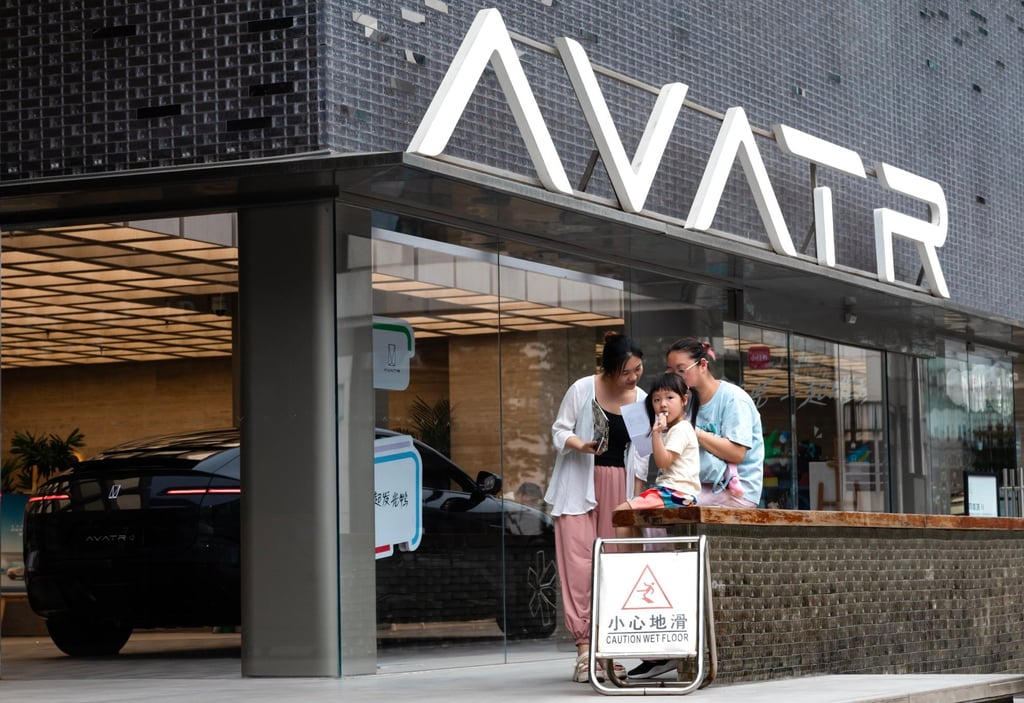
Huawei supplies local carmakers such as Seres and Avatr with automotive chips, sensors and digital ­technologies. Photo: EPA-EFE
BYD, the world’s largest EV maker, delivered 2.83 million units to mainland and overseas customers in the first eight months of 2025, up 21.9 per cent from a year on year. It held a 31.6 per cent share of the Chinese market in the corresponding period.
Advertisement
Select Voice
Choose your listening speed
Get through articles 2x faster
1.25x
250 WPM
Slow
Average
Fast
1.25x