Top Chinese officials, industry leaders may discuss capping EV output at ‘two sessions’
As China’s EV industry faces slowing growth, officials may discuss capping output and boosting tech innovation to combat price wars

Chinese government and industry officials are likely to discuss plans to control domestic electric-vehicle (EV) makers’ output, while encouraging them to prioritise technological innovation during the “two sessions”, as the industry’s growth shows signs of tapering off, according to analysts.
It has been a year since China’s top policymakers stepped in to avoid “involution” that had ensnared nearly all EV assemblers, with vicious price competition largely squeezing their profit margins. To combat deflationary pressures, regulators rolled out measures banning EV makers from selling cars below cost and delaying payments to suppliers.
The “two sessions” refer to the annual legislative meetings of China’s two main political bodies – the National People’s Congress and the National Committee of the Chinese People’s Political Consultative Conference.
Apart from top officials from various authorities such as the Ministry of Industry and Information Technology (MIIT), top bosses of China’s largest carmakers, from Geely Auto chairman Li Shufu to Chery Automobile chairman Yin Tongyue, will take part in the meetings that start on Wednesday.
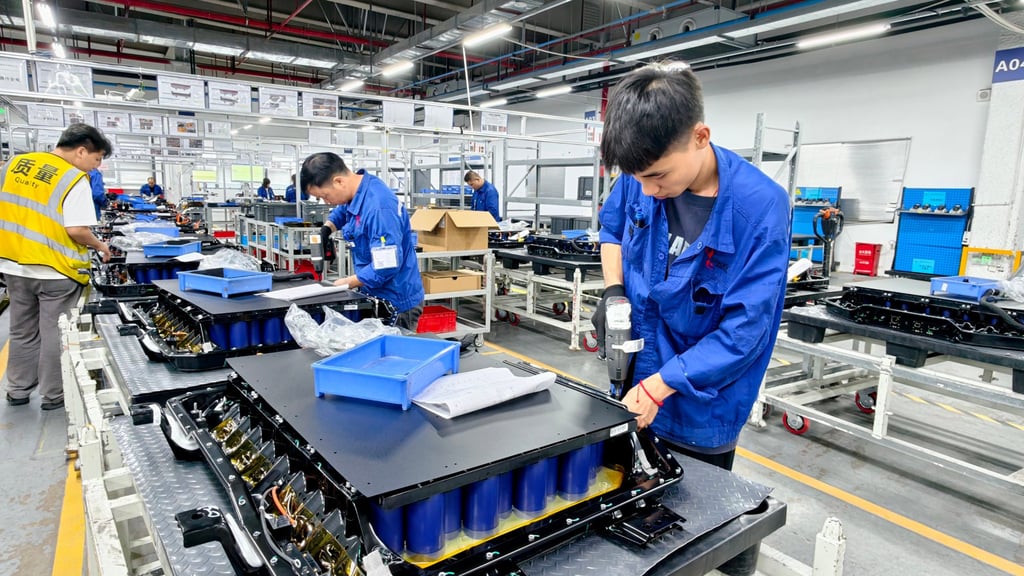
Under regulatory directives, EV companies may be required to shift focus from price cuts to technological upgrades to enhance competitiveness, as they face a challenging year marked by slowing sales growth, weakening policy subsidies and rising costs.