Advertisement
Trade
Opinion

What Asia should look out for in Donald Trump’s Nafta talks

Wendy Cutler says with their own trade deals with the US similarly under review, Asian economies are likely to pay great attention to the Nafta renegotiation to get a sense of the US president’s priorities and tactics

Reading Time:3 minutes
Why you can trust SCMP
A transporter hauls new Toyota trucks into the United States from Mexico last month after clearing US customs at the border in Otay Mesa, near San Diego, California. Photo: Reuters
Wendy Cutler
The Trump administration officially notified Congress on May 18 of its intent to renegotiate the North American Free Trade Agreement between Canada, Mexico and the US. With the 90-day congressional consultation clock now triggered, all eyes in the trade world are on the renegotiation of this 23-year-old agreement, which President Donald Trump had previously referred to as “the worst trade deal ever”.

Beyond the Americas, no region of the world could be more affected by the outcome of these talks than Asia. With its high dependence on trade for growth, its commercial interests in North America, and its growing trade and investment ties with US neighbours, the stakes are high for Asia.

The Nafta renegotiation provides an opportunity for Asia to strengthen its trade ties with Canada and Mexico

As the first free trade agreement negotiation in the Trump administration’s queue, the Nafta talks will provide important insights into the substantive priorities and negotiating tactics of the Trump team.
Advertisement
Will the US focus on “modernising” this agreement, largely lifting language from the Trans-Pacific Partnership (TPP) agreement around digital trade, intellectual property rights and state-owned enterprises? Or will the administration try to bring the agreement in line with its trade policy objectives of bringing manufacturing jobs back to America, reducing bilateral trade deficits and promoting reciprocity? If so, will the administration seek hard and enforceable commitments to bring down the deficit or will it propose softer consultation provisions? As it seeks stronger rules of origin – the criteria that determine the national source of a product – will it also insist on a dedicated percentage for US content? Will it seek to roll back any of the current provisions on government procurement and dispute settlement? These are some of the tough questions that will need to be hammered out over the next 90 days.
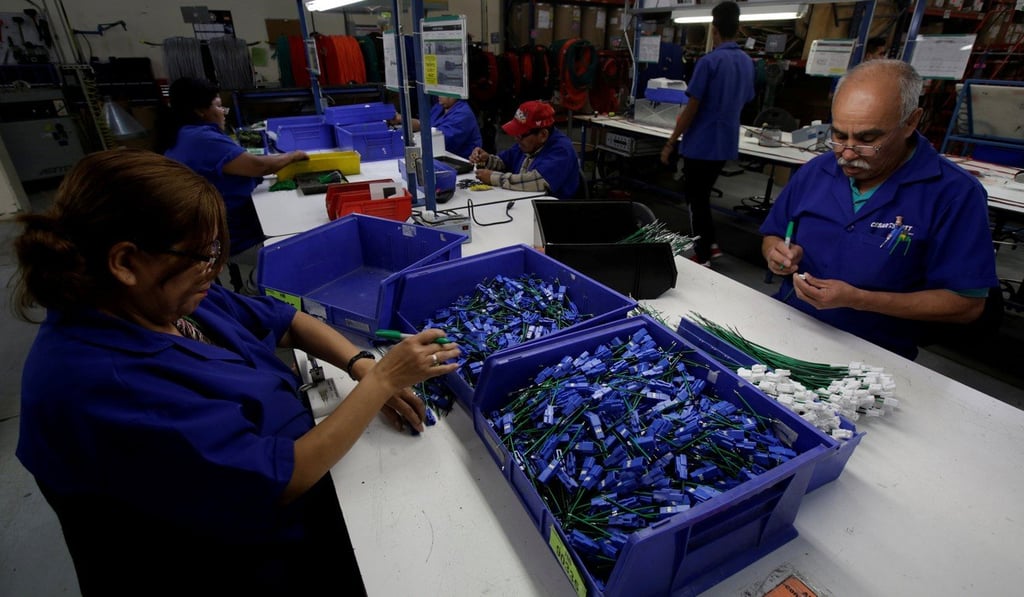
Employees work last month at a wire harness and cable assembly manufacturing company that exports to the US in Ciudad Juarez, Mexico. In its renegotiation, will the Trump administration try to bring the Nafta agreement in line with its trade policy objectives of bringing manufacturing jobs back to America, reducing bilateral trade deficits and promoting reciprocity? Photo: Reuters

Why Trump’s trade deal with China is unworthy of America

Asian economies will be watching these talks closely. Of particular interest will be how TPP “modernisation” issues are handled, what modifications are made to the existing Nafta rules of origin, and how bilateral trade deficit concerns are treated. With Asian economies comprising nine of 16 “deficit” countries under review by the administration, many are concerned about where this review might lead. Although China tops the list, officials in South Korea and Vietnam may also feel exposed.

Advertisement
Select Voice
Choose your listening speed
Get through articles 2x faster
1.25x
250 WPM
Slow
Average
Fast
1.25x