‘Iron rice bowl’ vs the algorithm: why China’s economy may better withstand the AI shock
The country’s economy – with an expansive public sector – is better positioned to withstand AI shocks, but more government support is needed

On a day typically considered one of the happiest on the calendar for Chinese workers – the eve of Chinese New Year, when families gather for dinner in the midst of an extended public holiday – the annual Spring Festival Gala, the world’s most-watched television programme, left some in the viewing audience with a sense of profound disillusionment.
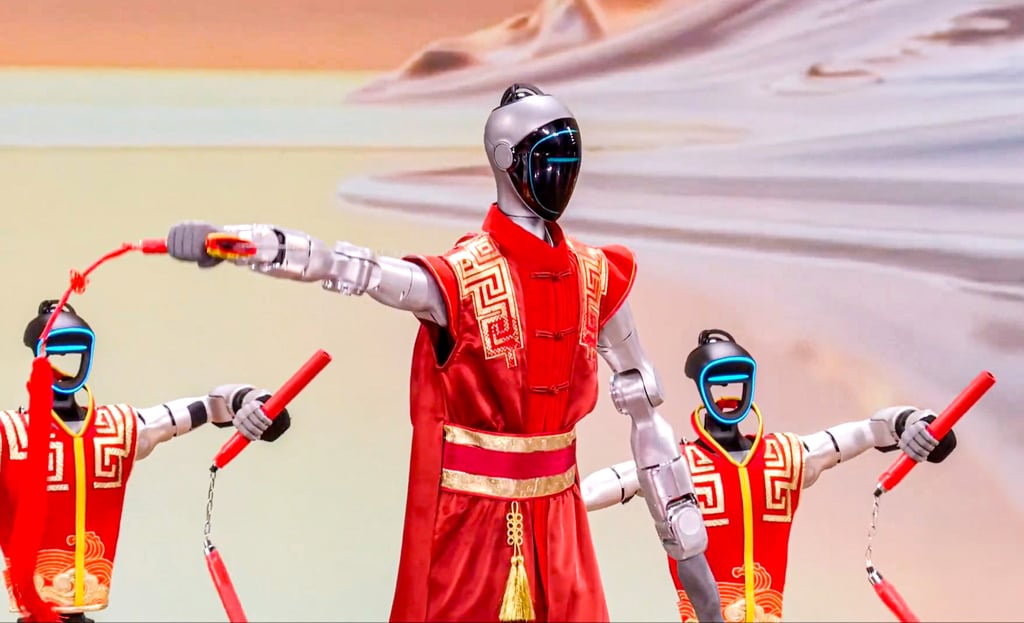
As a troupe of humanoid robots break-danced, flipped, swung swords and performed comedy sketches at the gala, domestic AI brands occupied the show’s highly sought advertising slots with unprecedented frequency. The display of China’s tech prowess left many of the programme’s roughly 677 million viewers deep in thought – weighing not joy or curiosity about the country’s progress, but the fear of being displaced.
They took to social media, where they were not reserved in sharing their trepidation. “I feel one step closer to losing my job,” wrote one. “It’s here to take away the jobs of hardworking people,” said another. One even saw the threat reaching outside the office: “Dancers and performers will be the first to lose their jobs.”
The artificial intelligence scare was not limited to China. A week after the gala, a report from little-known US firm Citrini Research on how AI advancements would lead to mass unemployment and economic recession triggered a major sell-off on Wall Street.
Although these worries are growing amid the technology’s rapid advancement in China, industry insiders point out that AI is already creating a large number of new jobs and that the country’s economy – with an expansive public sector – appears better positioned to withstand potential disruptions.
Still, displacement was indeed happening, and how Chinese workers, employers and policymakers adjusted to the new reality would determine whether AI was ultimately a helpful assistant for humans or led to their downfall, they added.