South Korea’s first major LGBTQ art exhibition lets queer artists have their voices heard
‘Spectrosynthesis Seoul’ at Art Sonje Centre signals a step towards acceptance in South Korea’s traditionally rigid and conservative society

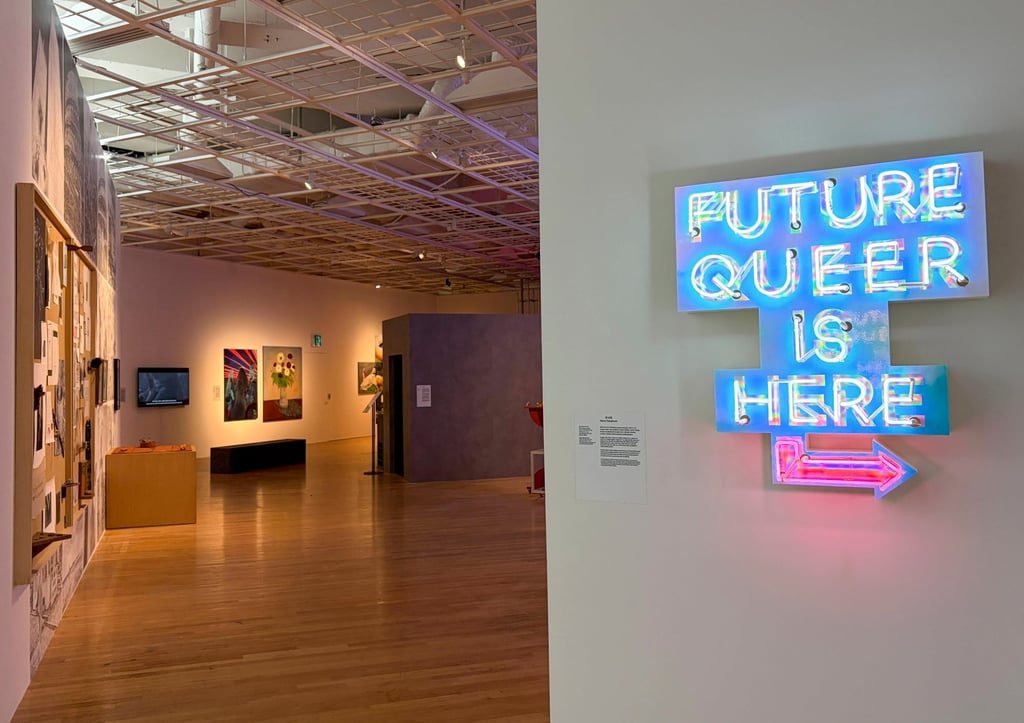
“Spectrosynthesis Seoul”, an exhibition of 74 artists and artist groups, opened on March 20 at Art Sonje Centre. Dedicated to exploring LGBTQ themes and celebrating queer artists, it is the first large-scale exhibition of its kind in South Korea.
Patrick Sun, the Hong Kong-born founder of the Sunpride Foundation and the collector who initiated the “Spectrosynthesis” project, says this edition stands apart from previous shows in Taipei, Bangkok and Hong Kong. He explains that the immense energy and backing from South Korea’s younger queer artists feels particularly powerful given the country’s comparatively traditional and rigid social landscape.
“I was coming here with some reservations,” says Sun, who came out as gay in the 1970s. “People may think Korea is very conservative, and yes, that may be true in some ways, but there’s also a thriving gay scene, and I’m especially appreciative of all our young artists who are very brave and willing to step out to have their voice heard.”
The show was curated by Art Sonje Centre’s artistic director, Sun-jung Kim, and Yong-woo Lee, who teaches cultural studies at the Chinese University of Hong Kong. Kim says contemporary art is often provocative, and compares this show with New York’s 1993 Whitney Biennial, where she recalls the censorship of Barbara Hammer’s “notoriously” provocative work.
“I’ve been seeing so much good change,” Kim says. “The new generation is very open about themselves and their identity.”