Advertisement
Chinese culture
LifestyleChinese culture

How the Tang dynasty took China to new heights politically, economically and socially

As China’s influence grew abroad, cultural exchange helped open society, leading to innovations in the arts and the birth of tea culture

Reading Time:4 minutes
Why you can trust SCMP
5
Tang-dynasty pottery is seen at “Tang Vogue Beyond the Horizons: A Golden Era of Multicultural Integration and Openness”, an exhibition at the Hong Kong Heritage Discovery Centre, in Kowloon Park, which runs until the end of the year. Photo: Nora Tam
Kevin Kwong
To understand Chinese culture, it is necessary to go back to the very beginning of its civilisation. In this series, we look at the most influential dynasties in Chinese history and how each, with its technological inventions and cultural advancements, helped propel the nation forward.

By the time China ushered in the Tang dynasty (618-907), Chinese culture was on the cusp of an unparalleled peak.

Riding on the success of the preceding Sui dynasty (581-617) – which unified China after four hundred years of division – the Tang inherited a strong central government and competent bureaucracy, the latter bolstered by a merit-based imperial examination system.
Advertisement

The Silk Road – a vast network of trade routes that connected China with the West as far as the Mediterranean – had been in use since the Han dynasty (206BC-AD220), and its expansion, both on land and at sea, would further spread the influence of Chinese art and culture far beyond its borders.
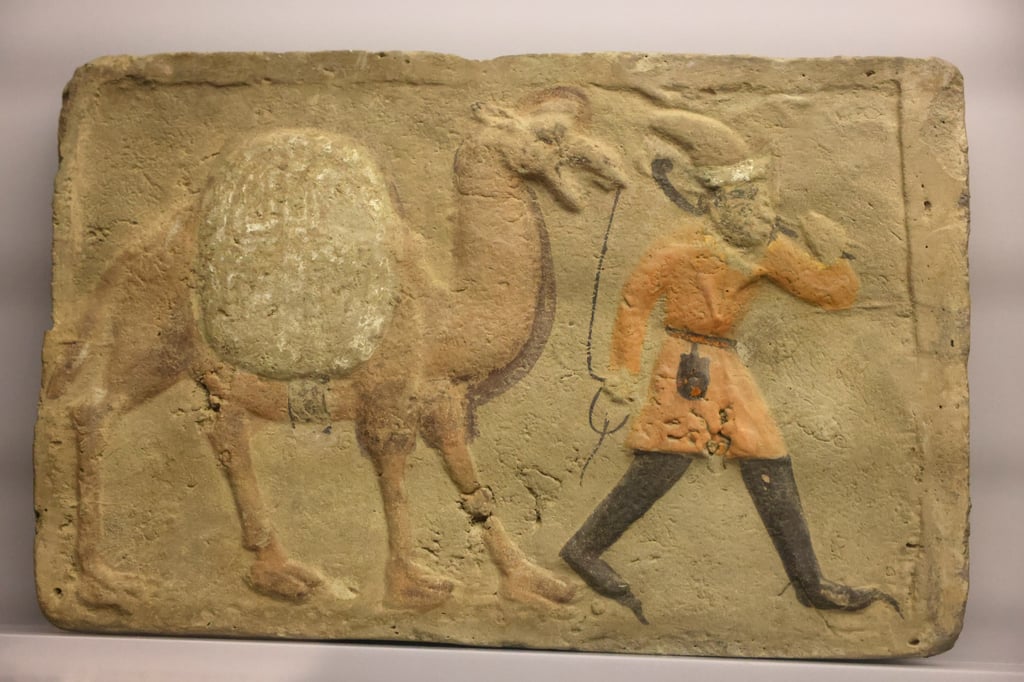
An exhibit at “Tang Vogue Beyond the Horizons: A Golden Era of Multicultural Integration and Openness”, an exhibition now on at the Hong Kong Heritage Discovery Centre. Photo: Nora Tam

It was on this solid foundation that the Tang dynasty was able to scale new heights politically, economically and socially. The new era’s prosperity could be felt in the bustling capital of Chang’an (modern-day Xian), the largest city in the world at the time.

Advertisement
SCMP Series
[ 4 of 8 ]
Advertisement
Select Voice
Choose your listening speed
Get through articles 2x faster
1.25x
250 WPM
Slow
Average
Fast
1.25x