-
Advertisement
Chinese culture
LifestyleChinese culture

Chinese Lunar New Year greetings in Mandarin, Cantonese, Shanghainese and Hokkien dialects

The Year of the Horse 2026 will be welcomed across China with blessings for money, health and more. Here are common ones and their meanings

Reading Time:4 minutes
Why you can trust SCMP
2
A woman holds Lunar New Year decorations. Throughout China, greetings in various dialects will be exchanged to welcome the Year of the Horse. Here are some of them and their meanings. Photo: Shutterstock
Syrena Jin
From auspicious horse-themed phrases and couplets to whether your luck is in, check out our Year of the Horse 2026 series to discover all you need to know about the coming Lunar New Year.

Lunar New Year is approaching, which means China will soon be abuzz with auspicious New Year greetings. From north to south, east to west, people will exchange warm wishes for health, prosperity and happiness in the year ahead.

In Hong Kong, kung hei fat choi is perhaps the most common New Year greeting, but there are many others, spoken in many different Chinese dialects.
Advertisement
China’s linguistic landscape is as rich as its culinary one, with Chinese generally categorised into 10 major dialect groups. These include Mandarin, Yue (which includes Cantonese), Wu (which includes Shanghainese), Min (which includes Chiuchow and Hokkien), Hakka and Jin.
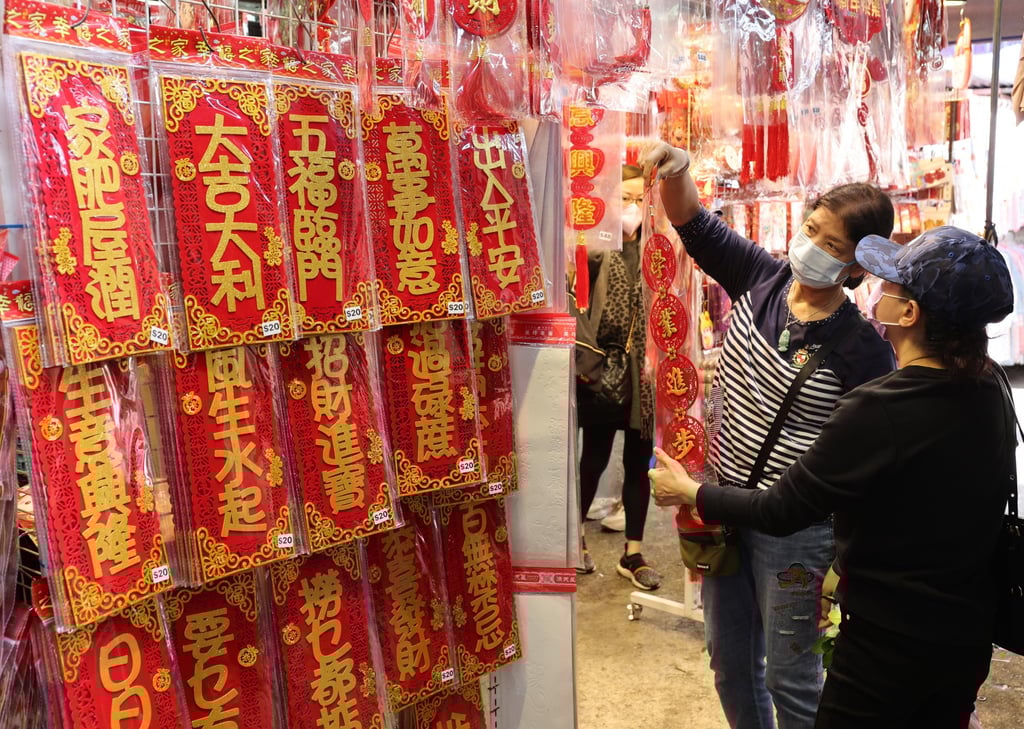
People shop at a market selling Lunar New Year decorations in Mong Kok, Hong Kong, in 2023. Photo: Edmond So

While New Year greetings may sound entirely different depending on the dialect, they all convey the same heartfelt wishes.

Advertisement

Below, we explore how to wish someone well during this festive season in four distinctive Chinese dialects: Cantonese, Mandarin, Hokkien and Shanghainese. How many do you know?

SCMP Series
[ 25 of 63 ]
Advertisement
Select Voice
Select Speed
1.00x