History of Chinese flatbreads reflects how food has echoes of faraway places
How ‘hubing’ came to China is reflected in Hong Kong’s Jenny Bakery cookies smelling like Malaysia’s Rotiboy coffee buns, Wee Kek Koon says

Last month, friends visiting from Hong Kong brought me two tins of cookies from Jenny Bakery – a popular local treat I had somehow never tried in two decades of living in the city.
When I finally opened one, the aroma caught me off guard: rich, buttery and instantly familiar. It smelled exactly like the coffee buns from the Malaysian bakery chain Rotiboy, which I used to eat far more often than I should admit.
I paused for a moment, tin in hand, trying to place that recognition. Maybe it was a coincidence – two bakers, two places, arriving at the same recipe. Or perhaps one borrowed, knowingly or not, from the other. Food has a way of carrying echoes, and sometimes what we taste is less an invention than a continuation.
China has been doing this – absorbing, adapting, making its own – for a very long time. As early as the second century BC, it had already taken in an import that had travelled thousands of miles along the Silk Road: hubing. The name itself says as much. Bing is a broad category of flour-based foods, but the prefix hu marks it as something foreign, something that came from elsewhere.
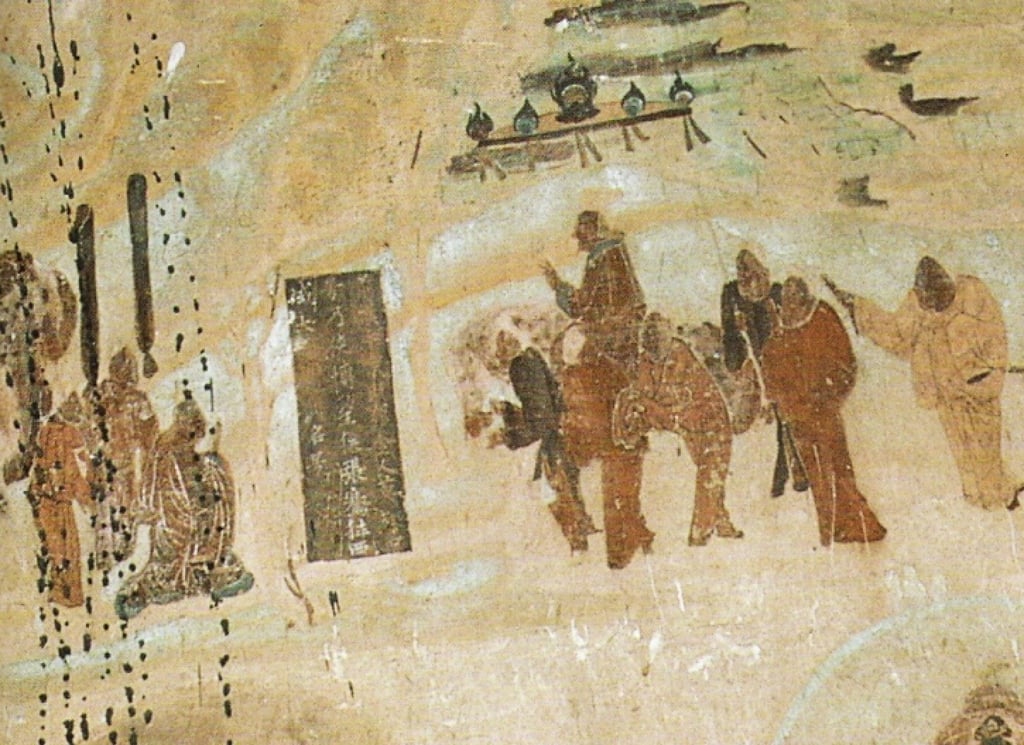
The story begins with Zhang Qian (c. 195BC-114BC), a Han-period envoy who journeyed west and returned with more than diplomatic contacts.