
Advertisement
Chinese culture
LifestyleChinese culture
Reflections
Wee Kek Koon

What an ancient Chinese dish can teach people about the ‘proper’ way to eat dishes

The evolution of ‘biluo’ in Tang-dynasty China highlights how there is no unchanging way in which a dish ought to be prepared and enjoyed

3-MIN READ3-MIN
1
Listen
Cherry biluo. Biluo was introduced to China by Central Asian traders during the Tang dynasty and evolved from a heavy wheat-based dish into something sweeter to suit local tastes. Photo: Instagram/resilkroad
Having lived his whole life in the modern cities of Singapore and Hong Kong, Wee Kek Koon has an inexplicable fascination with the past.

It was a familiar situation that I found myself in. I was one of two Singaporeans among half a dozen or more Malaysians, and predictably – and almost always unprovoked – the trashing of Singapore’s food began, especially its supposed unoriginality and blandness vis-a-vis Malaysian fare.

I have learned to grin and bear it, recognising that these barbs are less about food than the complex emotions Malaysians harbour towards their southern cousins, which are shaped by history, resentment and a sense of frustration. That said, the mutual dissing is usually lighthearted, resembling the good-natured ribbing between old friends.
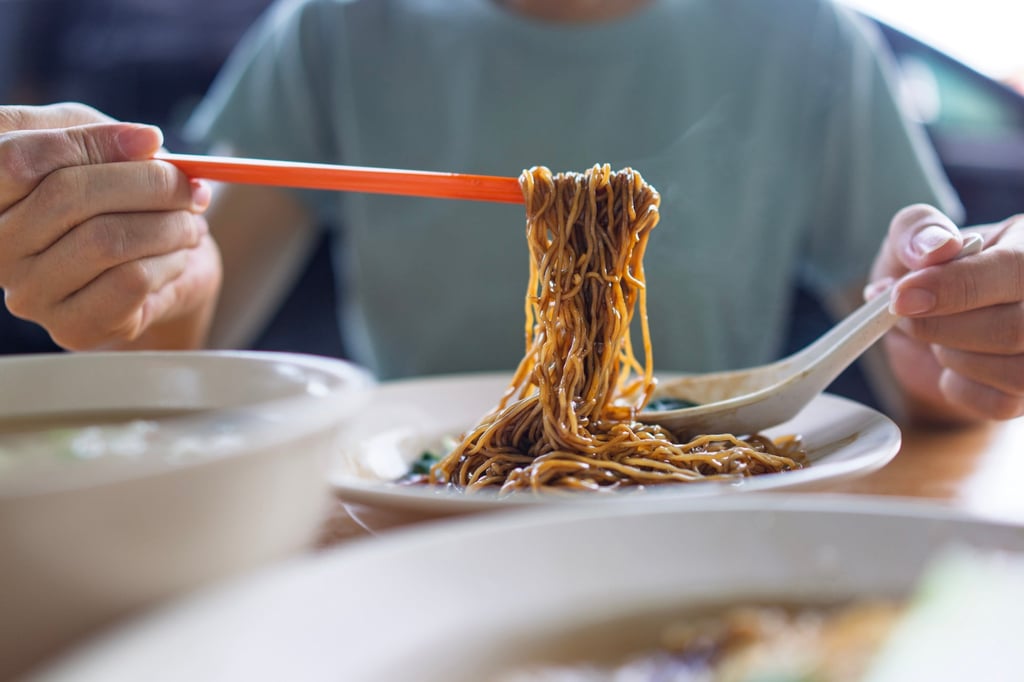
Then someone at the table sneered, “In Singapore, they add chilli sauce to their wonton noodles!” The didact in me was instantly triggered and I felt compelled to retort – not out of any nationalistic pride, but from a desire to inform and educate.
Advertisement
“The people in Hong Kong and Guangzhou would similarly shudder at the sight of Malaysians drowning their wonton noodles in dark soy sauce,” I said.
Malaysians typically eat wonton noodles in dark soy sauce, unlike how they are served in Singapore and other parts of Asia. Photo: Getty Images

I am not sure if anyone got it, but my point was to illustrate the fallacy underlying such a remark: that there exists an unchanging way in which a dish ought to be prepared and enjoyed across time and place.

Advertisement
Advertisement
Select Voice
Select Speed
1.00x