
How whisky took its name from the Gaelic ‘water of life’ and what drinking it neat means
‘Whiskie shall put our brains in rage’, a phrase in a 1715 book, marked the first appearance in English of the term for the distilled drink

Around the world, aficionados may sip on a wee dram, ask for a Scotch on the rocks, or grab a ハイボール haibōru, Japanese for “highball”, even in a can from a kombini (Japanese convenience store).
This spirituous liquor, originally distilled in Ireland and Scotland from malted barley – with or without unmalted barley or other cereals – is, of course, whisky, or whiskey, the latter the spelling common in Ireland and the United States.
Whisky is a clipped version of whiskybae, which is a borrowing from Gaelic uisge beatha – literally “water of life”. Old Irish uisce “water” traces back to the Proto-Indo-European (PIE) root *wed- meaning “water, wet”, plus bethu meaning “life”, from a suffixed form of PIE root *gwei- “to live”.
The earliest appearance in English of the word is in 1715, in A Book of Scottish Pasquils 1568 to 1715, a collection of satirical poems, songs, and sayings from Scotland, in what seems an apt description of the drink: “Whiskie shall put our brains in rage”.
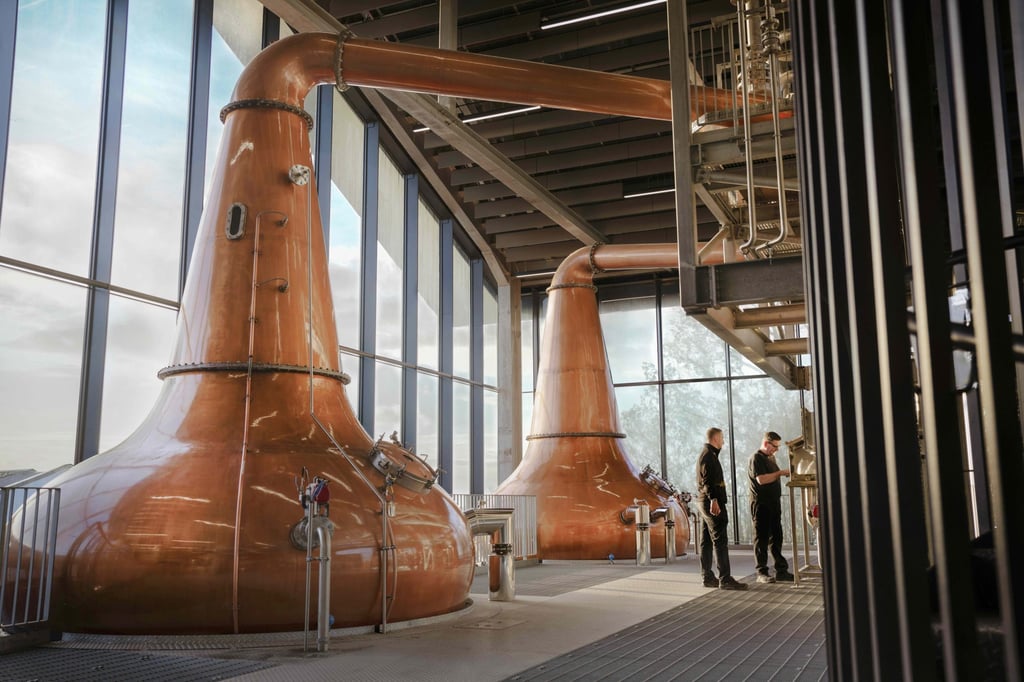
The use of distillation, and the term for such “water of life”, however, both date much further back.