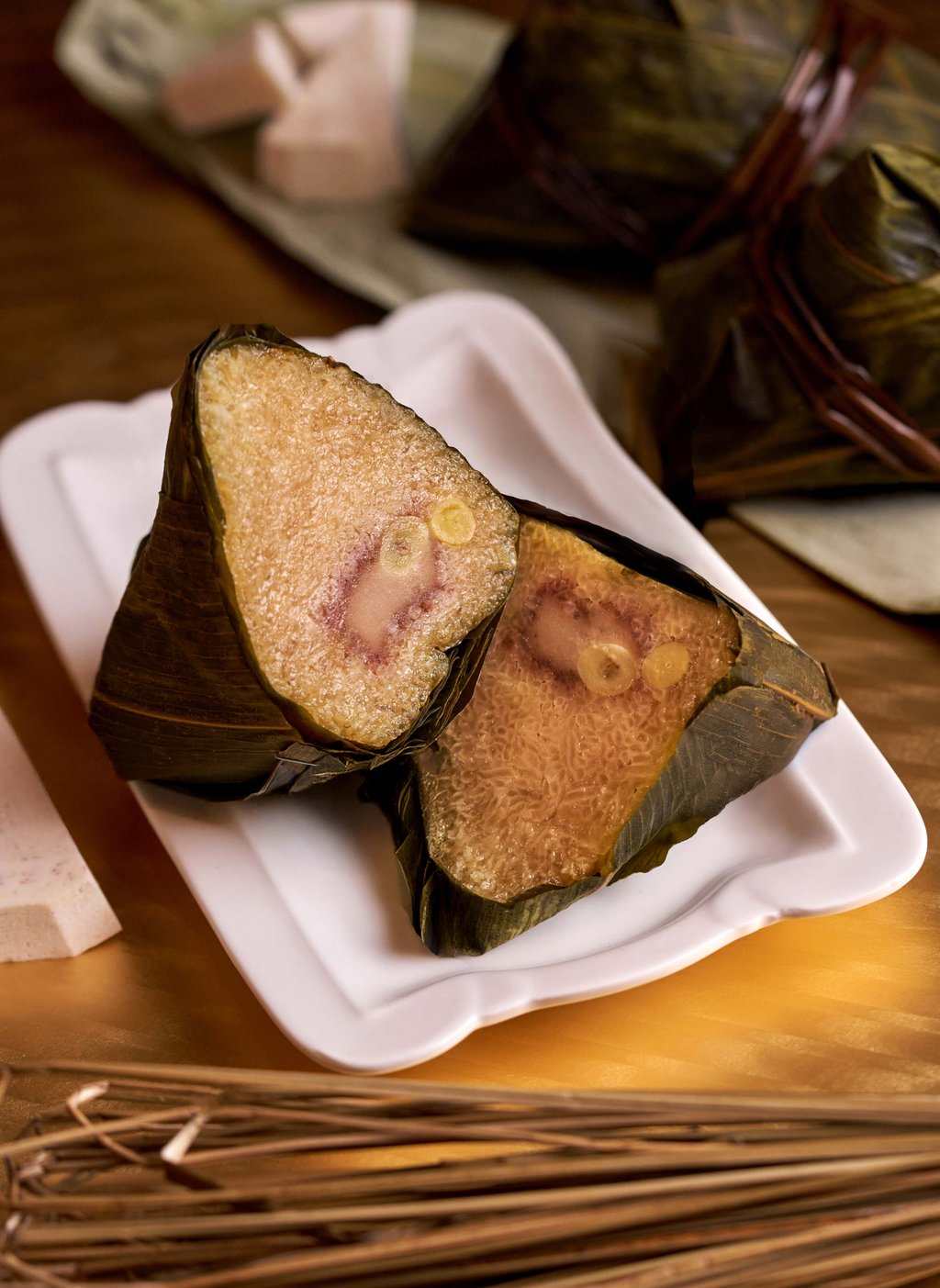
Alkaline rice dumplings, a sweet treat often enjoyed with red bean paste, peanut sauce or honey, can be an acquired taste for those in Hong Kong celebrating the Tuen Ng Festival, or Dragon Boat Festival.
This is because, in China, rice dumplings are sweet in the north and savoury in the south – or so the saying goes. In Hong Kong, glutinous rice dumplings stuffed with pork, salted egg yolk, mung beans and mushrooms are more common.
Historical records reveal that alkaline dumplings with sweetened lotus seed paste were served in the inner palace during the Qing dynasty (1644-1912). Empress Dowager Cixi, who was known for her sweet tooth, was rumoured to favour these soft, springy rice dumplings during the Tuen Ng Festival.
Making alkaline water
The ancient method of alkaline refining dates back to the Spring and Autumn Period (circa 770BC-476BC) and the Eastern Han dynasty (AD25-220), when Chinese people discovered that water rich in potassium carbonate and sodium carbonate – obtained by soaking plant ash – could remove oil, soften fibres and aid coagulation.
Advertisement
Alkaline water, also known as lye water, has strong antibacterial properties. In times before refrigeration, bamboo shoots treated with alkaline water not only kept longer than fresh bamboo shoots but were also less prone to spoilage.
By the Jin dynasty (265-420), this alkaline solution was used to soak glutinous rice, creating alkaline-water zongzi, or rice dumplings, which became a festive food in southern China, particularly in Guangdong and among Hakka and Minnan communities.
Sweet taro and gingko rice dumplings from Pak Loh Chiu Chow Restaurant. Photo: Pak Loh Chiu Chow Restaurant
Written during the Ming dynasty (1368-1644), the Compendium of Materia Medica – a natural medical encyclopaedia – detailed the process of producing an alkaline solution from plant ash. This method was widely used to make the crust of Cantonese mooncakes, where it neutralised the acidity of the syrup and gave the mooncakes their distinct golden colour, and in bamboo-pressed noodles to add a chewy texture and yellow hue.