Why Hong Kong is a butterfly lovers’ paradise and where to see them
Hong Kong is home to more than 240 butterfly and 2,000 moth species, and many can be seen at Kadoorie Farm’s butterfly garden

While Hong Kong is small considering its population of 7.5 million, with a total area of just 1,114 square kilometres (430 square miles), it is big on biodiversity, with 3,300 species of plants, 55 species of mammals, 200 species of freshwater fish, 116 species of reptiles and amphibians, and more than 580 bird species.
People might also be surprised to learn that Hong Kong is home to more than 240 species of butterflies and more than 2,000 species of moths. To give some perspective, England is home to just 59 species of butterflies.
One of the best places to indulge in butterfly watching is Kadoorie Farm and Botanic Garden (KFBG), a nature paradise covering 148 hectares (366 acres) nestled in the New Territories’ Tai Po district, near the slopes of Tai Mo Shan, Hong Kong’s highest mountain.
KFBG features Hong Kong’s first outdoor butterfly garden, and 80 per cent of all butterfly species in Hong Kong have been recorded there.
“Hong Kong has a high diversity of butterfly species due to its combination of a mild and humid subtropical climate, complex topography, and diverse ecosystems,” says Philip Lo, senior conservation officer (projects) of KFBG’s Conservation China Programme.
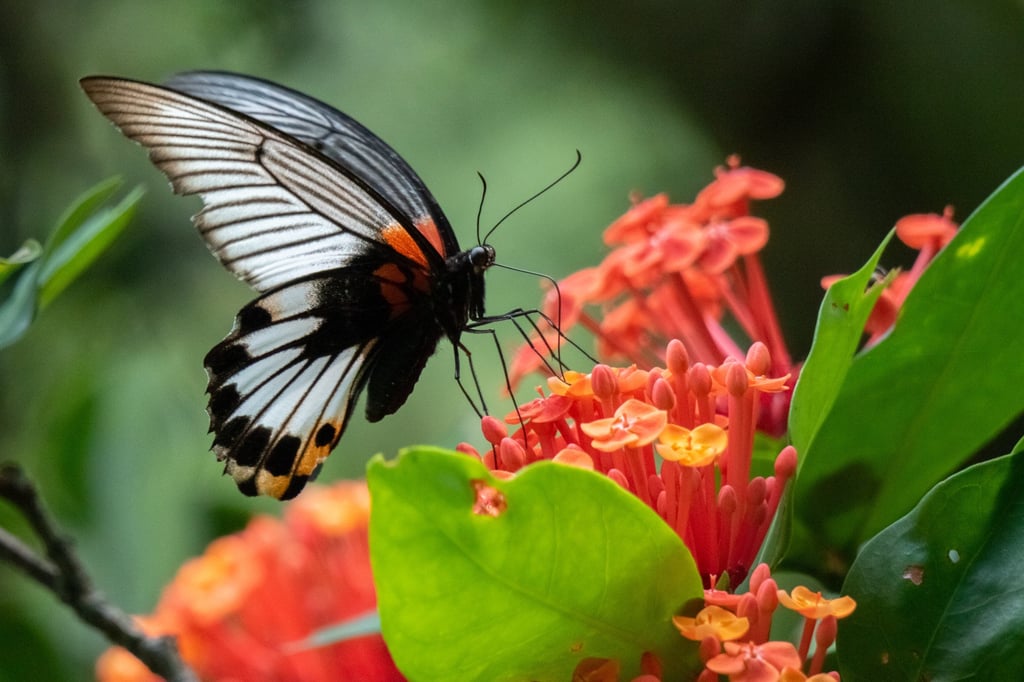
Open to the public, the garden boasts a vast range of native plant species, including larval host plants and nectar sources that have been planted there to attract butterflies and moths.