Taste Sweden’s delicious sustainable ‘blue food’ fresh from the sea on boat tours
From oysters and mussels to superfood seaweed, Sweden’s west coast is a treasure trove of ‘blue food’ – sustainable aquatic produce

Lars Marstone is leaning on the pier in Lysekil’s harbour, arms crossed, as though personally greeting the wind and waves arriving at this town on Sweden’s southwest coast. Moored nearby is Signe, his lovingly restored wooden boat. Her name derives from the Old Norse Signý, meaning “victorious” or “blessed”.
For more than 50 years, Signe has been braving the waves. Today, she will be taking us on an oyster and mussel tour, the first leg of our expedition to some of Sweden’s “blue food” hotspots.
Sustainable blue foods – from oceans, lakes and rivers – “have an essential role to play in achieving food security, ending malnutrition and building healthy, nature-positive and resilient food systems”, the United Nations says. They include fish, shellfish and seaweed, caught wild or farmed in aquacultures with a small ecological footprint.
Along Sweden’s wild west coast, the blue food movement is especially vibrant. We are in the province of Bohuslän, about 120km (75 miles) northwest of Gothenburg, and Marstone is a blue-food pioneer. For more than 15 years, from March to November, he and his wife, Maivor, have operated their shellfish tour.
But before he lets us board his boat, he gives us seaworthy fisherman’s overalls to put on – thick, waterproof and rather stiff. Getting into them is almost an adventure in itself. “You might need them,” he says with a smile.
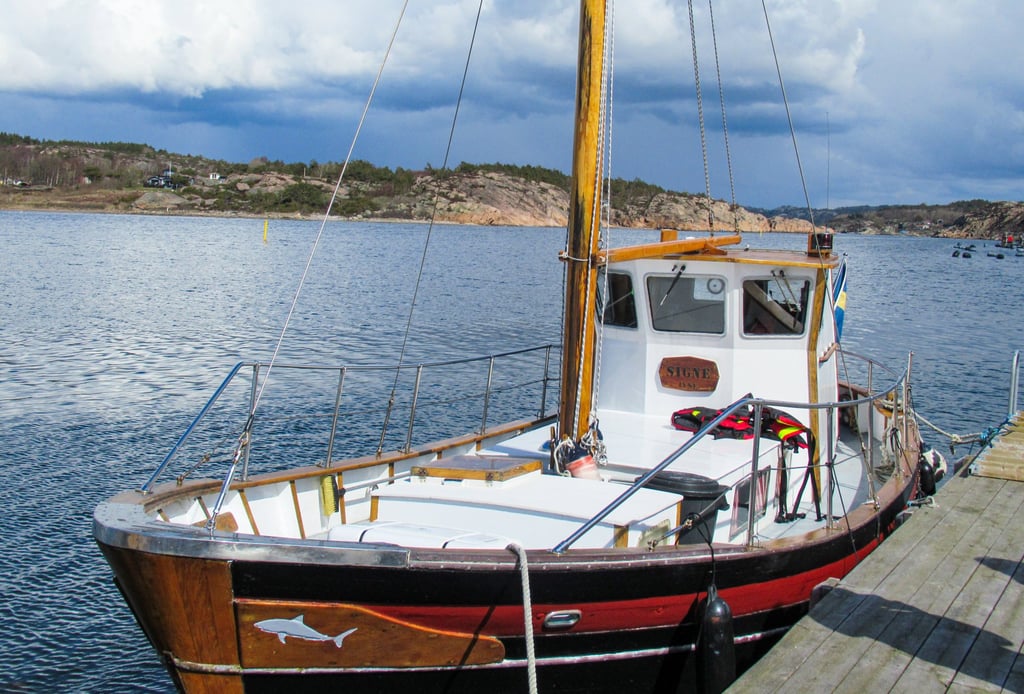
Then Signe chugs out of the harbour. Ahead of us stretches the Gullmarn fjord, roughly 25km long and up to 120 metres deep. Sweden’s largest and deepest fjord, it is teeming with marine biodiversity.