India’s young female wrestlers fighting to overcome tradition, prejudice
Their families worry they won’t find husbands but Delhi’s determined young kushti fighters are putting the sport first

The narrow Delhi street is still dark at 5.45 on a chilly winter’s morning. Some of the city’s poorest inhabitants, wrapped in scraggy blankets, sleep on pavements alongside scavenging goats and stray dogs. Even the stalls selling cups of warming chai are not yet open, and India’s teeming capital is silent this long before the dawn.
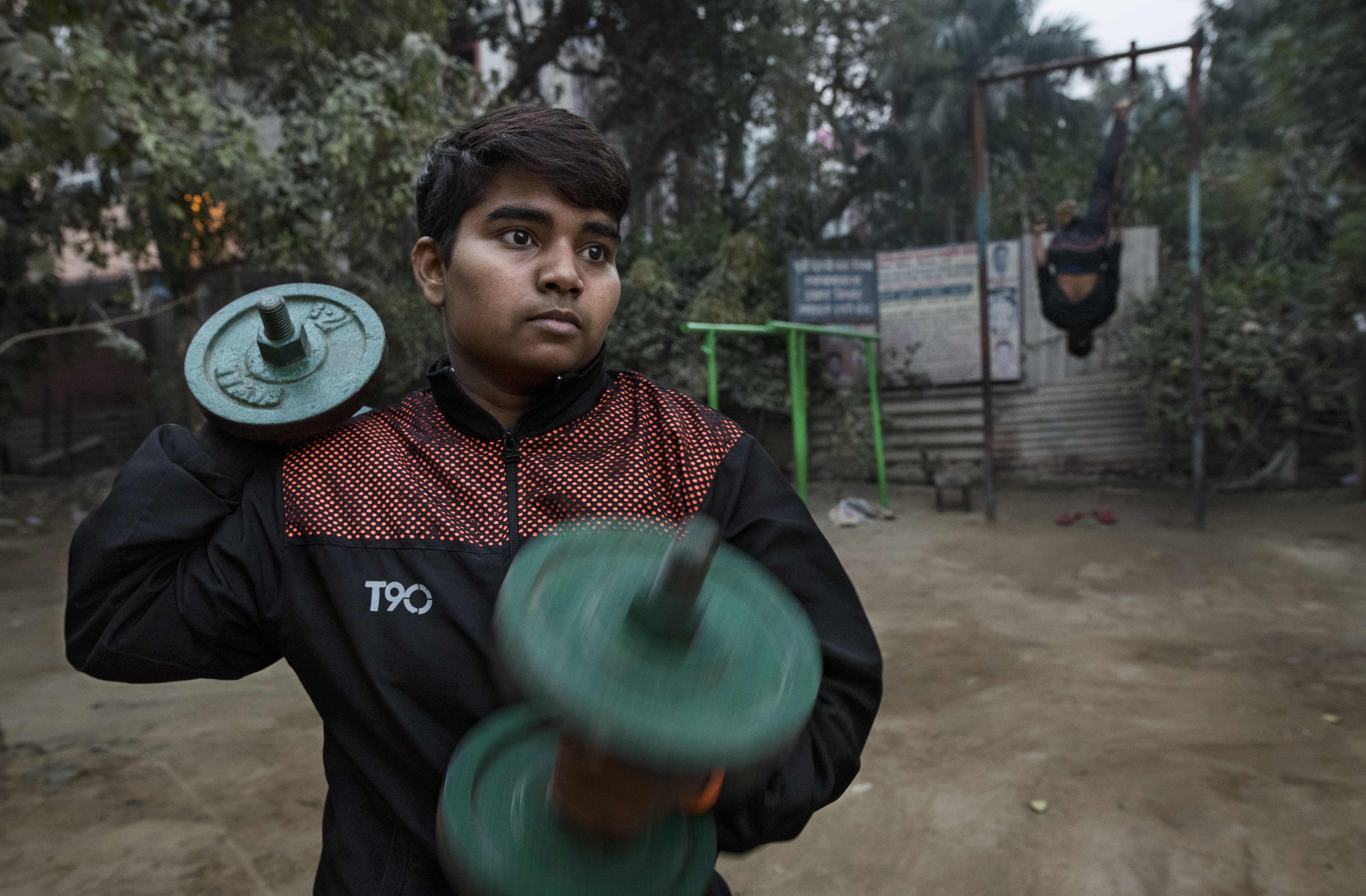
A tight huddle of girls, mostly teenagers and all decked out in well-worn tracksuits, emerges from the misty gloom. They try to keep their voices low, but cannot help laughing loudly now and then. This, after all, is their favourite time of day.
The youngsters are heading for a wrestling arena, known as an akhara, the word derived from Sanskrit. Some believe the ancient form of wrestling practised here, kushti, is the ancestor of all forms of wrestling worldwide.
“Nobody can precisely trace kushti’s origins,” says Mohit Saroha, a lawyer with the Wrestling Federation of India. “Some say it dates back 3,000 years, while most will settle around the fifth century BC. At that time, it was called malla-yuddha, and the sport spread rapidly across South Asia with the founding of the Mughal Empire [in the 16th century].”