How modern ceramic techniques are revolutionising high horology: Watches and Wonders 2025 showcased hardy new pieces from Audemars Piguet, Chopard, Chanel and IWC Schaffhausen

Modern ceramics are revolutionising high horology with scratch-proof durability and vibrant designs, making them the material of choice for many luxury watchmakers
Scratch resistant, heat-resistant, non-corrosive – what’s not to love about ceramics? Used by humankind for some 25,000 years – and by the watch industry since the 1970s – the material is now becoming a ubiquitous material for high horology, appearing on timepieces in a wide variety of textures, colours and finishes.
Audemars Piguet and Chanel are among the brands releasing new-school ceramic pieces. An example from the latter is the J12 Bleu collection of nine watches in a deep blue, nearly black, hue.

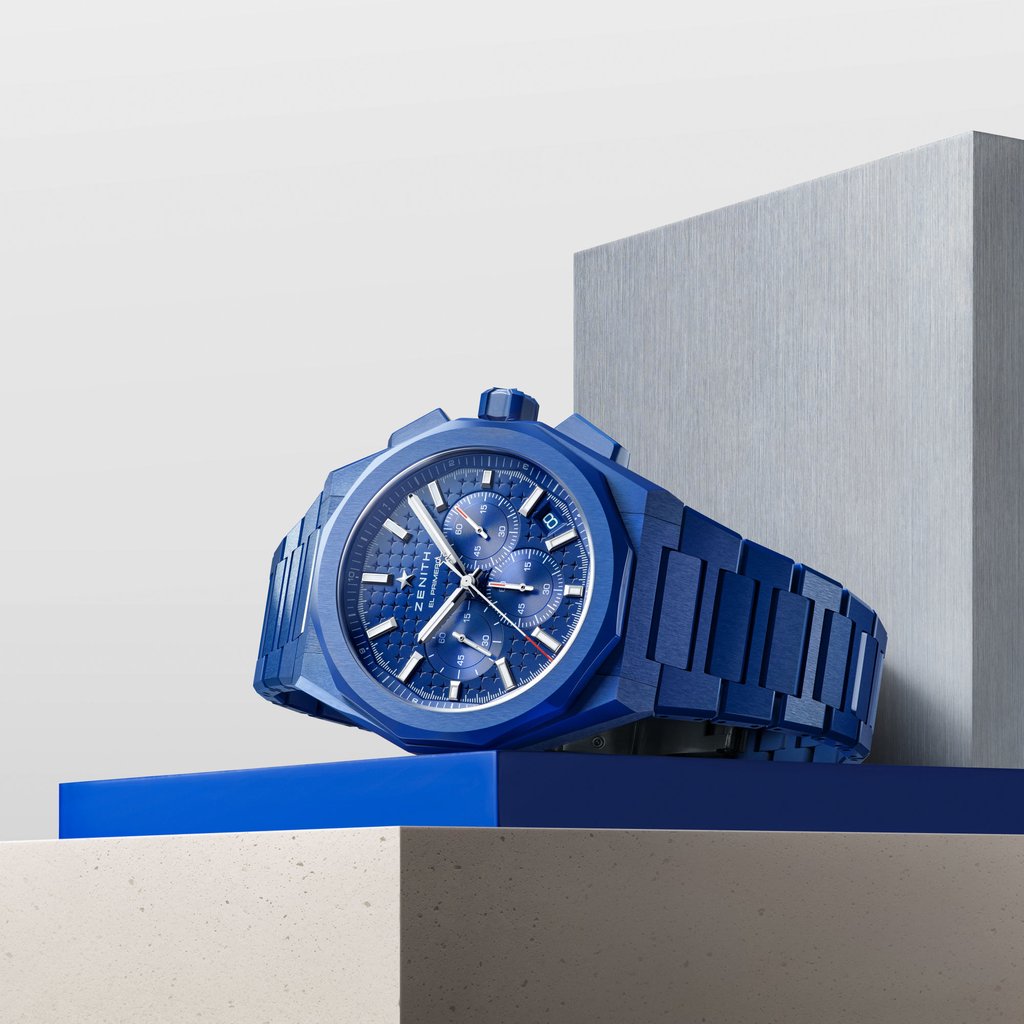
“The properties of ceramics are very interesting, and you can play a lot with colours. I think clients are searching for this,” says Zenith chief products officer Romain Marietta, adding that the brand’s uniquely developed hue allowed for a consistent shade over the whole watch.
Zirconium oxide is the chemical name of the ceramic commonly used in the watch industry. Previously, its application was either dull or extremely shiny, but newer tools for processing the material have created more possibilities. “Our suppliers now have more experience in mastering the material itself,” says Marietta, adding that one complexity is that the material shrinks by 30 per cent during the sintering process involved in its manufacture. “Now, with better precision tools and better understanding, ceramic bracelets are tighter as they can be machined with smaller tolerances.”
Zenith’s releases this year also proved the brand could reproduce the types of finishes normally seen on other materials with ceramic. “Polished, satin, microblasted and sandblasted [finishes are now more possible]. This [hi-tech] material is also relatively accessible, so we can create great-looking watches at a very interesting price point,” Marietta continues. He adds that much of the work is done by hand, and suppliers have become better at hand finishing.
It’s important to note that while brands work with ceramics in their watches, no brand has its own in-house ceramic case making and bracelet facility. Five major suppliers are Bangerter, Ceramaret, Comadur, Dexel and Formatech.
As befitting a brand seeking the latest technologies and innovations, Marietta is excited about the future of ceramics. “We feel the appetite of clients for something different, something surprising. We are also working on other components that have never before been made in ceramic. In the end it is not simple to sell a ceramic watch, because a lot of people prefer traditional materials. But if you appreciate colour, technique and things that are different, ceramic is a very cool material.”