Silk shimmers on: how Gucci’s The Art of Silk campaign with Julia Garner, Chanel’s investment in producer Mantero, and Hermes’ famous Twilly scarves show the ancient fabric’s lasting appeal

La DoubleJ and Shanghai-based Ruohan Nie use silk in almost all their collections, while Zimmermann and Ralph Lauren also featured the fabric in recent shows
For millennia, humans have carefully harvested the delicate fibre that has given silkworms their name, and woven it into one of the most enduring luxuries besides gold itself. Indeed, in a world where fast fashion endangers any handcrafting left in the apparel industry, true silk – and what it represents – is likely to only become more valuable.
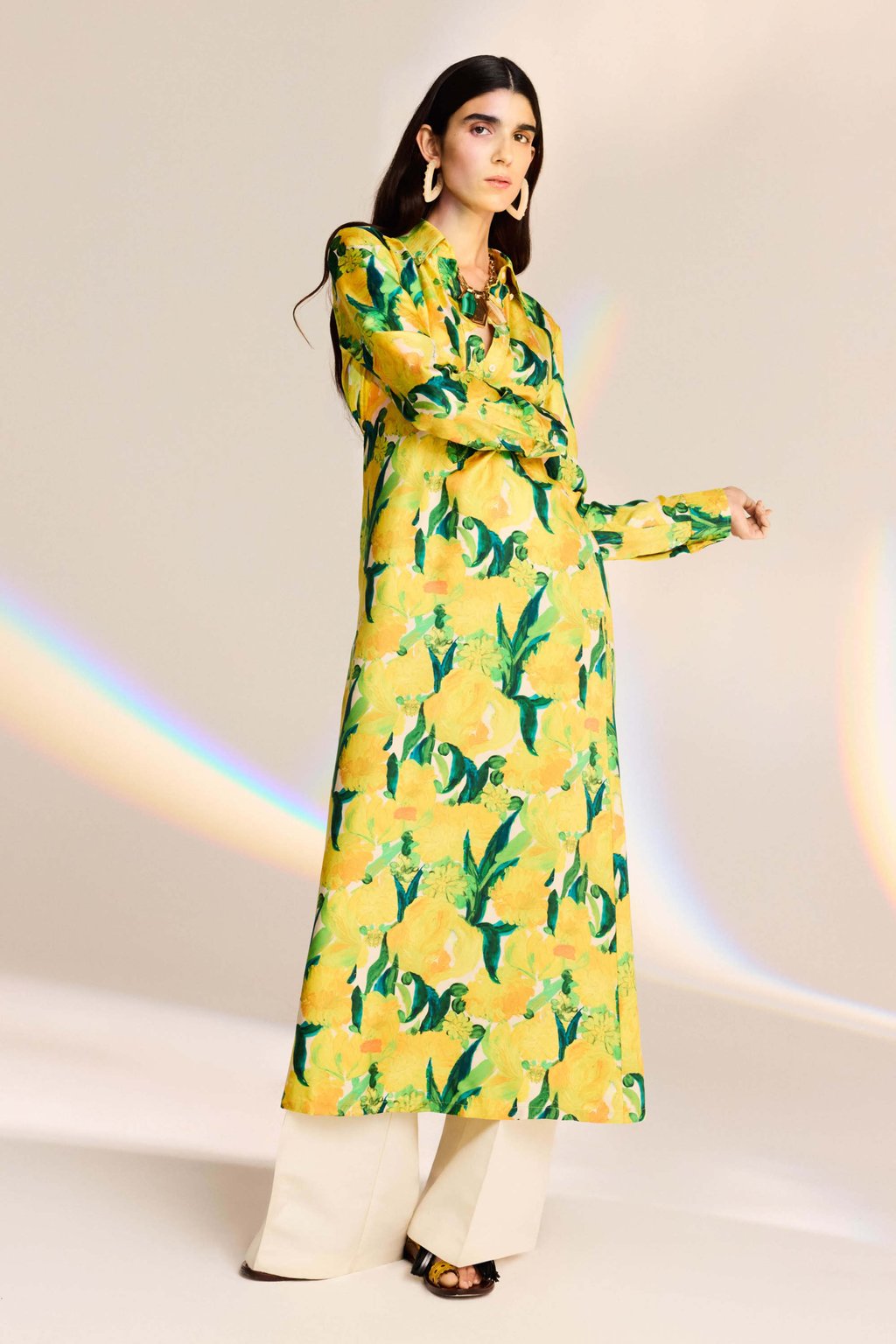
The shimmeringly smooth yet breathable natural fibre is widely believed to have originated in neolithic China, though recent evidence suggests that other Bronze Age civilisations may have also been producing silk around that time, perhaps from the silk-producing larvae of other species of moth.
The World History Encyclopedia notes that ancient archaeological records first mention sericulture (the commercial rearing of silkworms for silk) around 3600BC, with the first known examples of woven silk dating from 2700BC, in what is now Zhejiang province. In the 2,500 years between that milestone and the development of the trading routes known collectively as the Silk Road, the fibre, and the fabric it was woven into, became among the most coveted commodities in all the ancient world.

The Silk Road network developed after the Han dynasty opened up trade with neighbouring regions in 130BC, leading to knowledge of the fabric spreading far beyond Asia – even as China ensured its sericulture techniques were kept a secret for centuries, only making the fabric still more valuable.
Famously, in 552, the Roman Emperor Justinian sent two monks on a mission to China, who returned to Byzantium with silkworm eggs or larvae hidden in their walking sticks. The resulting monopoly of European production filled Roman coffers for centuries – until the 7th century Arab conquest of the Persians, also early developers of sericulture, brought the practice to Spain.
Later came Venetian merchant Marco Polo’s 13th century voyage to China, which promoted the growth of sericulture in Italy. Today, Como remains one of the world’s silk-making hubs, due to its prime location and climate, but also due to Duke of Milan Ludovico Sforza’s push to plant mulberry trees – on which the silkworms feed – around the lake in the late 15th century, as well as the World War II destruction of Lyon, Europe’s main source of supply for several centuries.