High-street fashion labels like Zara and H&M promise sustainability in China – can luxury brands keep up?

Whether make-up, fashion or jewellery, informed consumers in China want sustainable products and practices, and companies like Swarovski, Burberry and Estée Lauder are putting in place strategies that are China-specific
As non-luxury gets evermore committed to sustainability – you will have seen Zara’s recent “100 per cent” pledge plastered over the news last week – the suggestion of luxury and sustainability in China continues to build.
In the last few years, the conversation about sustainability and luxury – particularly in fashion – has been not only nothing new, it was in danger of becoming a parody of itself.
For all luxury brands, the right question might not be if they need a China-specific sustainability plan, but how quickly they can create one that’s holistic, trustworthy and inspiring
Do luxury Chinese consumers want sustainability? Of course. Do luxury brands and industry leaders talk about sustainability? At length. Entire panel discussions have been held on the subject, talking about what should be done and about how we must care for the planet. And then the talk ends.
Agreeing via panel discussions that we all need to save Mother Earth made us wonder if the event would end with the linking of arms and singing Heal the World together. Aside the “highlighting of issues” and hand-wringing platitudes, what is really being done to commit to the promises made? Where can brands learn more from and are they willing to see sustainability as more than just a target to be met?
The new wave of luxury consumers see sustainability as a core objective
Chinese consumer interest in all things sustainable is no assumption – in the 2018 report on Chinese travellers, “Next-Gen Luxury Leaders: Affluent Chinese Families”, presented by ILTM China and The Luxury Conversation, more than 71 per cent of survey respondents said that a hotel’s sustainability offering was a top factor in their decision-making process. As for the healthy side of what sustainability can mean, 75 per cent of respondents chose “organic food” as very important in relation to a resort’s offering, with “education on wellness” being a very important selection in terms of what they expect their children to experience at a Kids Club.
On the lifestyle sharing platform Red Book, sustainability is a popular theme. The hashtag roughly meaning “shopping lasts bag after bag” (in Chinese it also rhymes with “shopping lasts generation after generation”, since “bag” and “generation” have the same sound) generated over 6,000 user posts. Lifestyle blogger @Ritatawang and @Irene …, inspired by the Scandinavian running movement “plogging” that combines jogging with picking up litter, documented a day of plogging under the hashtag meaning “running while picking up trash” that reached around 250,000 views.
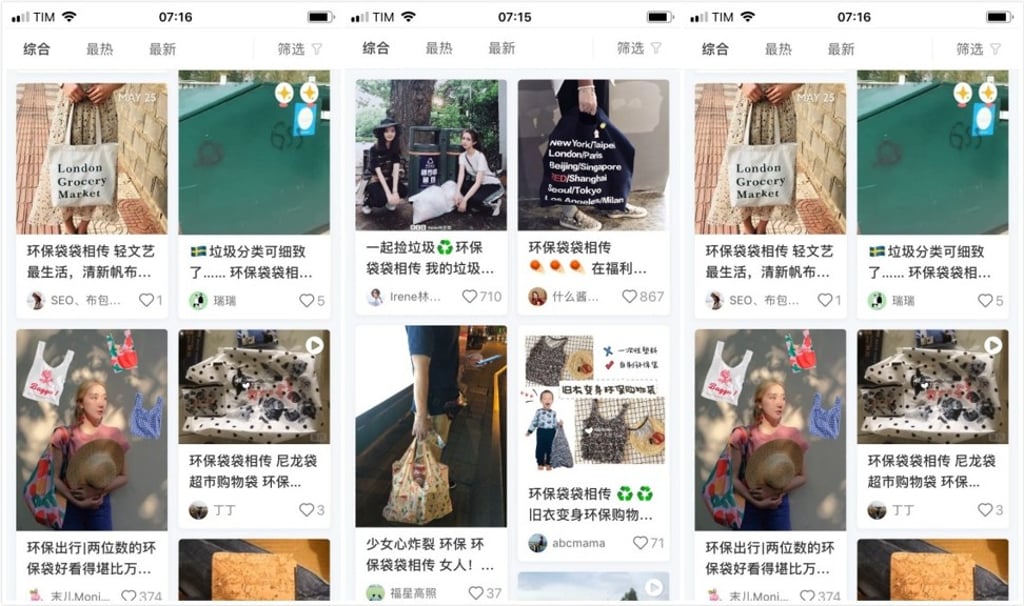
In simple terms, it only takes a quick flick through our WeChat Moments feed to see Earth-consciousness, care for nature and hatred for plastic echoed by Chinese “consumers”/people on a daily basis. Just as anywhere in the world, knowledge of humankind’s impact on the Earth and a drastic need for change is a strong issue in Chinese society.