Why Chinese millennials dress for the lifestyle they aspire to – and why brands need to think beyond ‘niche’ to succeed in China in 2020

Local competition is fierce in China; to do well in this market, brands need to embody an identity that belongs to somewhere inspiring
In terms of business intelligence, articles and reports on China, we often read and hear that “niche” is what young Chinese consumers want. It is the case that non-mainstream, bold and distinct fashion is capturing their interest – but what do we find when we delve deeper? In the past 12 months, there have been successful market entrants and big winners – yet 2019 was a difficult year for some big names in fashion. What can be learned as we swing into 2020?
In November, high-end e-commerce Yoox announced it was leaving China, following in the footsteps of Old Navy and Forever 21, and before them New Look, Topshop, ASOS, Marks & Spencer and Macy’s. While China fuels the world’s fashion growth, its fashion market remains hard to penetrate for international players. Why?
Local competition is fierce. Having grown up in an era of relentless prosperity in China, young Chinese fashionistas are spoiled by the country’s hyper-efficient e-commerce system. For a spontaneous fashion splurge, they could head to Taobao, Tmall, JD, Netease’s Yanxuan, Little Red Book, or one of the countless influencer-run WeChat marketplaces for a good deal and get it delivered to their home the next day. While a D2C (direct to consumer) brand that sells trendy clothes at an affordable price point might be lauded as “innovative” or “rule-breaking” (or worse, disruptive) in the West, it has been a reality in China for many years. As well as having countless international brands vying for their attention and spend, the unbranded copycat market can duplicate a generic look rapidly.
Bargains from domestic players that make their profits from a massive quantity of orders are readily available. On Taobao, a decent quality “Insta-inspired” summer dress made with 100 per cent viscose, costs around 120 yuan to 130 yuan (US$17 to US$18) at full price with one-day shipping and free return included. It’s no wonder that Chinese fashionistas, long used to similar deals that cut business margins to the minimum, were unimpressed with ASOS and the like.
In short, players that strip apparel down to its use-value are doomed to fail in China. No sales pitch about a brand’s quality, price, or look is going to impress Chinese consumers who have grown up style hunting on Taobao. Brands that stand out in this crowded marketplace are those that have gone beyond the use-value and represent a form of cultural and social currency. In this analysis, we break down the main categories impacting the aesthetic choices and cultural tastes of China’s trend-forward youth.
Contemporary brands with ‘woke’ values
Leading influencer brands: Everlane, Allbirds, Lululemon, Veja
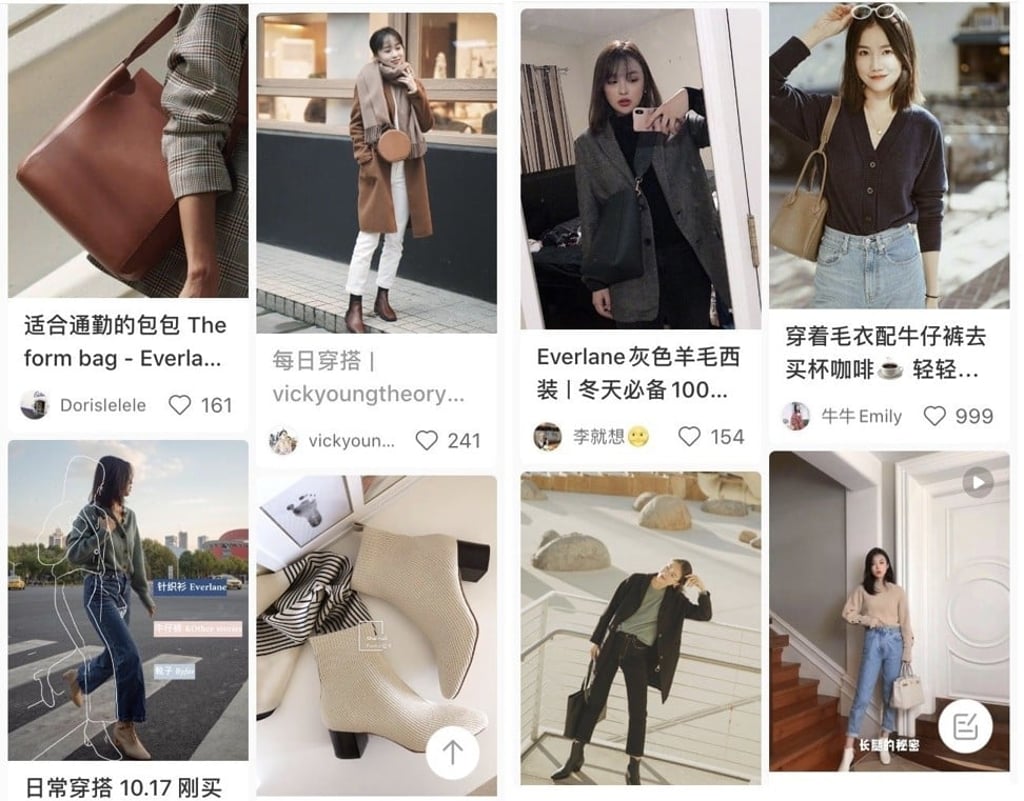
A wave of eco-friendly, direct-to-consumer brands that represent international millennials in global capitals is now hitting urban China. Brands like Everlane, Allbirds and Lululemon that champion a healthy eco-friendly lifestyle are trending among the country’s fashion early-adopters. On a cultural level, they also embody what Chinese millennials fantasise about: an international lifestyle; one that is not necessarily rich or glamorous, but wholesome and living your best life (which, according to influencer photos, involves continuously crossing roads and looking sideways).
Everlane, an American clothing brand known for its basic styles, pricing transparency and sustainable practices, is seen by Chinese fashionistas as a premium alternative to Uniqlo and Zara. On the lifestyle platform Xiaohongshu (aka Red Book), posts about Everlane are often published by bloggers living overseas, making the brand synonymous with a tag “those who have been abroad”. The same myth has been around the eco-friendly wool runner brand Allbirds. On Chinese social media, the Allbirds sneakers are marketed as “a standard style for Silicon Valley elites”, something worn by America’s tech billionaires and start-up superstars. Lululemon, the millennial athleisure brand par excellence, has also become a local symbol for the buyer’s global lifestyle. Wearing Lululemon yoga pants, attending its off-site workshop and posting about it on social media, is a sign of someone familiar with the modern health mindstyle.