Mughal jewellery shines bright at Hong Kong Palace Museum exhibition

The Mughal dynasty’s opulent jewellery tradition continues to inspire contemporary designers and captivate collectors worldwide
India’s Mughal dynasty (1526–1857) was famously one when creativity, design and opulence flourished in art, architecture and adornment – in particular, jewellery. The era produced some of the world’s most beautiful objects of function and finery thanks to the blending of Persian, Islamic and Indian influences, as well as intricate craftsmanship, a deep appreciation of the materials, besides attention to symmetry and balance.
Such artefacts are currently on show at the Hong Kong Palace Museum as part of the exhibition “The Hong Kong Jockey Club Series: Treasures of the Mughal Court from the Victoria and Albert Museum”, which runs until February 23, 2026. The show is designed around the reigns three great Mughal emperors – Akbar (1556–1605), his son Jahangir (1605–1627) and grandson Shah Jahan (1628–1658) – and examines how their patronage shaped the court’s visual culture through jewellery, painting, textiles and architecture.
“There is a unique beauty, sophistication and refinement to Mughal design,” says Emily Hannam, curator of South Asia at the Victoria and Albert Museum (V&A). “We can credit it to the great creativity and mastery of these makers, but also the whole economic ecosystem that underpinned it.”
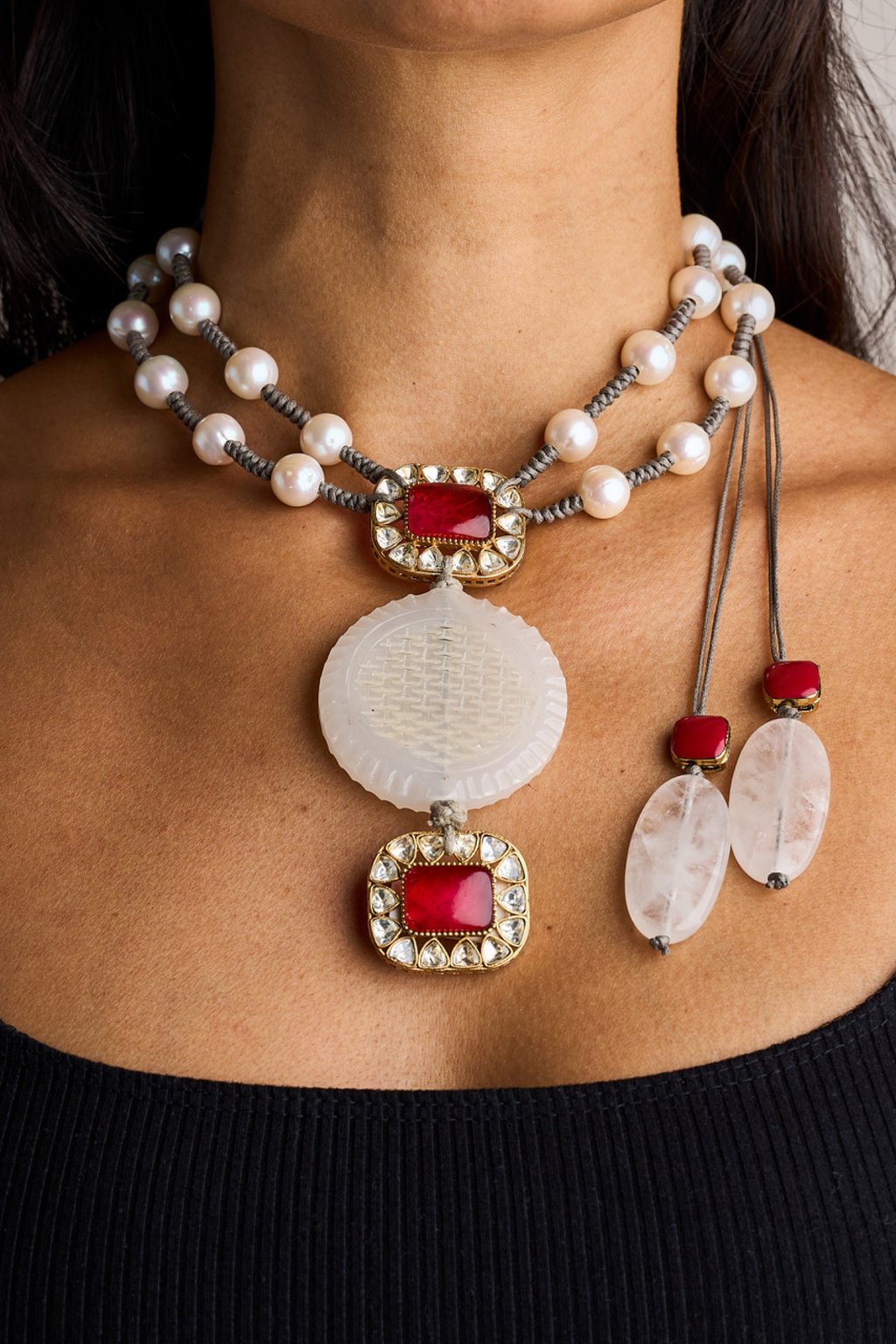
At its peak, the Mughal empire extended from southern India up to modern-day Kabul and across from Gujarat to Bangladesh. It was responsible for 28 per cent of the world’s industrial output up until the 18th century, and its economy surpassed that of China’s Qing dynasty and Europe, resulting in a wealthy royal court.
“The intricacy and complexity is simply inimitable. The best jewellers and designers in India today will tell you that it’s impossible to recreate the best examples of Mughal design from the 1600s, because those skills [and ecosystem] no longer exist,” adds Hannam.
However, that has not prevented today’s jewellery designers from carrying the Mughal design legacy forward, whether through honouring traditional techniques, adopting a global approach to jewellery making or merging real history into unique pieces.
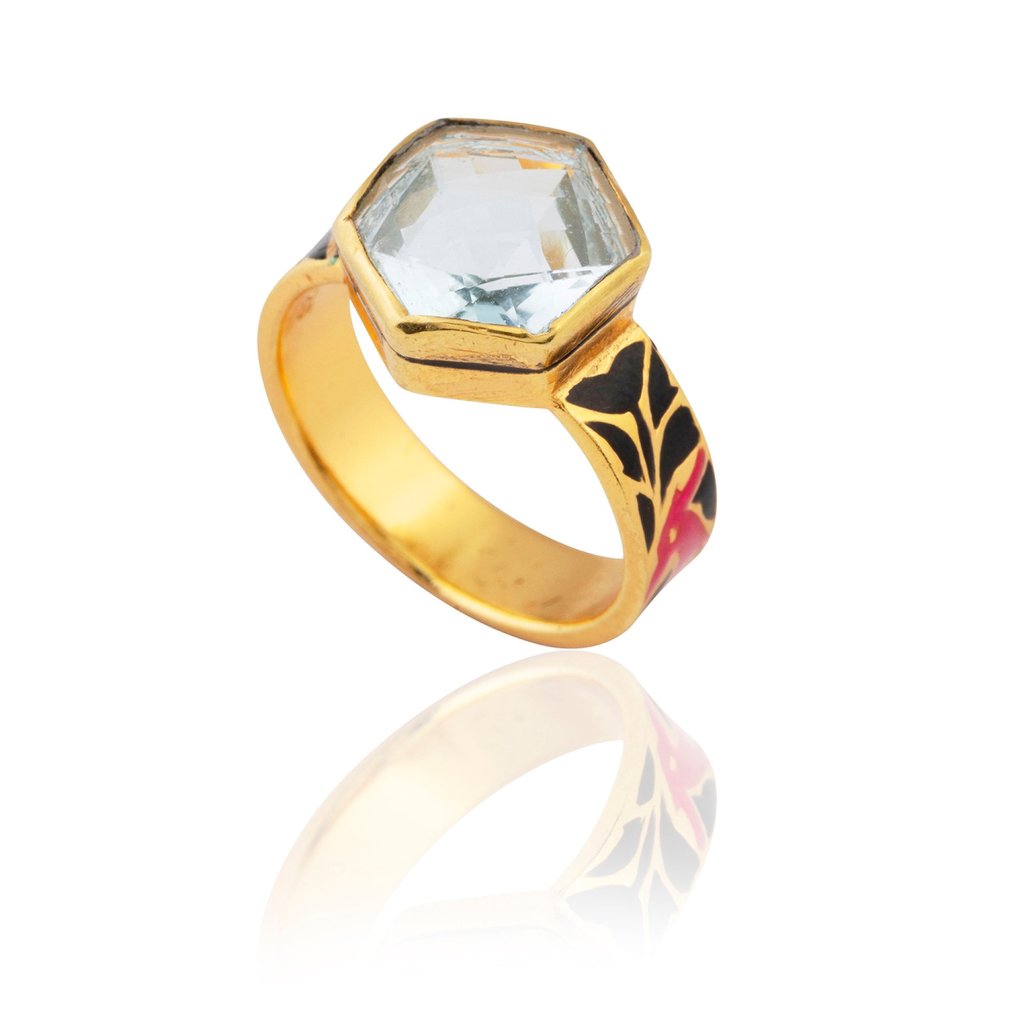
Rajvi Vora, founder of London-based Kastur Jewels, is deeply influenced by heritage jewellery – a key reason she started making jewellery 13 years ago. Her pieces combine the splendour of the past with modern wearability and she has worked with the V&A for seven years to develop exclusive collections for the museum.
“One of the techniques I use [from the Mughal era] is kundan and we set uncut diamonds, called polki,” says Vora of her bestselling designs. Kundan uses very highly refined pure gold, meaning you can set stones just by using pressure to bond them in place. “It’s only really [done] in Rajasthan and [more specifically] Jaipur, and I think it’s still so original – even though it’s a 500-year-old technique.”
Another technique Vora often employs is meenakari, colourful enamel work that dates back to ancient Persia and which flourished under the Safavid dynasty in the 16th century. “The pieces we’ve created have [been] contemporised a bit, but not too much – they still have that old-school feel to them. I’m a firm believer that [traditional] techniques never go out of fashion. They’re timeless.”