Why honeycomb designs are a hit, with Rolex, Tissot and Chopard all making them

Chopard got creative with hexagons of dyed straw, Buccellati used the design in a new Tulle secret watch, and Olivia Burton offers more approachable takes
Honeycomb motifs are quietly emerging as a feature in luxury watchmaking, appearing across a range of recent releases. Whether used for decoration or integrated into the function of a timepiece, the hexagonal pattern has appeared in new launches from Rolex, Tissot and Chopard, each with a distinct take on the theme.
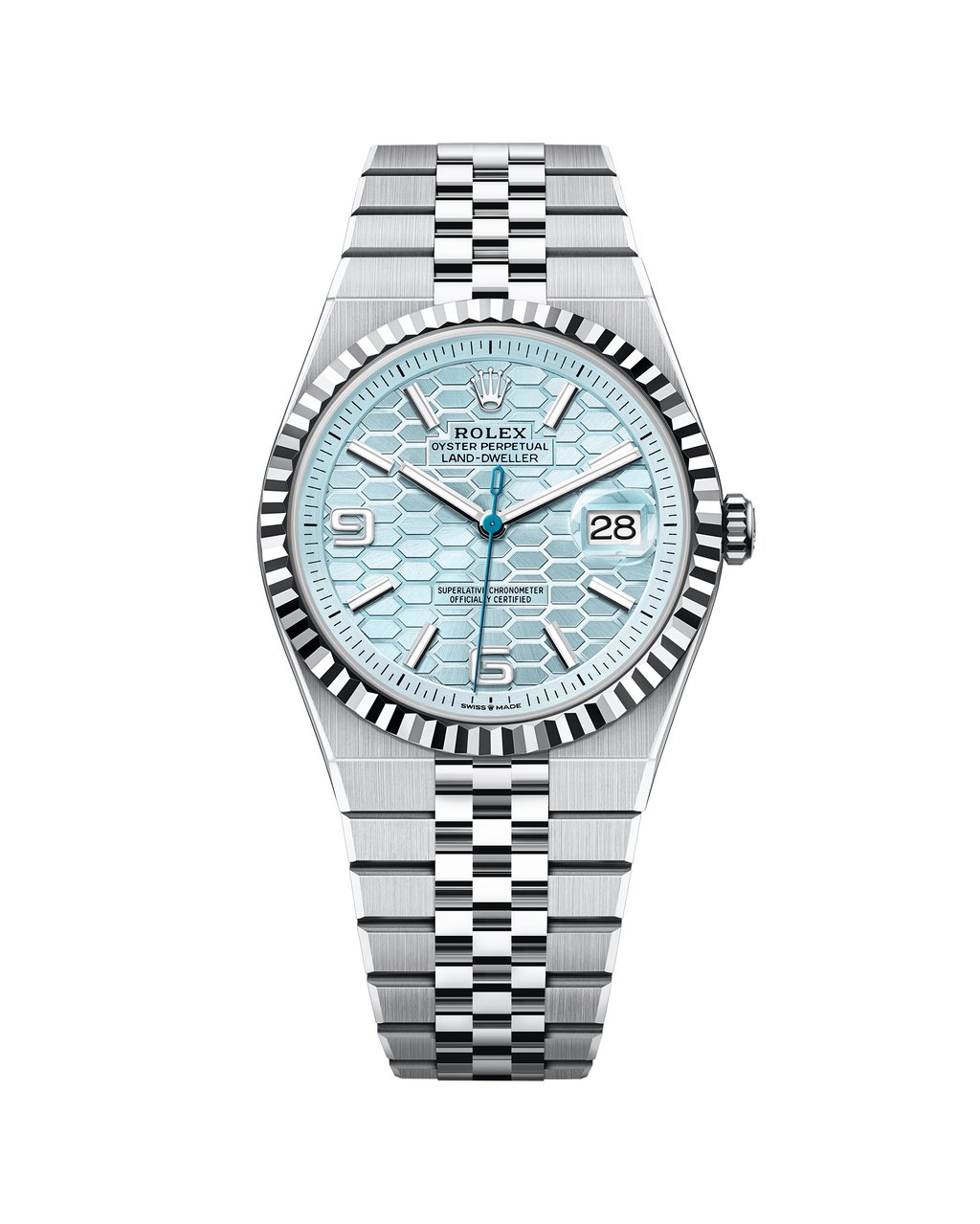
The watch’s other details are just as quietly luxurious. The six and nine numerals are open-worked, referencing earlier Rolex designs such as the Explorer and Air-King, while Chromalight hour markers glow blue in low light. Inside, the new calibre 7135 delivers around 66 hours of power reserve, and includes innovations like the Dynapulse escapement, ceramic balance staff and Syloxi hairspring, all of which significantly boost the calibre’s stability and magnetic resistance.
Tissot, meanwhile, is using the honeycomb pattern for performance. In its new PRC 100 Solar, launched in a 39mm size back in March, with a smaller 34mm version added in June, a honeycomb of photovoltaic cells lie beneath the sapphire crystal. Unlike traditional solar watches, where the cells sit beneath the dial, these tiny solar units are hiding in plain sight, just visible as they absorb light from natural and artificial sources, powering the quartz movement without affecting the dial’s clean aesthetic. A 10-minute charge provides a full day of autonomy, while a full charge delivers up to 14 months of power in complete darkness.
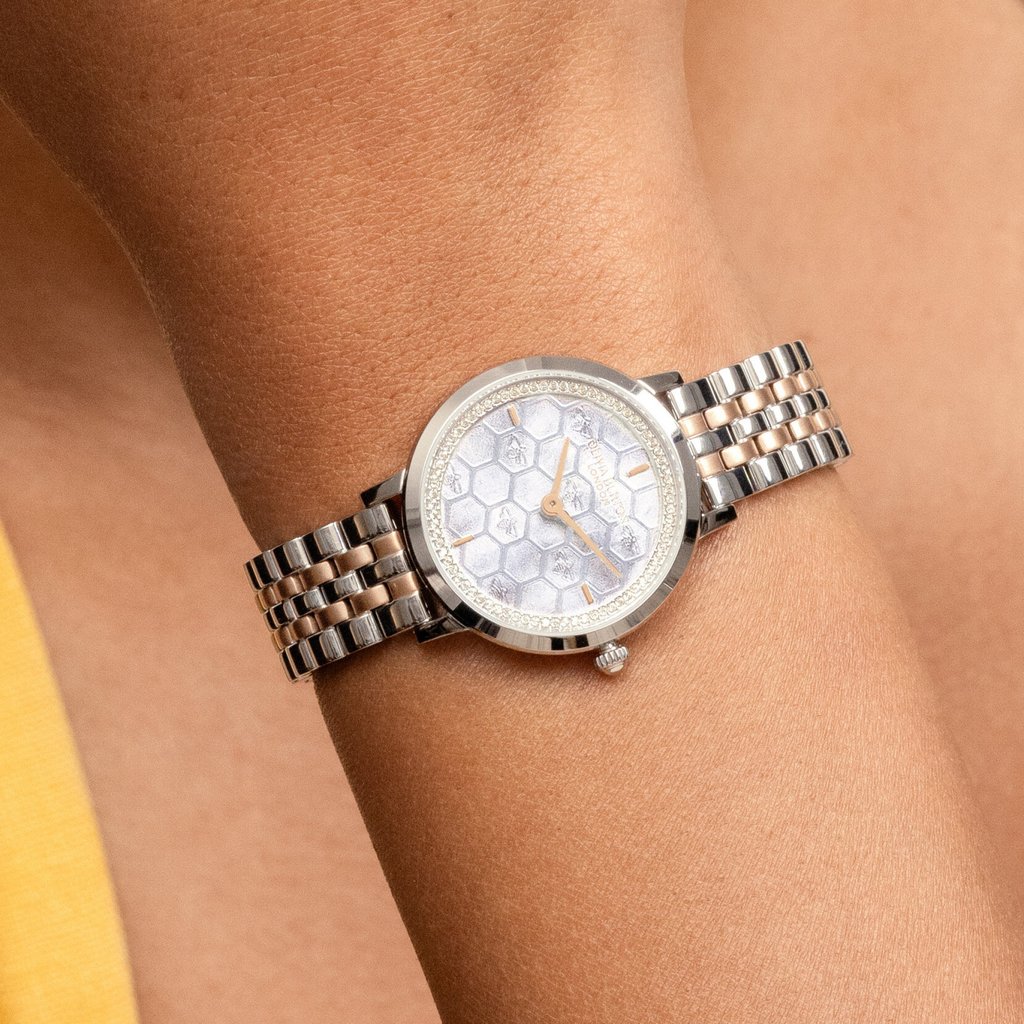
The PRC 100 Solar is the first Tissot timepiece equipped with this Lightmaster Solar technology – and the Swiss watchmaker is the first brand to implement the innovation in an analogue quartz watch. It also features a screw-down crown and comes with a stainless steel bracelet.
Swiss house Chopard takes a more decorative route with its L.U.C Quattro Spirit 25 Straw Marquetry Edition, which also debuted at this year’s Watches and Wonders. The dial is crafted using natural rye straw, which is dyed and arranged to form a honeycomb motif. The marquetry technique involves splitting each strand, flattening it with an agate tool, aligning the grain, drying it under tension, and then hand-applying each piece. The result is a surface with tonal variation and natural sheen, set within a 40mm rose gold case. Under the hood is the calibre L.U.C 98.06-L, a manually wound movement with an eight-day power reserve and jumping hours display. The rarity – with only eight pieces of this watch in existence – and intricacy of the honeycomb dial highlight the extraordinary craft behind Chopard’s L.U.C series.
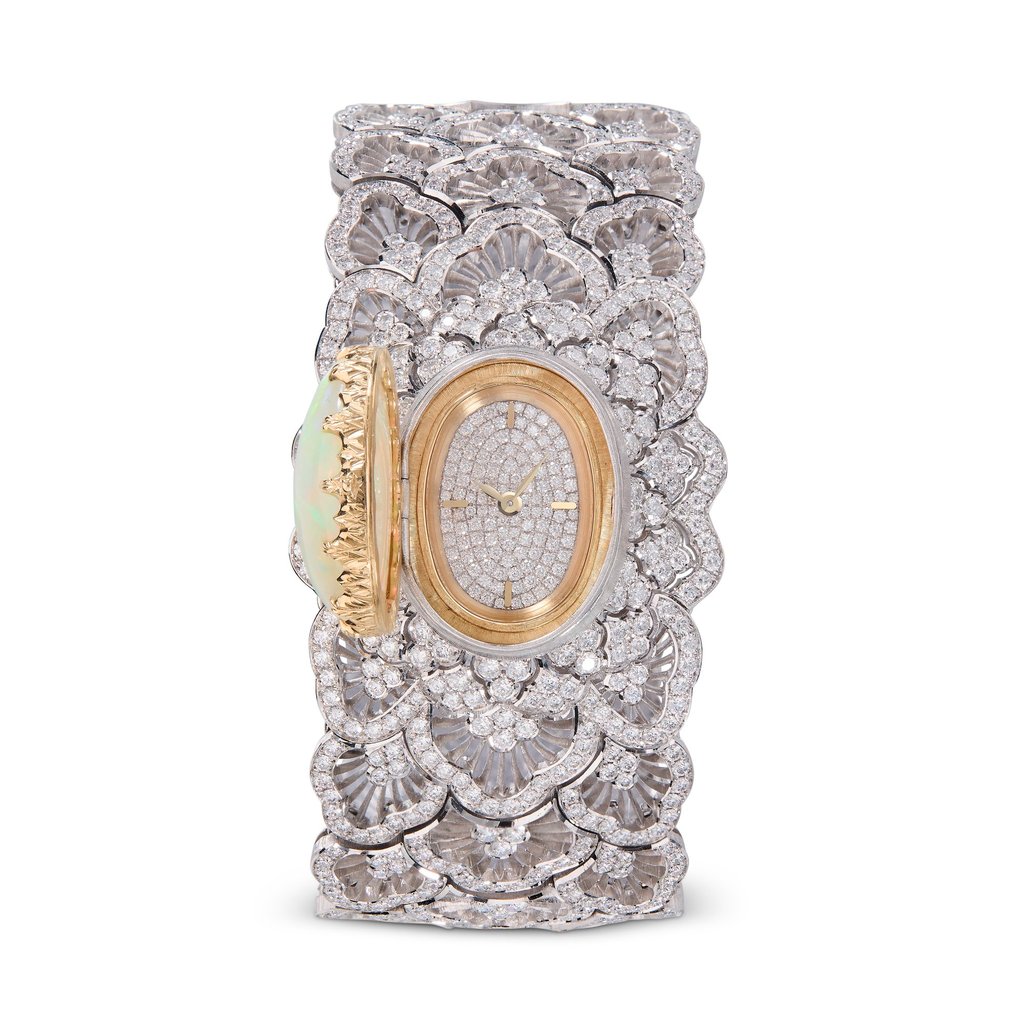
Also from the world of high horology comes Buccellati’s new Tulle collection secret watch, the dial hidden behind a huge opal, which was unveiled during Paris Haute Couture Week in July. It elevates the honeycomb motif using one of the brand’s most recognisable techniques: tulle, an openwork process that involves piercing gold sheets with a hacksaw to create a network of tiny, polygonal holes. Each cell is worked and reworked by hand with a saw at least five times to ensure symmetry and regularity. In this latest design, a radial tulle pattern is used to form a white gold bracelet with pavé diamonds, framing a yellow gold and opal-set case edged with sculpted floral motifs, each petal finished by hand with microscopic precision.