Irregular watch designs, beyond the Cartier Crash: brands from Audemars Piguet to independent names all have their takes

Blackpink’s Jisoo and Timothée Chalamet are fans of the Cartier Crash, while Hamilton’s Ventura has shown up on Elvis Presley’s wrist and in the Men in Black movies
The visual language of watchmaking has long been dominated by symmetry. Circular, square and rectangular cases have defined the landscape for centuries. Yet just as you wouldn’t let style rules dictate your entire wardrobe, there’s no reason to let them dictate the shape of every single watch.
When most designs follow the same template, breaking away from it becomes all the more striking. An increasing number of brands are doing just that by moving away from obvious symmetries to experiment with more or less irregular silhouettes.
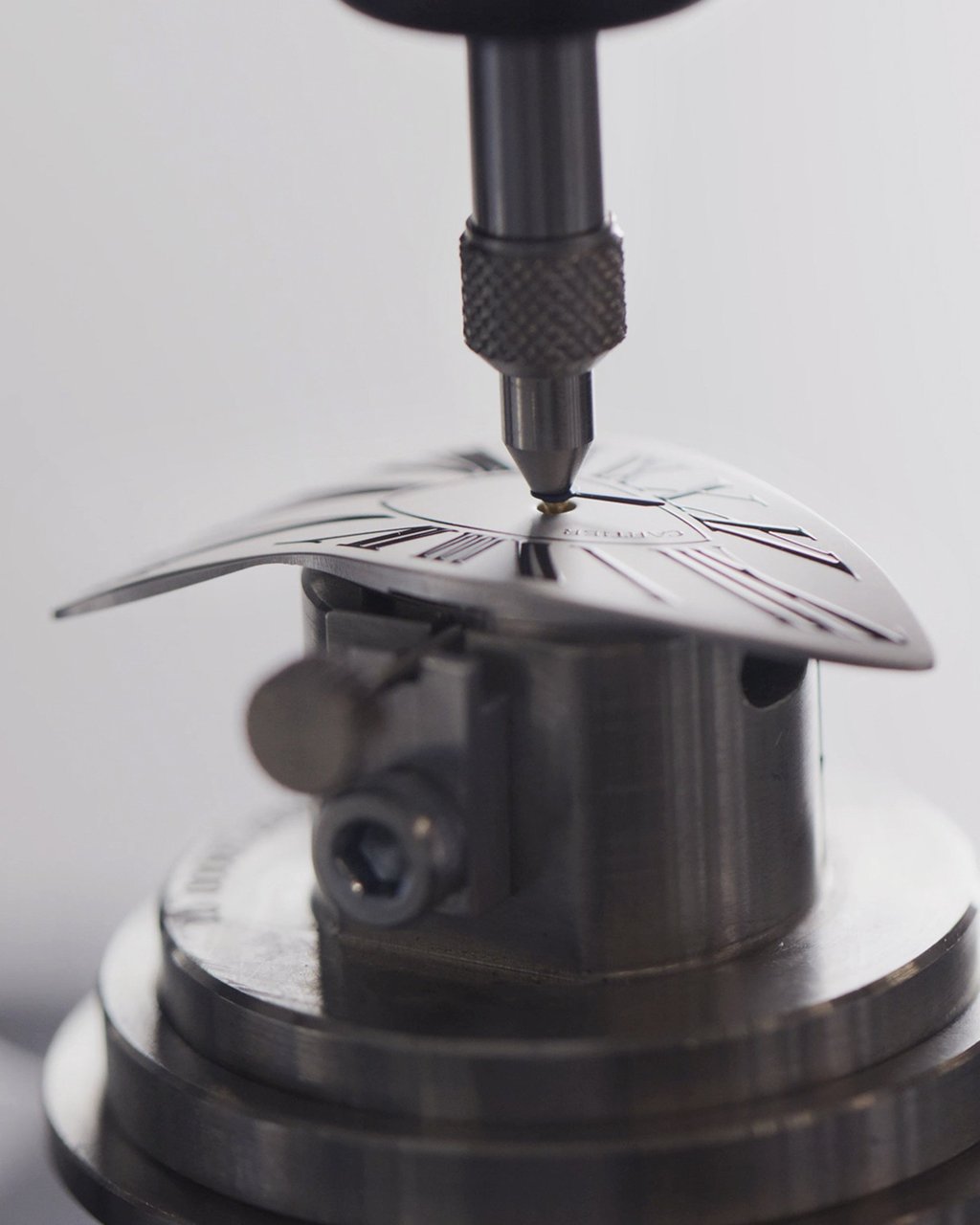
Among the new generation of freer designs, independent watch company Anoma is one of the newest. The UK-based brand approached its first watch, the A1, launched in 2024, as a bold statement of innovation and craftsmanship. Its rounded triangular case takes its cues from a 1950s free-form table by Charlotte Perriand – the French designer who created furniture with Le Corbusier – the softened edges of river stones and the streamlined forms of Romanian sculptor Constantin Brâncuşi.
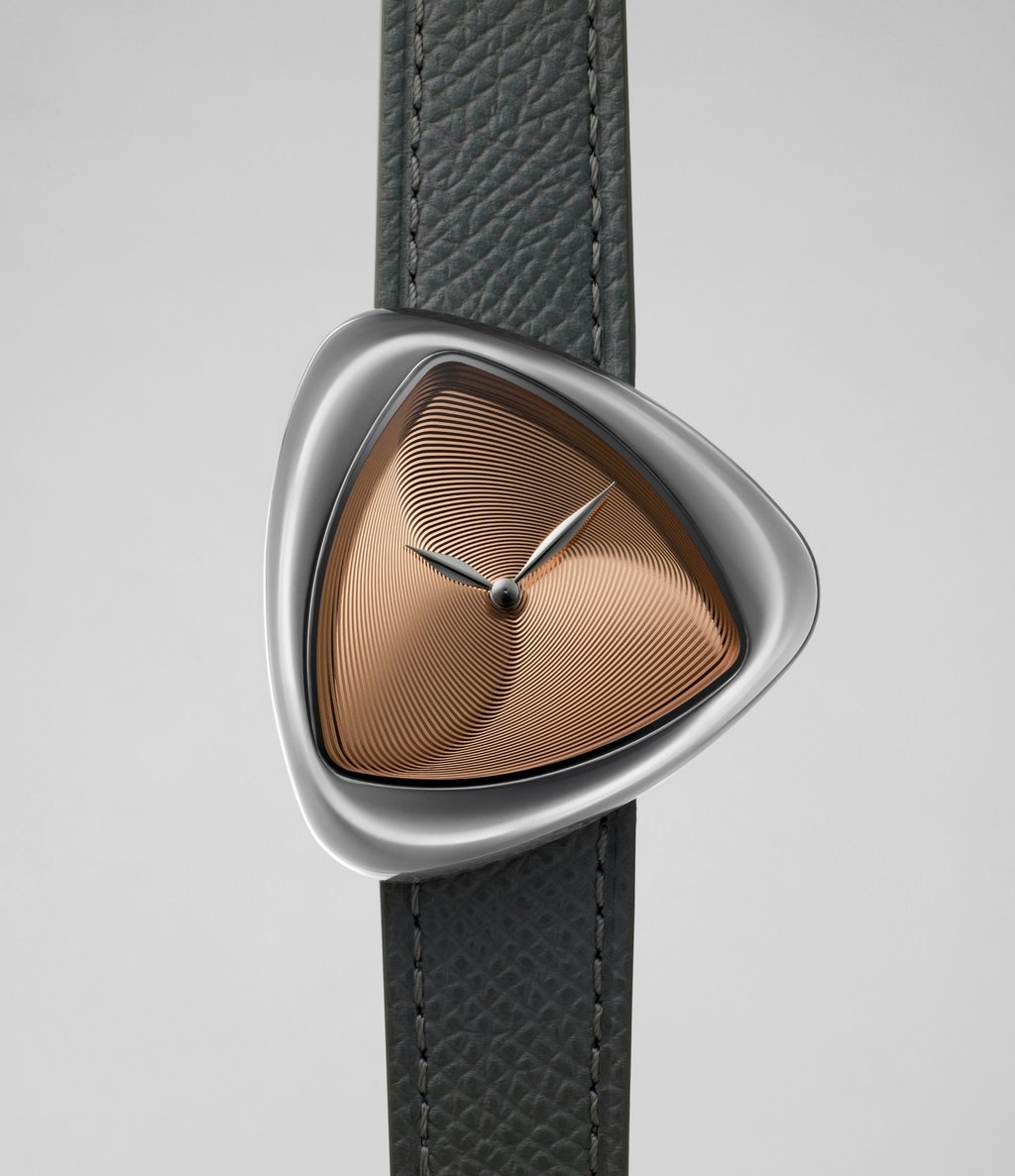
He adds: “Ergonomics are crucial. We spend a long time refining proportions and curvature during the design process, ensuring the watches wear comfortably and naturally despite their sculptural appearance. For example, our A1 case has a soft, flowing profile that hugs the wrist while maintaining visual tension in its geometry.”
The newer A1 Optical builds on this approach with a dial engraved with 50 subtly offset triangles, which are inspired by optical art – an approach that uses geometric patterns to create optical effects like movement or warping.
The first 300 watches – 150 in copper and 150 in silver – are individually numbered and paired with an Adam Fuhrer artwork bearing the same number. “Collectors are often excited to encounter something different, especially when it still respects craft and quality,” notes Violet-Vianello. “The unconventional shape becomes a talking point. It invites curiosity and emotion in a way that traditional forms sometimes don’t. Many collectors have told us that the case design was what first drew them to Anoma.”
![The [Re]Master02 draws on Audemars Piguet’s early 1960s experiments with asymmetry. Photo: Handout](https://img.i-scmp.com/cdn-cgi/image/fit=contain,width=1024,format=auto/sites/default/files/d8/images/canvas/2025/12/01/5e75352f-7dff-460e-8b8e-887d4780b286_bd6e22cb.jpg "The [Re]Master02 draws on Audemars Piguet’s early 1960s experiments with asymmetry. Photo: Handout")
Storied maisons have also explored asymmetry. Swiss watchmaker Audemars Piguet has approached the idea from the opposite direction, revisiting an era when it briefly abandoned symmetry altogether. The [Re]Master02 draws on the brand’s early 1960s experiments with asymmetry. Between 1959 and 1963 it created more than 30 unconventional models, most produced in fewer than 10 examples, including the 1960 Ref. 5159BA that inspired this watch.