Style Edit: Cartier reshapes its most storied watch collections

This year, the house has reinvented the Privé Crash, Santos de Cartier, Baignoire and Myst de Cartier, and has brought back the Roadster
The first of those, the Cartier Privé Crash, is a reinterpretation of one of the maison’s most radical designs, first introduced in 1967 and since 2015 a key part of the Cartier Privé collection. For the 10th edition revisiting of that collection, the Crash is reimagined as a skeletonised watch driven by the manufacture 1967 MC movement. Its 142 components are arranged to echo the watch’s deliberately distorted silhouette, with bridges shaped into Roman numerals, each individually hammered by hand using traditional decorative techniques. The distortion appears heightened, as if the movement itself has been pulled into the design. The result is a watch where structure and aesthetics are inseparable, produced in a strictly limited series of 150 numbered pieces.
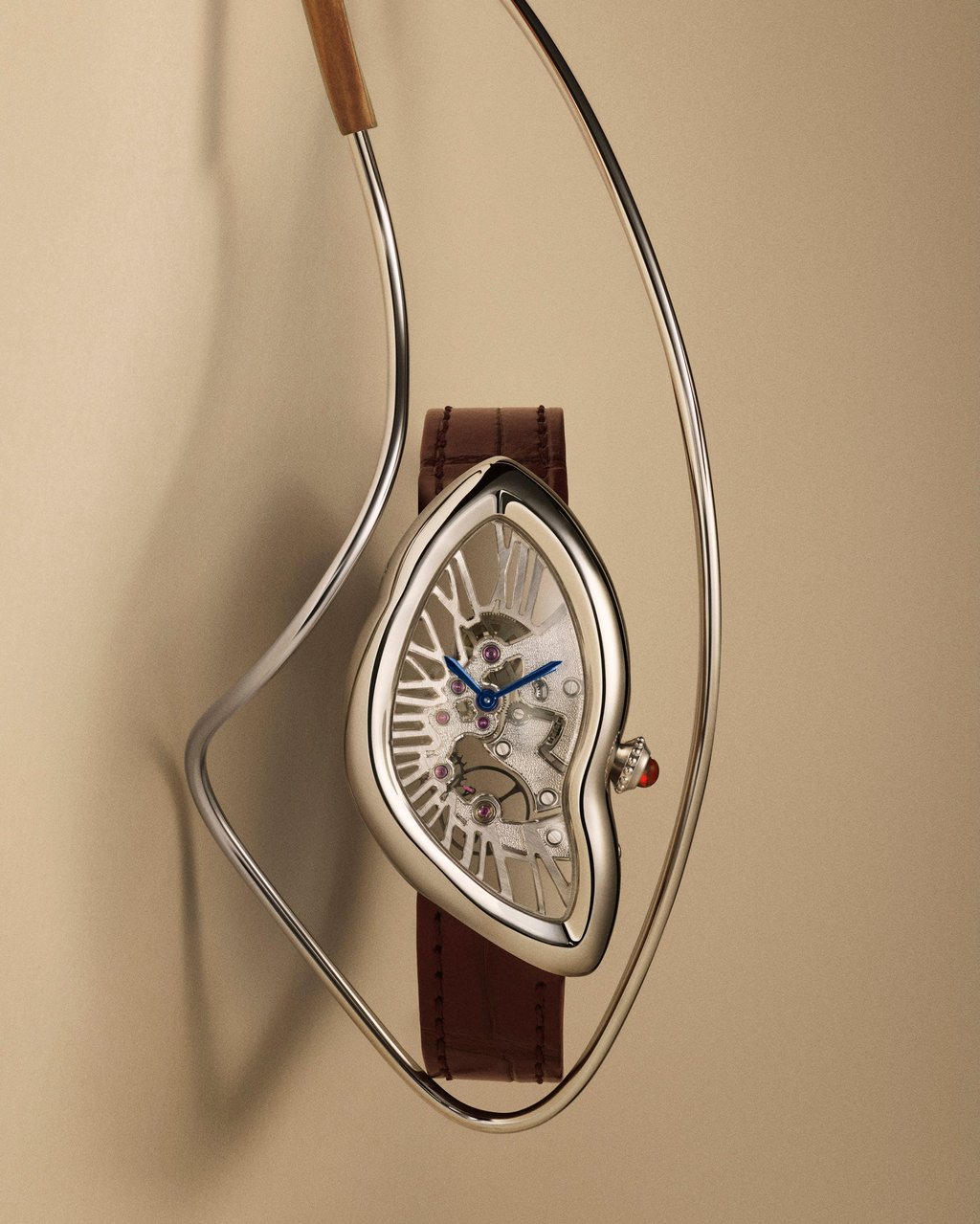
“The first Cartier skeleton watches appeared in the 1920s as pocket watches,” says Pierre Rainero, director of image, style and heritage at Cartier. “A true marvel of elegance and technical sophistication, their design made it possible to render complications visible.
“In 2009, Cartier unveiled the Santos 100 skeleton watch with the patented calibre 9611 MC manufacture movement. This watch is immediately recognisable by its bridges sculpted in the shape of Roman numerals. This approach reflects the spirit of Cartier watchmaking, where technique is at the service of the aesthetic.”

From avant-garde expression to enduring icon, the Santos de Cartier returns with renewed depth. This latest interpretation is defined by a dial crafted from gilded obsidian – a volcanic stone, in this case from Mexico – known for its subtle iridescence caused by microscopic air bubbles trapped during its formation. At just 0.3mm thick, the material demands exceptional precision and delicacy from Cartier’s artisans. The watch is paired with a refined yellow gold bracelet composed of nearly 400 micro-links, echoing the maison’s early 20th century experimentation with supple metal bracelets. The result is a fluid, almost textile-like construction in gold, where technical engineering meets effortless wearability.

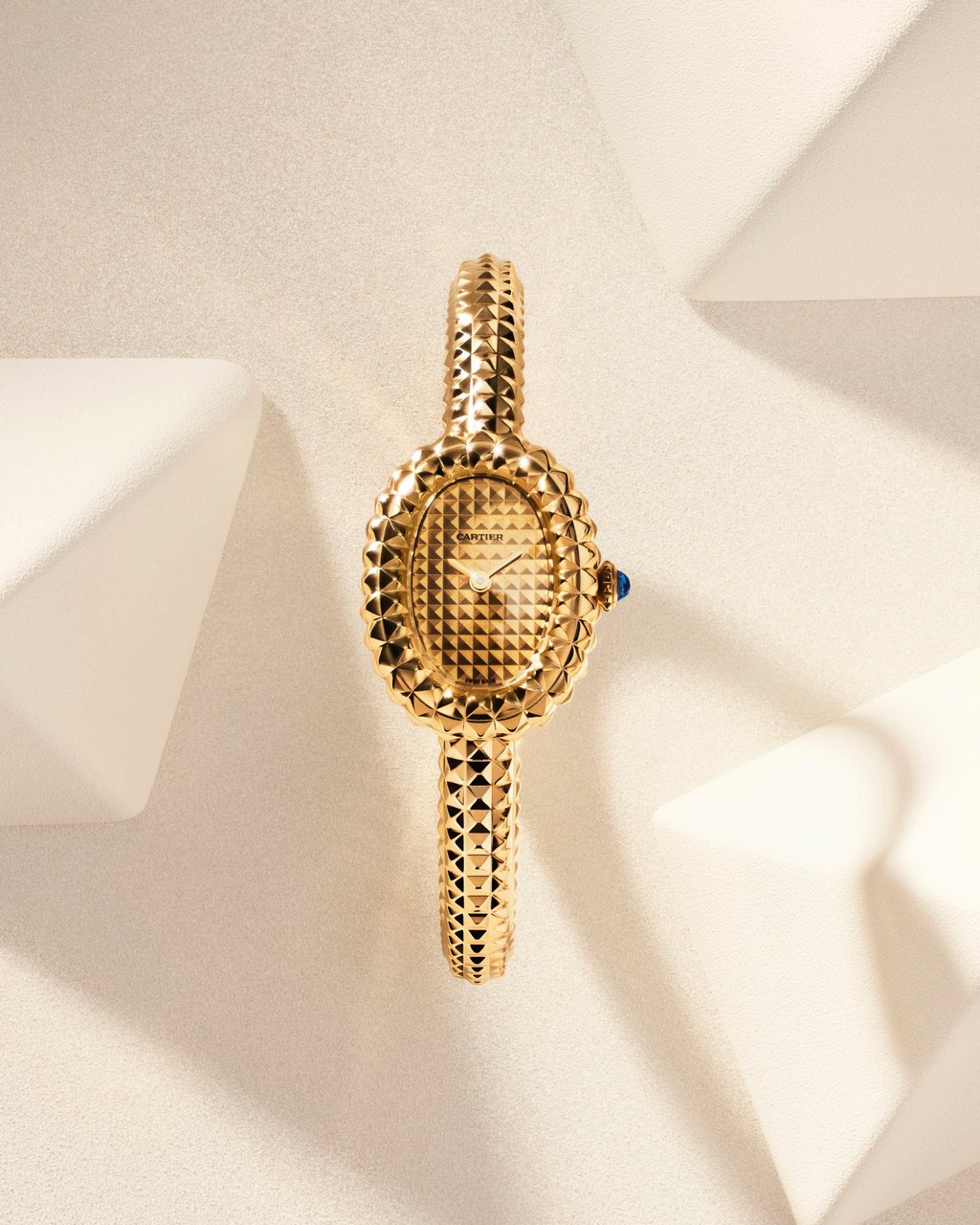
The Baignoire, one of Cartier’s most recognisable silhouettes, is reinterpreted through a more architectural lens. This year, the maison introduces the Clou de Paris motif across the entire design, transforming the watch into a study of rhythm, texture and volume. Crafted in monochrome yellow gold, the pattern flows seamlessly from case to bracelet, creating continuity of surface and structure. Snow-set diamonds are applied across the dial, while inverted diamonds on the case introduce contrast and depth. Every surface is hand-polished, ensuring the watch captures and reflects light with controlled precision rather than excess brilliance.