Prudential NextGen Aces event offers inspiration from leaders in sport and business
Elite athletes Aryna Sabalenka, Andre Agassi and Vivian Kong sat down with Prudential executives to explore their journeys to success
03:56
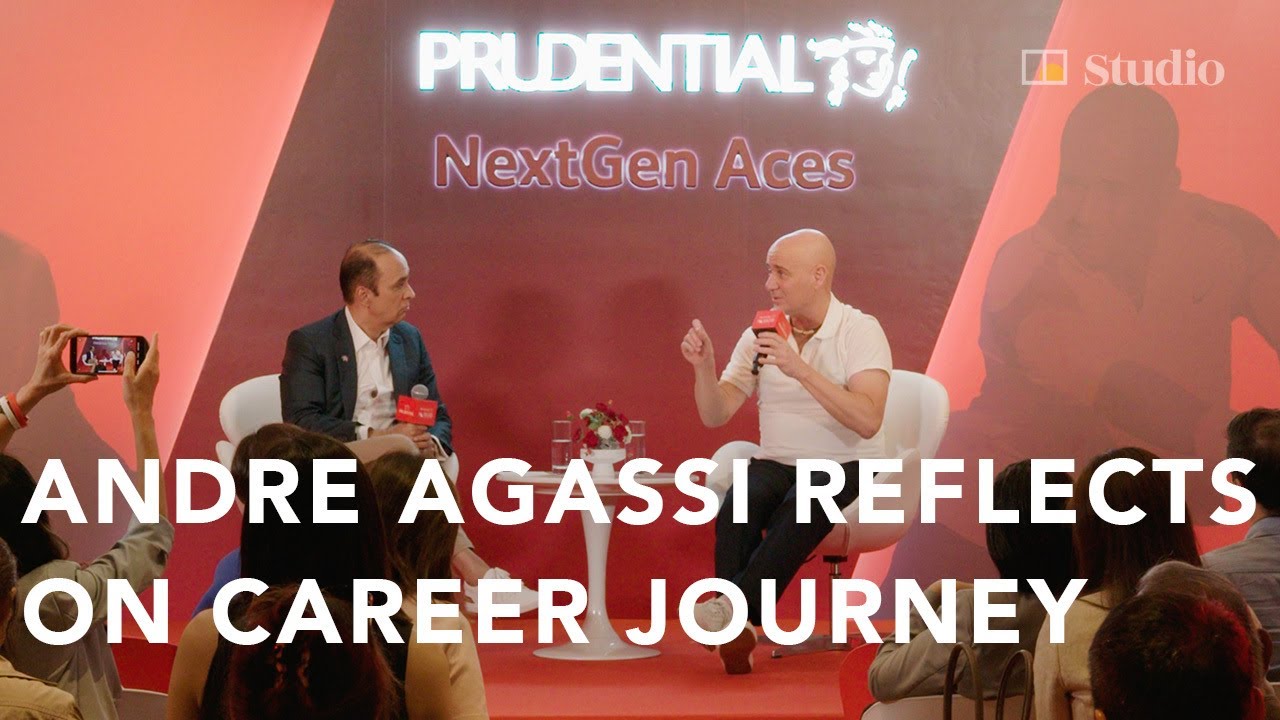
Prudential CEO Anil Wadhwani joins Andre Agassi at Prudential NextGen Aces event
Thousands of tennis fans soaked up the on-court action as the Prudential Hong Kong Tennis Open got under way in late October. But in the lead-up to the tournament, legends of the sport served their own aces off the court during a special event aimed at inspiring and nurturing young talent.
The Prudential NextGen Aces event put a spotlight on the resilience, discipline and mindset required for elite athletes and business executives to reach the top of their respective games. It was presented as a complement to the tennis tournament, which the insurer has been supporting for more than a decade.
The event’s line-up of speakers included Aryna Sabalenka, the current Women’s Tennis Association (WTA) world No 1 player who has won four major tournaments so far in her career, and Andre Agassi, the former world No 1 men’s player who holds eight major tournament titles. They were joined by Vivian Kong, Hong Kong’s Olympic gold medal-winning fencer, and Prudential executives in two discussion sessions that explored the lessons learned on the journey to career success.
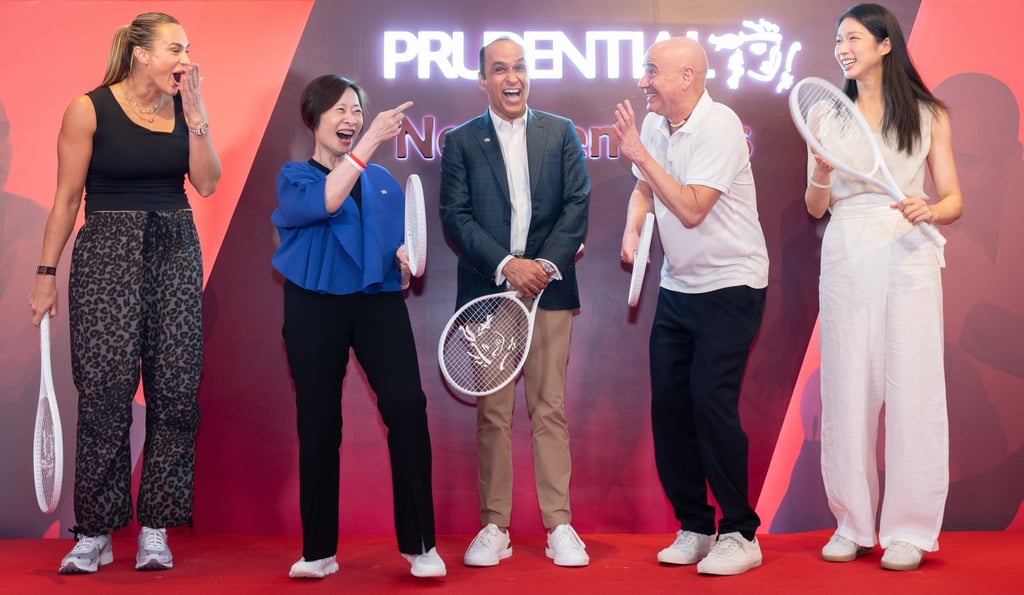
In his opening speech to an audience of more than 200 guests, Prudential Group CEO Anil Wadhwani said Prudential NextGen Aces was part of the company’s wider campaign to support the growth of tennis in Hong Kong and its ongoing outreach to local communities, emphasising that the experiences of the sport and business leaders featured at the event could provide inspiration for young people with aspirations of their own.
Wadhwani hosted a fireside chat with Agassi, which was titled “Passing the Racket: Leadership, Legacy and the Next Generation”. The pair discussed the pressure that comes from being at the top of a field. Agassi, who became a professional tennis player at age 16, shared the highs and lows of his career, which included falling from the world No 1 ranking to No 141 within a two-year period.
He revealed how success at a young age made him have a “hate-love” relationship with tennis. But a time of reflection led Agassi to establish an educational foundation for children in the poorest neighbourhood of his US hometown of Las Vegas, which not only helped give him a purpose, but also a reason to return to the sport.
“Every day, my identity was tied to performance,” Agassi said, adding that he was always trying to prove himself in order to feel more connected. “I thought winning would do this, but it never quite did.”
He continued: “It’s much harder [to come back] the second time, but it teaches you very quickly how to become incredibly present in what it is you’re doing, because your goal can’t be to be No 1 – it is, can I be better than I am today?”
The fireside chat also addressed the parallels between sport and business, as well as the importance of understanding individual strengths and weaknesses, with Agassi saying: “It’s important to be honest and self-aware of both those things, and in order to do that, it requires a level of humility – a level of vulnerability.”

03:36
Prudential’s Angel Ng joins athletes Aryna Sabalenka and Vivian Kong at leadership event
In a panel discussion session titled “The Experience Exchange: How Champions Forge New Ones”, Sabalenka and Kong sat down with Angel Ng, Prudential Group’s regional CEO for Greater China, customer and wealth. The trio talked about the importance of learning from past experiences to cultivate personal growth.
Ng noted that humans have a tendency to always look for the wins as they progress through their careers, and that it was easy to be accountable for good results. “But we are never able to have a moment to humble ourselves and learn from mistakes,” she said, adding that she tries to build such a process within her team. “Allowing failure is a way to build accountability. We have to learn how to bear results and be accountable for bad results.”
Sabalenka, who was fresh off a tournament win at the US Open in September, said the way in which an individual gets back on track after a fall reflects the discipline they bring to their work. “Sometimes there are days where you hate it and you don’t want to go there,” she said, pointing out that she struggled both physically and mentally with her serve early in her career.
“Discipline is going to bring you to the top of the world,” Sabalenka added. “There was a moment when I almost gave up and threw my racquet away, but I stuck to it, and two months later I won my first grand slam.”
Kong, who won gold at the 2024 Paris Olympics, recalled how taking prolonged time away from her sport due to injury helped her find the motivation and commitment to return to fencing even stronger. “I didn’t want to do it because I just wanted to win, I wanted to redefine what it means to win,” she said, explaining that it includes sharing her story of hard work, failure and mindset with schoolchildren in Hong Kong.
“For them, what really matters is winning. But just being there, showing them that you can love sports and encourage them was enough,” Kong added, recalling the moment when she heard a young girl say she was proud of the fencer’s achievements. “It was a big moment for me to keep going and to make her even prouder.”