Inside Central Crossing: the dual-tower development built for the future of work
Opening this year, it will be Central’s first mixed-use project in more than 20 years to combine offices, retail and hospitality

For decades, the best office spaces in Hong Kong’s Central district sold the same promise: proximity to capital, clients and decision-makers. Today, that is just the baseline. The next generation of tenants is weighing if the office experience feels as modern as the businesses operating inside it.
Central Crossing, a mixed-use development scheduled to open later this year at 118 Wellington Street and directly connected to the starting point of Central’s elevated walkway network, is a new address in Central built for that shift. It is a location that has witnessed the transformation of this commercial heart of the city – where old meets new and the can-do spirit never changes.
Jointly developed by Wing Tai and CSI, Central Crossing marks a major milestone in the efforts by the Urban Renewal Authority (URA) to revitalise the Central neighbourhood. The dual-tower development brings together grade A office space, luxury hospitality and lifestyle retail, making it the first mixed-use project in Central to combine all three in more than 20 years, after the International Finance Centre.
Alex Barnes, co-CEO of Greater China and managing director of JLL Hong Kong, Taiwan and Macau, says the timing could not be better, because top-tier options in Central are limited and projects that combine office space with both retail and hospitality are rare.
“Central Crossing is arriving at a moment when companies are actively looking for their next address in Central,” he says. “Comparable top-tier buildings have incredibly low vacancy and demand for unique space is high.”
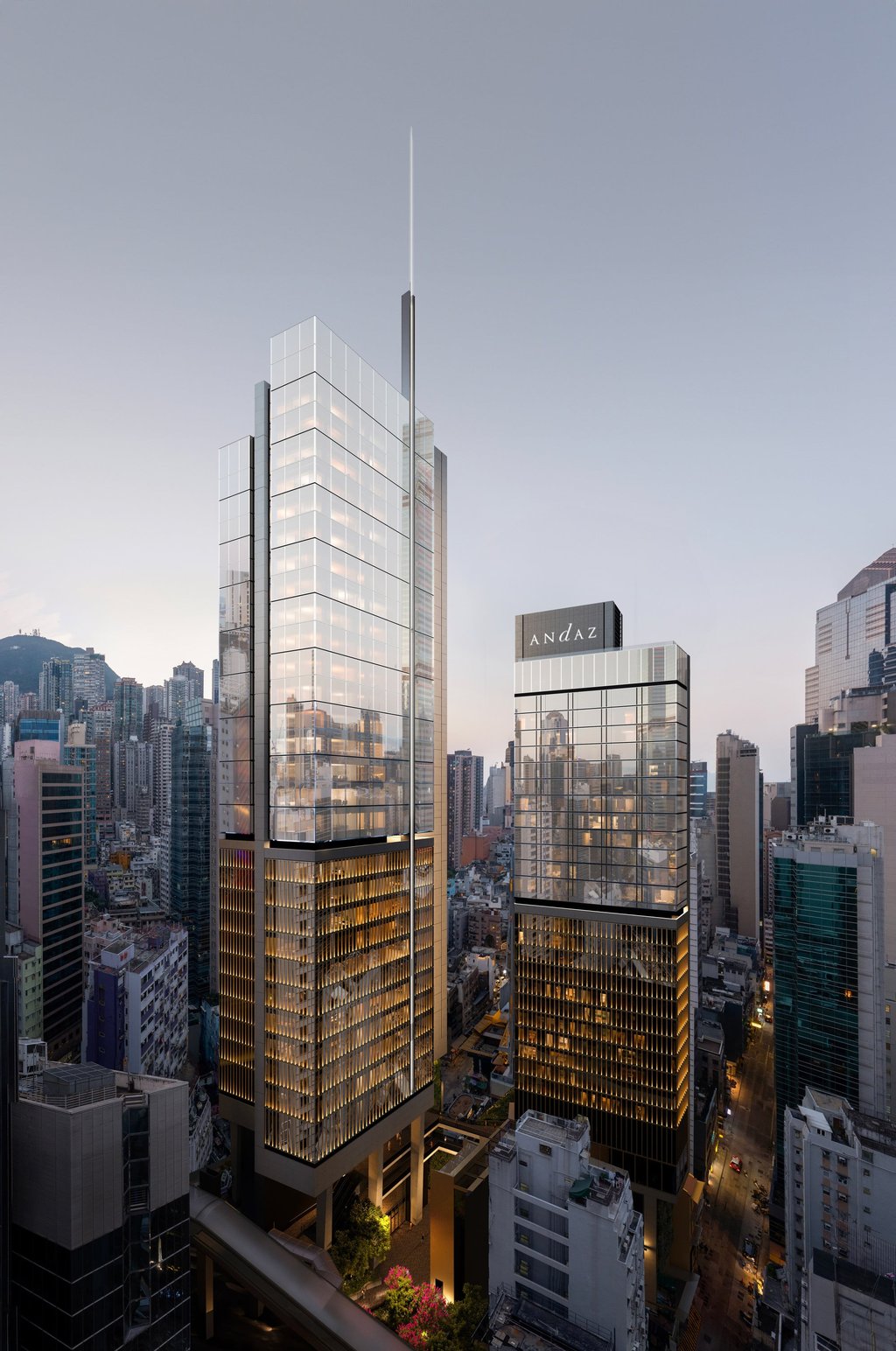
A Central address designed for the future of work
In the market for premium office space, the question is no longer just about being in the centre of finance. It is about what the environment enables a business to achieve once it is there.
Trophy buildings, such as Central Crossing, are defined by JLL as the top tier of office real estate, checking off a list of premium features including a prime address, advanced technology and sustainability infrastructure, high-quality architecture and facilities, strong connectivity and large floor plates.
Central Crossing has been designed to meet that expectation. The 28-storey office tower will feature column-free floor plates of approximately 10,600 square feet and ceiling heights of three metres.
“The design went through years of iteration to refine the floor plate for maximum visibility and flexibility,” says Edward Noble, senior director of office leasing advisory at JLL. “It reflects the modern function of the office. Teams shift between focused work and collaboration frequently throughout the same day.”
Central Crossing is designed by Foster + Partners, known in Hong Kong for landmark projects such as the HSBC headquarters building and Hong Kong International Airport. The development is helmed by Michael Jones – project architect for the Stirling Prize-winning Bloomberg European headquarters in London – working with the Hong Kong team.
Split over two towers, Central Crossing’s gross floor area is approximately 433,000 square feet. Above, an illuminated spire will project a beam of light into the night sky, dramatically marking the project’s place in Hong Kong’s iconic skyline.
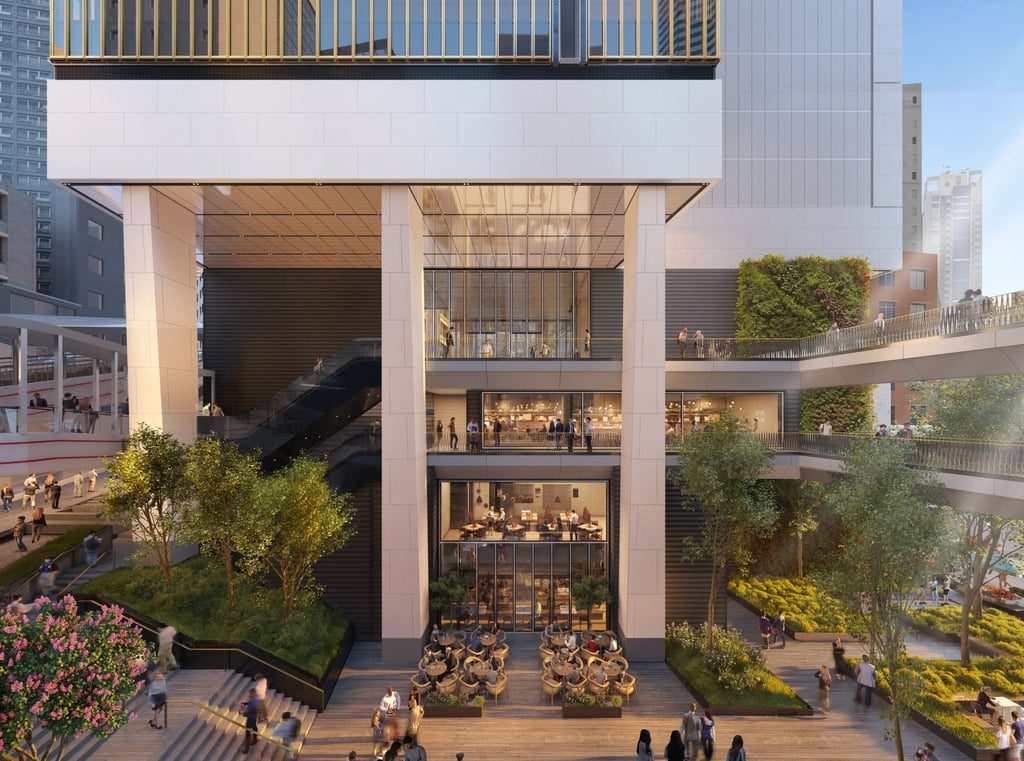
At street level, the development includes approximately 15,000 square feet of publicly accessible open space connected to Central’s elevated pedestrian network. Vertical greenery and a cascading 20-metre waterfall offer a breath of fresh air in the densely built central business district.
Noble says tenants now treat many of the attributes described above as non-negotiables. “They want to be in a new, modern building with sustainability and well-being credentials,” he says. “Across Hong Kong, more than 40 per cent of the building stock is over 30 years old. Central Crossing is significantly raising the bar and meeting growing occupier demands for the highest specification standards in brand-new assets.”
Against a backdrop of rising ESG expectations, Central Crossing is targeting triple platinum sustainability certifications across the LEED, BEAM Plus and WELL platforms, and has already secured provisional status across these benchmarks.
For companies making long-term real estate decisions, these details matter, especially when workplace strategy is tied to worker and client experience.
The arrival of Andaz
The second tower will house Hong Kong’s first Andaz-branded hotel, scheduled to open in 2027. In addition to 125 guest rooms and suites, the hotel will feature curated dining experiences, with concepts expected to be announced ahead of opening.
For Central Crossing’s tenants, the hotel component gives a built-in option for hosting visiting clients. The address is designed to work from morning meetings to after-hours engagements, and everything in between.
Below the office floors, Central Crossing will also introduce the world’s first Andaz Village, a bespoke retail hub built around dining, well-being and shopping, and designed as a lifestyle destination for the wider community.
Connected to, and beyond, Central
Central’s appeal has historically been its connectivity. “People talk about 15-minute cities. Central is the three-minute district,” says Noble. “And what really sets it apart is not only being the epicentre of Hong Kong, but also of the Greater Bay Area and Asia-Pacific.”
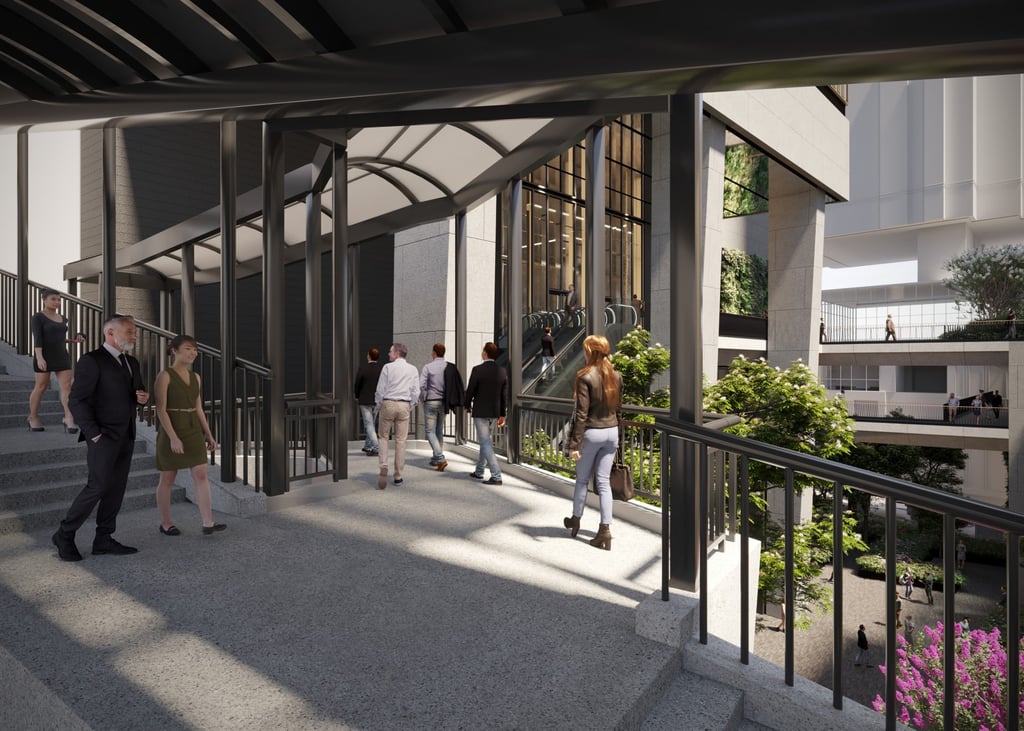
As its name suggests, Central Crossing sits at an intersection. Located near the start of the Central–Mid-Levels escalator – one of Hong Kong’s most iconic infrastructure projects that has played a key role in the district’s transformation story – the development links street level and the elevated walkways through multilevel access points, offering an all-weather route through one of the city’s busiest pedestrian corridors.
It means being within easy walking distance of financial and business landmarks, and the bars and restaurants of SoHo and the Mid-Levels residential clusters. It is also close to Central MTR station and the Airport Express terminal, supporting seamless arrivals for meetings, events and client hosting.
Respecting the past, inspiring the future
Situated between Tai Kwun, PMQ and Central Market – three famously repurposed historic buildings that have become cultural institutions linking the past with the present – Central Crossing marks the next chapter in the district’s preservation and revitalisation. This part of the city still retains cherished elements of “old Hong Kong”, and Central Crossing has purposefully reinstated the historic grid pattern into its design, much of which had been lost over time as the neighbourhood evolved.
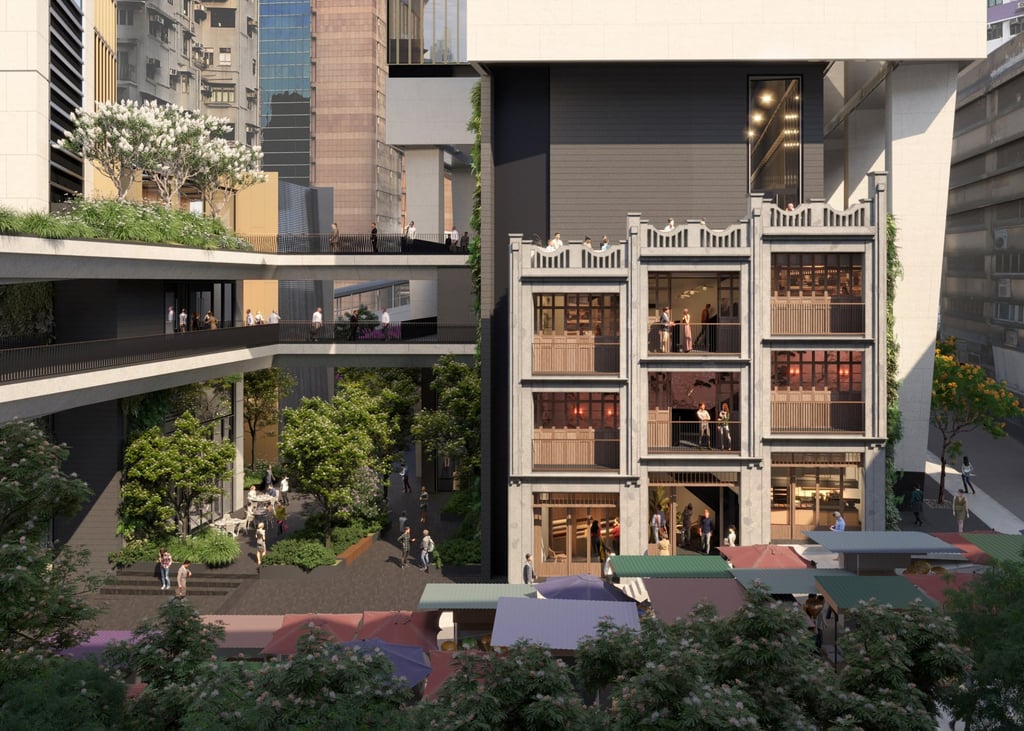
Two heritage structures preserved by the URA have been incorporated into the development. Wing Woo Grocery at 120 Wellington Street was built around 1880 and is a grade one historic building, while the pre-war shophouses at 26ABC Graham Street are grade three historic buildings known for their stepped facades.
Both are set to be restored and take on new life as part of the wider development, serving as a reminder that in Central, progress rarely comes on a blank slate: the most desirable new addresses are often those that honour Hong Kong’s resilience and the stories of the surrounding streets.