‘Asean’s gateway’ Singapore offers foreign tech start-ups unparalleled growth potential
Support of government agency IMDA ensures city state’s strategic advantages can help innovative firms succeed across region and beyond

Singapore, with its dynamic digital economy and supportive business environment, has become a magnet for foreign technology start-ups and also serves as a strategic gateway to the fast-expanding markets of Southeast Asia.
The transformation of the city state and other countries among the 10-member Association of Southeast Asian Nations (Asean) bloc – which includes Indonesia, Malaysia, the Philippines, Thailand and Vietnam – was highlighted in the Global Innovation Index 2024, published by the World Intellectual Property Organization.
The latest edition of the index, which ranks the creativity of 133 of the world’s economies and the top 100 science and technology clusters, reveals the rapid progress of various Asean member nations over the past decade in advancing their innovation ecosystems.
It also makes special mention of Asean’s close regional integration and, importantly, vital cooperation in the areas of science, technology, intellectual property, and facilitating the free flow of information and investment capital.
Moreover, key metrics show that Asean’s combined investment in research and development (R&D) reached US$54.9 billion in 2023, which is more than five times the US$10.6 billion recorded for 2002. This has helped to make the bloc a global leader in hi-tech exports – an area of trade which in Asean rose in value from US$303 billion in 2013 to US$598 billion in 2022.
Many overseas tech companies realise that the bloc’s many burgeoning strengths make it an ideal location for regional manufacturing centres, new markets, research partners, or simply a good base to establish a start-up.
They also recognise that Southeast Asia’s combined population of more than 670 million, the spending power of a thriving middle class, and the increasing adoption of online platforms and e-commerce websites have been changing macroeconomic fundamentals – to create a period of near-unprecedented opportunity for businesses ready to take the initiative.
Singapore, in particular, ranks fourth globally overall in the report, based on a number of attributes of innovation, including the quality of its institutions, infrastructure, market sophistication, and knowledge and technology output.
It is also top-rated globally in 14 out of 78 indicators, such as regulatory quality, policy stability for doing business, venture capital received and hi-tech manufacturing.
Strategic approach helps tech start-ups develop
Singapore, as one of the world’s most digitally advanced countries, sits at the heart of everything that is happening. Long-standing advantages, such as its strategic location, stable government, world-class infrastructure, favourable tax policies and skilled workforce, have attracted many forward-thinking entrepreneurs to set up their regional offices in the city state.
Its proactive approach to digitalisation has created an ecosystem that is exemplified by advanced data centres, early implementation of artificial intelligence (AI) and widespread adoption of 5G technology. Its connectivity, entrepreneurial focus and expertise are inspiring regional neighbours to establish smart tech-led industries with the potential to drive new levels of prosperity for all.
This has increased the pace of developments in sectors ranging from financial technology and the Internet of Things – interconnected computing devices embedded in everyday objects which can share data online – to smart city solutions that address urban challenges such as traffic management, energy efficiency and public safety. It has also enabled an environment where tech start-ups can test prototype products and services before scaling when the time is right.
The support and practical guidance offered by various Singapore government agencies has been crucial in creating and sustaining this impetus. In particular, the Infocomm Media Development Authority (IMDA), which is driving its digital transformation, has taken the lead in helping foreign tech start-ups get established in Singapore and later leverage the country’s reputation and credibility to further expand into the wider Asean region.
The IMDA Accreditation programme, established in 2014, along with its complementary Tech Acceleration Lab (TAL), looks to ensure businesses, the workforce and the public can thrive within a holistic digital ecosystem.
On one level, this involves helping companies to complete proof-of-concept (POC) protocols and fast-track procurement processes. On another, it means working with partners in industry and venture capital firms to offer suggestions on securing funds, identifying potential clients and building in-demand skill sets to be globally competitive in the digital age.
To obtain the accreditation, companies must be evaluated on their technical, financial and operational viability, and their readiness to compete in Singapore and the region. The organisation screens about 1,500 to 2,000 companies each year, but brings on board only 30 to 40 of them.
“We have within our programme a growing number of unicorns, ‘soonicorns’ and tech leaders recognised by top industry analysts,” Edwin Low, director for enterprise and ecosystem development at IMDA, says.
“To date, the programme has supported over 200 frontier tech companies with revenue traction steadily increasing year on year and consistently outperforming industry benchmarks. By enhancing business traction, driving adoption and catalysing investments, the programme has significantly contributed to the digital sophistication of Singapore’s tech industry.”
Since the programme began, accredited companies have attracted over S$1.2 billion (US$920 million) in new growth capital, and there have been 26 successful exits through mergers, acquisitions and initial public offerings.
Accreditation allows companies to establish their credentials and position themselves as qualified contenders able to deliver for government contracts and pursue deals with large enterprise clients.
Services provided by TAL meet the increasing demand for speedy trials and POC assessments in a secure environment. Notable successes include Confluent, which teamed up with TAL in 2023 to accelerate testing and deployment of its data streaming platform. This ensures real-time data can flow seamlessly between organisations’ systems and applications. The platform has been deployed by several Singapore government agencies to support real-time data management and uncover notable insights from their data as they transition to the cloud.
IMDA also plays an active role in attracting foreign start-ups to Singapore. It has long been collaborating with the Economic Development Board to scout and engage best-in-class start-ups based overseas with a view to attracting them to the city state to set up an office, which in turn will strengthen and diversify its tech ecosystem.
Future AI-powered tech landscape
Over the next five to 10 years, Singapore is determined to continue to solidify its position as a leader in AI-driven digital transformation. The country’s 2024 budget outlined its ambition to inject an investment of more than S$11 billion into developing key sectors such as R&D, clean energy and AI.
The government will allocate an additional S$1 billion over the next five years to enhance the country’s AI infrastructure by expanding the talent pool and promoting the adoption of the technology nationwide.
In 2023, the country launched AI Verify, an AI governance testing framework and software toolkit co-developed by IMDA as a neutral platform to foster best practices and open collaboration.
Another partnership advancing AI research and engineering to develop large language models is the SEA-LION (Southeast Asian Languages in One Network) – launched initially in November 2023, with Version 3 introduced from November and December 2024. Its aim is to provide a faster speech-text transcription and translation function and incorporate AI into the workflows of cost-sensitive companies.
Such efforts are not only reinforcing Singapore as a hub for AI-powered solutions, cybersecurity and next-generation connectivity, but also creating new channels for investment and shaping the future of the digital economy.
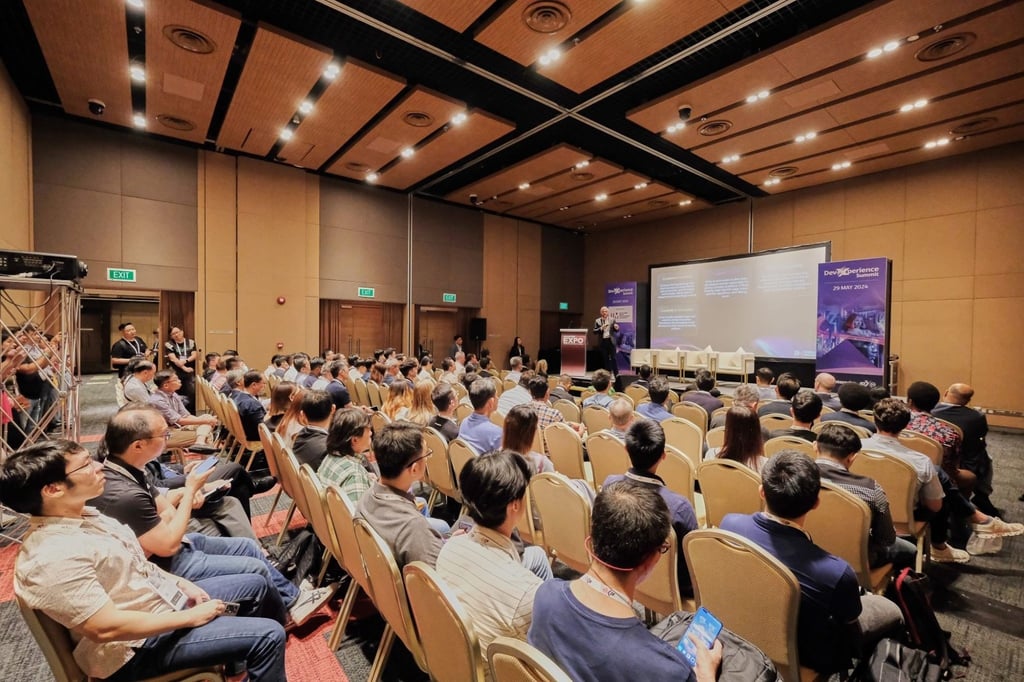
Meanwhile, IMDA will remain an important driving force for the country’s digital push. Besides helping tech start-ups with its accreditation programme, it will also work with relevant stakeholders to strengthen the country’s AI governance while continuing to drive AI and deep-tech investments, and help build a pipeline of digital talent with the relevant skills to help meet the evolving needs of the market.
“By strengthening partnerships and expanding growth initiatives, IMDA aims to attract more best-in-class foreign tech start-ups,” Low says. “With over 4,000 start-ups and half of Southeast Asia’s unicorns already based in the country, Singapore will continue to drive innovation by attracting top global talent and investment, and remain a leading global innovation hub.”