Hong Kong’s professional services help firms expand into belt and road markets
City’s Belt and Road Cross-professional Forum highlights its strategic advantages and encourages greater regional business collaboration
Hong Kong has long been recognised as a global leader in finance, legal, logistics and other professional services sectors. Favourable conditions, such as its strategic geographical location and trade-friendly policies, have attracted many international companies to establish regional offices in the city to facilitate trade in mainland China and other global markets.
These advantages also help Hong Kong foster collaboration between mainland China and countries that are part of the Belt and Road Initiative – a development strategy created by China to encourage multilateral collaboration in fields such as trade, infrastructure, innovation, digitalisation, green development and healthcare.
Additionally, they position the city as a gateway for Chinese enterprises seeking to expand internationally, and for companies in belt and road countries that are looking to enter the mainland Chinese market.
Hong Kong is now home to the regional headquarters of about 10,000 mainland Chinese and international enterprises. Between 2013 and 2022, the city’s direct investment into belt and road countries tripled to US$120 billion, while its trade in merchandise with these nations rose by about 60 per cent during the same period.
The Belt and Road Cross-professional Forum was held in Hong Kong in February to promote multilateral cooperation and highlight the city’s unique role as a strategic connector for the initiative. More than 250 guests from Hong Kong, mainland China and belt and road countries attended the event.
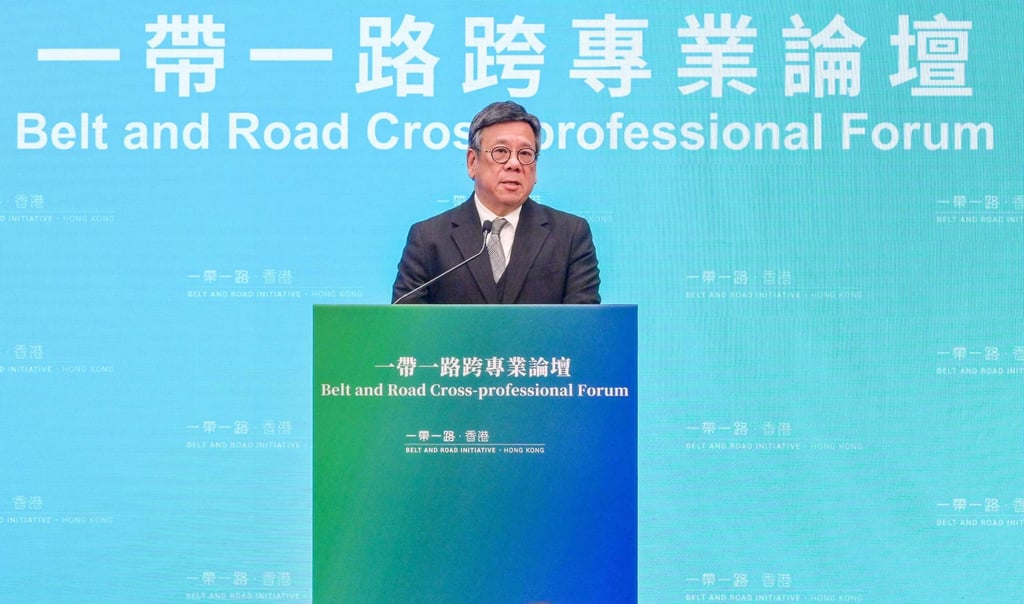
The forum was organised by the Belt and Road Office, which promotes the city’s full participation in the initiative. The office is part of the Hong Kong Special Administrative Region government’s Commerce and Economic Development Bureau.
About 30 entrepreneurs and business leaders took part in talks to share their experiences and discuss their latest projects and future opportunities.
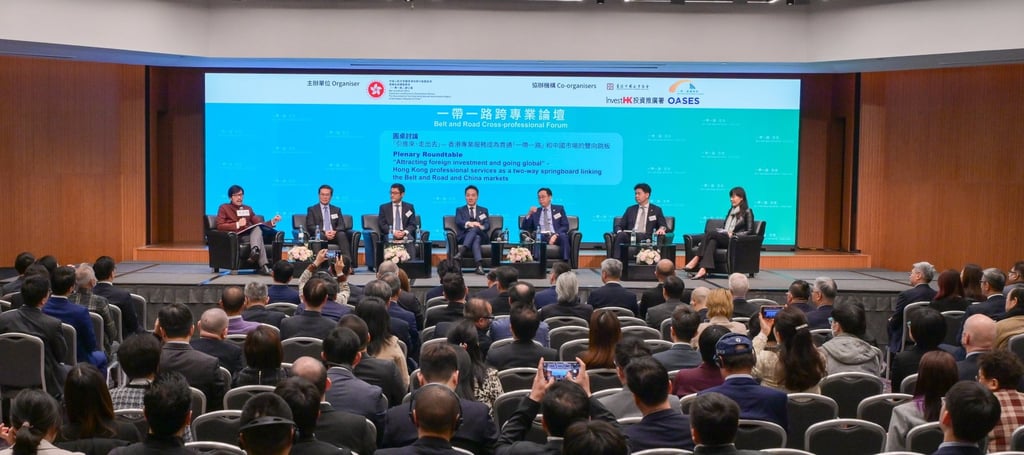
The forum underscored how Hong Kong can help these companies to achieve their expansion targets, with plenary round-table discussions explaining how its professional services enable the city to serve as a two-way springboard for companies in mainland China and belt and road countries.
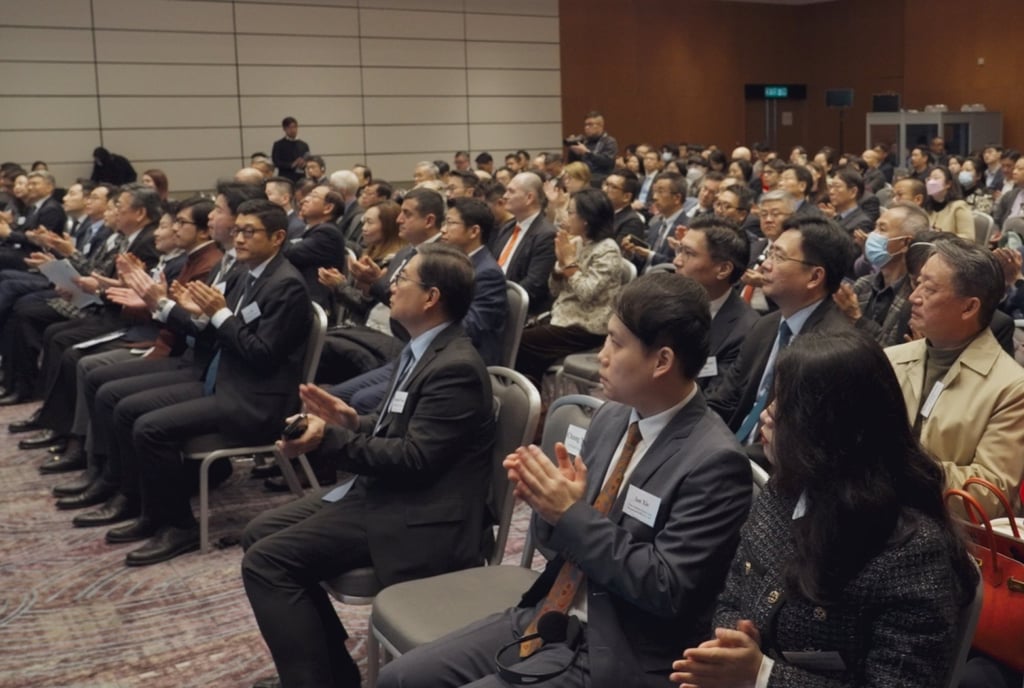
The first discussion saw six speakers from the fields of healthcare, commerce, insurance, legal services, engineering and accounting explain how they leveraged Hong Kong’s advantages to shape their market strategies.
Eight business-sector panellists took part in the second discussion, which examined successful global supply chain management and construction projects. They shared examples of how their products and services have improved the lives of people in emerging belt and road countries, and how Hong Kong has propelled their businesses forward.
Attendees also learned more about potential business opportunities and future developments in the fields of legal and financial services, transport and construction, as well as green development and innovation.
Dr Kenneth Tsang, regional CEO of IHH Healthcare North Asia, who was a speaker during the first plenary round-table discussion, said the forum and other similar events were good opportunities for attendees to connect and explore ways to collaborate on projects in mainland China and other belt and road countries. He also described Hong Kong as an ideal platform for facilitating such discussions.
IHH Healthcare, a global private healthcare services provider, operates more than 80 hospitals in 10 countries, including in China, Malaysia, Singapore, India, Turkey, India and the Netherlands.
“IHH Healthcare’s North Asia head office is located in Hong Kong primarily because of the high quality of the city’s medical professionals,” Tsang said. “Of course, its favourable policies and legal system are also crucial for an international company like ours.”
Earlier this year, Gleneagles Hospital Hong Kong, one of the city’s IHH Healthcare medical facilities, and Varian Medical Systems, the Siemens-owned producer of radiation oncology treatment devices, formalised plans to set up facilities in Hong Kong to provide clinical training programmes to radiation therapy professionals across the region.
Tsang stressed that this initiative exemplifies how Hong Kong leverages its high healthcare standards to enhance the capabilities of other medical practitioners in emerging belt and road markets.
Another speaker, Winnie Wong, CEO and executive director of Hong Kong-based Asia Insurance and Avo Insurance, highlighted that the city’s role as a regional insurance hub and global risk management centre would continue to provide her company and the broader insurance industry with significant business opportunities.
Beyond Hong Kong, Asia Insurance has a presence in mainland China and several Asian countries that are part of the Belt and Road Initiative, such as Thailand, Cambodia, Indonesia, the Philippines and Laos. It has designed insurance programmes for many Chinese overseas direct investment projects in these countries to help businesses mitigate a wide range of risks, including contractual, cyber and geopolitical challenges.
“Many mainland Chinese companies are already using Hong Kong as a gateway for developing their overseas operations,” Wong said. “Insurance companies like ours can design and arrange risk transfer programmes that can help them centralise their regional or global risk management activities here in the city.”
She said events such as the forum provide representatives from a wide range of fields across the region the chance to discuss common issues.
“Whether it is a mainland Chinese company aiming to do business in belt and road countries, or overseas firms seeking to develop their presence in China, the forum is a good platform for exchanging ideas and sharing best practices, and gaining a deeper understanding of Hong Kong’s professional services,” she said.