Hong Kong firms’ expertise boosts digital ecosystems in belt and road countries
WeLab’s fintech services and Altai Technologies’ Wi-fi solutions enhance innovation and connectivity in emerging markets

Hong Kong’s global reputation as a dynamic international business and finance centre has been built on its renowned “can do” spirit and ability to embrace change.
The city’s government has been quick to provide support to firms as they transform themselves through the use of new digital technologies, including artificial intelligence (AI) – computer systems that can emulate intelligent human behaviour – and the Internet of Things, where interconnected everyday devices share data online.
Hong Kong’s financial technology (fintech) sector, where computer programs and other digital technologies help to provide banking and financial services, is making full use of digitalisation. Today, it is home to a vibrant fintech ecosystem comprising about 1,100 fintech companies and start-ups.
The city’s strengths, including its robust innovation and technology ecosystem and ability to link China with the rest of the world, enable Hong Kong-based firms to help emerging countries which are part of the Belt and Road Initiative to improve their digital infrastructures and connectivity and develop more digital economic partnerships.
The global development strategy, initiated by China in 2013, aims to enhance trade and economic integration and encourage collaboration among participating nations in fields such as innovation, healthcare and green development.
WeLab, the fintech unicorn – or new company valued at more than US$1 billion – behind the licensed digital bank, WeLab Bank, has played an important role in strengthening the digital economies in these emerging markets. The company, founded in 2013, now offers mobile-based consumer financing solutions and digital banking services to more than 70 million individuals and 700 enterprises across Hong Kong, mainland China and Indonesia.
In 2019, WeLab became one of the eight companies to receive a digital bank licence issued by the Hong Kong Monetary Authority, the city’s central banking institution. WeLab Bank was launched in the city the following year.
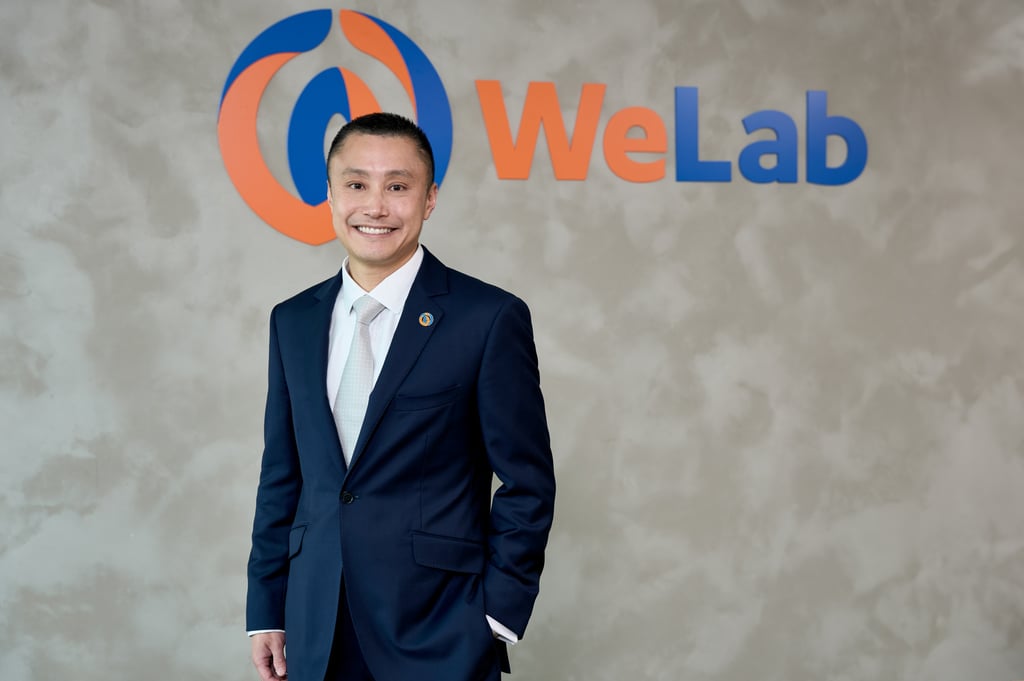
“Hong Kong is one of the first cities in Asia to issue digital banking licences,” Simon Loong, WeLab’s founder and group CEO, says. “This gave us a head start over other Asian markets and allowed us to develop our technological know-how and recruit talent ahead of them.
“Companies and regulators from markets that started after us, such as Singapore, Malaysia and Thailand, approached us and asked us to share our experience in building a digital bank. It was great for our brand and building credibility and led to opportunities for scaling regionally, too.”
In November 2023, WeLab, together with Astra Financial – the financial services division of the Indonesian conglomerate, Astra International – launched its second Asian digital bank, Bank Saqu, in Indonesia. Up to January, more than 2 million users had signed up for a Bank Saqu account.
Loong believes its success in the market is because of the company’s ability to localise and adapt its approach to meeting market needs. For example, about 40 per cent of Bank Saqu’s users are young “solopreneurs” – a term that encompasses small business owners who run and manage their businesses alone, freelancers and also people who have more than one job. This thriving market segment is expected to encompass 117 million people and contribute to 36 per cent of Indonesia’s gross domestic product by 2030.
To cater to these individuals, many of whom have multiple jobs and income streams, Bank Saqu users can create up to 20 “pockets” – or saku in Bahasa Indonesia – which allows them to easily manage their finances in a single account.
Loong says his company’s success in entering new markets hinges not only on having partners with a strong local knowledge and presence, but also established relationships with customers, regulators and government entities.
WeLab plans to expand its digital banking and technology services to other Southeast Asian countries to achieve its ambition of establishing the first leading regional digital bank and signing up 500 million users by 2032. Last September, the company and the Thai fintech firm, Lighthub Asset, formed a consortium and applied for a digital banking licence with the Bank of Thailand, with the results to be announced in the first half of this year.
“When we started looking at the Thai market, we couldn’t find a good partner,” Loong says. “[The Hong Kong government’s] Belt and Road Office connected us with our current partner, whose local expertise and network were crucial in helping us prepare for the licence application to the Thai government. Being introduced by a mutually trusted entity adds a level of credibility and trust, and helps to fast-track the discussion.
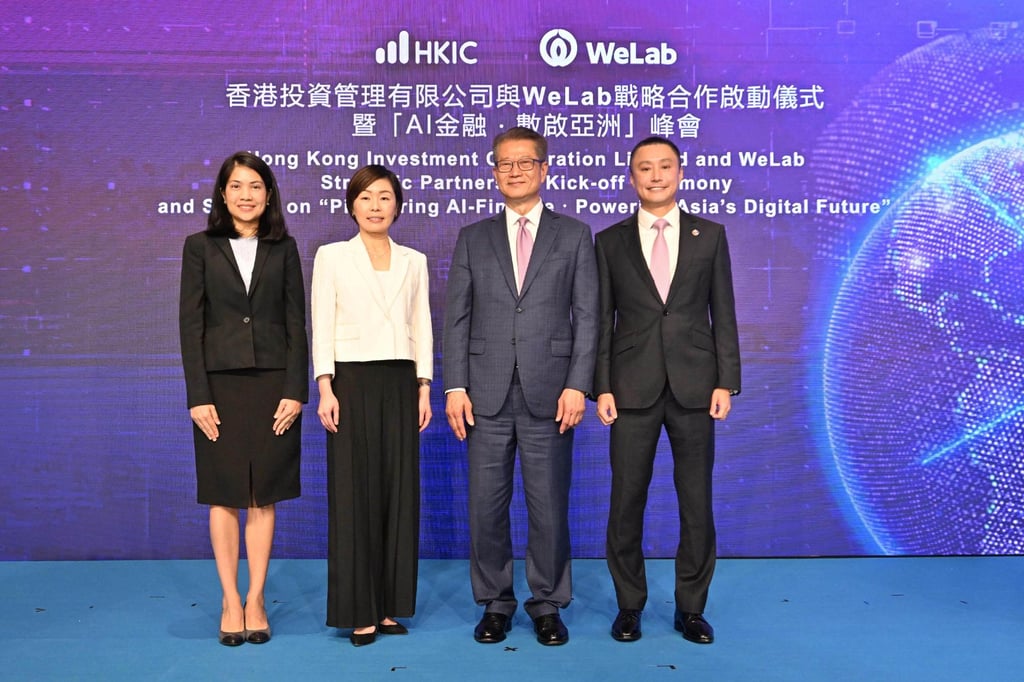
Earlier this month, the Hong Kong Investment Corporation (HKIC), an organisation set up by the government to manage public funds through identifying investment opportunities, and WeLab announced a strategic partnership that will accelerate the development of fintech services driven by AI and promote inclusive finance in Asia.
Through this partnership, WeLab aims to expand the adoption of AI tools and make AI-powered financial services more widely available. It also plans to help develop the next generation of fintech professionals through training programmes at secondary schools and universities. The firm will also leverage its success and connections in Southeast Asia to help other companies in the HKIC’s ecosystem expand in the region.
“When we meet our partners in belt and road countries, Hong Kong’s professional image and our agility and resilience are qualities that appeal to them. Fintech companies from Hong Kong should continue to leverage our strengths in the field to drive future e-commerce cooperation in the region.”
Besides strengthening the digital economies in belt and road countries, Hong Kong companies are also leveraging the city’s expertise and sophisticated infrastructure in information and communications technology to help boost the connectivity capabilities of emerging markets in the region.
“In today’s world, connectivity isn’t just a convenience, it is a necessity,” says Ken Leung, president of Altai Technologies, a leading global provider of industrial-grade Wi-fi solutions. “When the connection breaks, everything stops, [the] operation stalls, communication ceases, and opportunities are lost.”
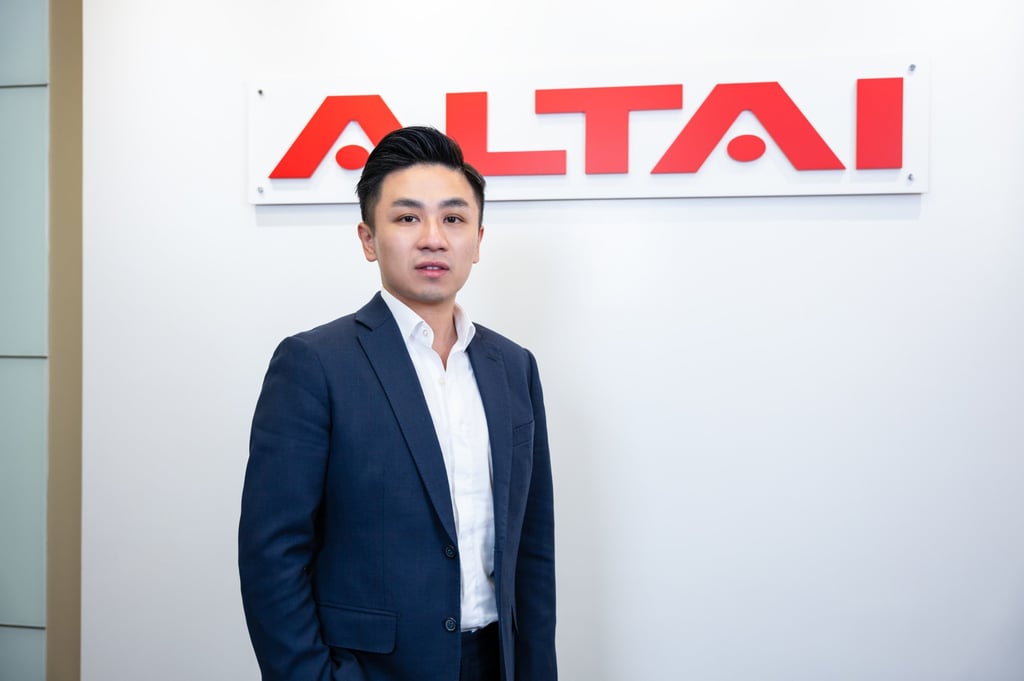
The company, founded in 2006, has its headquarters in Hong Kong Science Park, a research and development hub in Pak Shek Kok, New Territories, which provides infrastructure and support for tech start-ups and enterprises.
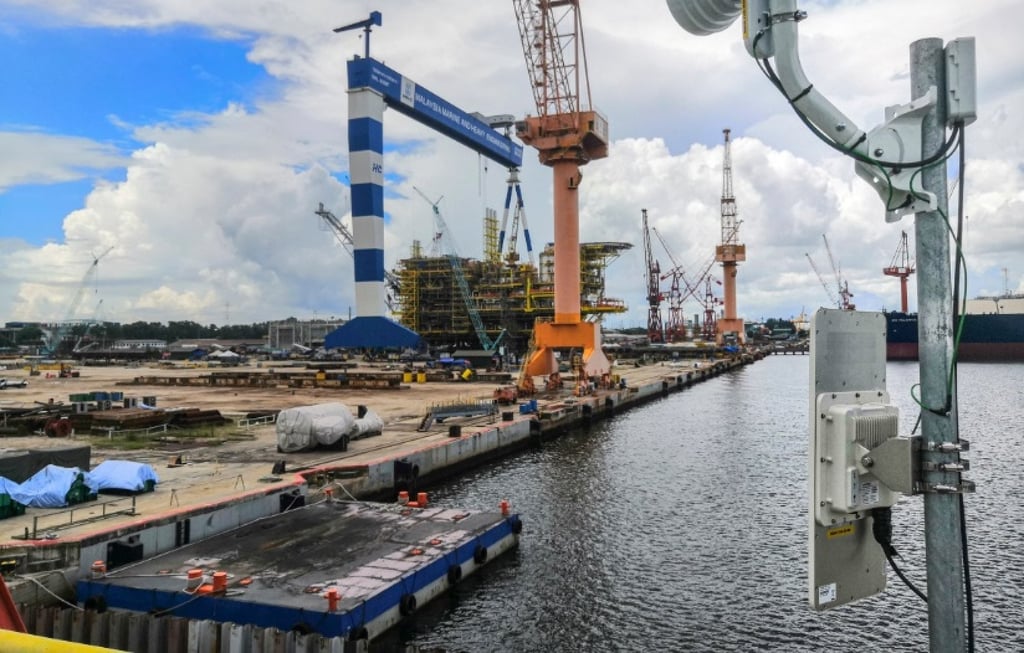
It has been designing, developing and rolling out its products and technologies in container ports, airports, warehouses, manufacturing facilities, power plants and other industrial sites in more than 100 countries in Asia, the Middle East, Europe and Africa.
Its products are designed to meet the rigorous requirements of industrial applications and can operate stably in harsh environments, including high temperature, humidity and vibration. This makes them particularly well-suited for industrial environments and outdoor scenarios, especially in emerging belt and road markets, Leung says.
Simple deployment and maintenance processes and low hardware investment costs are also important reasons the company’s products have been widely adopted in emerging economies.
Besides industrial applications, Altai Technologies is also helping to improve connectivity for people living in remote parts of emerging countries. For example, it has worked with the Indonesian government to offer robust Wi-fi services to three schools in the remote island areas of Komba City district, East Manggarai Regency and East Nusa Tenggara. The network services have benefited not only the schools, but also its local residents and communities, who can now enjoy reliable internet connection.
The company was also asked by Malaysia’s Communications and Multimedia Commission to deliver high-speed, low-latency connectivity to rural communities in many states across the country, which previously had no internet connectivity because of the high cost of both building and maintaining terrestrial internet infrastructures.
To overcome these cost issues, the company teamed up with a global satellite broadband service provider to develop a solution that now provides wide and stable Wi-fi coverage and can be managed centrally by the local authorities using Altai’s cloud platform.
“These projects help bridge the digital divide by offering access to resources for underserved populations to transform their life, whether it is allowing students to receive education, or encouraging e-commerce opportunities,” Leung says. “I take great pride in knowing that we played a part in this.”