Why sustainable finance is critical for Asean SMEs seeking long-term resilience
Banks play a pivotal role in helping businesses build ESG-optimised operations to drive regional growth and global relevance

Sustainability has evolved from a strategic differentiator to a business imperative, especially for small and medium-sized enterprises (SMEs) in the Association of Southeast Asian Nations (Asean). Representing 97 per cent of private-sector businesses and 85 per cent of the labour force in the region, SMEs are critical to long-term economic growth. But with rising expectations for supply chains and growing investor scrutiny, embedding environmental, social and governance (ESG) initiatives into operations is increasingly essential for the survival and competitiveness of these businesses.
Across Asean, sustainable finance is playing a growing role in this transformation. The Asian Development Bank estimates the region will require US$210 billion in infrastructure investment annually through 2030, much of which must align with ESG standards to access international and private capital as regulatory pressure intensifies and investors’ appetite for sustainable instruments grows. Banks act as crucial intermediaries, channelling this capital into practical, impact-driven initiatives.
For SMEs, these shifts present both a challenge and an opportunity: while early movers can unlock new markets and financing, many other businesses still lack a clear starting point and the resources to implement ESG effectively.
Strengthening sustainable growth through financial leadership
Financial institutions are playing a vital role in helping Asean SMEs bridge the ESG gap. Banks can provide access to advisory services and financing solutions, creating an ecosystem that helps businesses overcome common barriers.
One of Asean’s largest banks, UOB, has seen an increasing uptake in sustainable financing solutions. Data provided by UOB shows that its portfolio reached S$7 billion (US$5.5 billion) within the first half of 2025 – the same amount achieved in the whole of 2024. This brings the bank’s total portfolio to S$66 billion.
However, businesses still face challenges in the adoption of sustainable business practices. Some SMEs remain hesitant or overwhelmed, particularly when it comes to launching their ESG initiatives or managing upfront investment costs. In response, financial institutions are developing targeted solutions that simplify ESG adoption and make sustainability more accessible for businesses of all sizes.
“Many SMEs know sustainability matters, but struggle with two questions: ‘Where do we start? And how do we manage costs?’,” says Bonar Silalahi, managing director and head of the Sector Solutions Group for UOB. “With the right support, these barriers become opportunities for scalable impact.”
A structured road map for ESG transformation
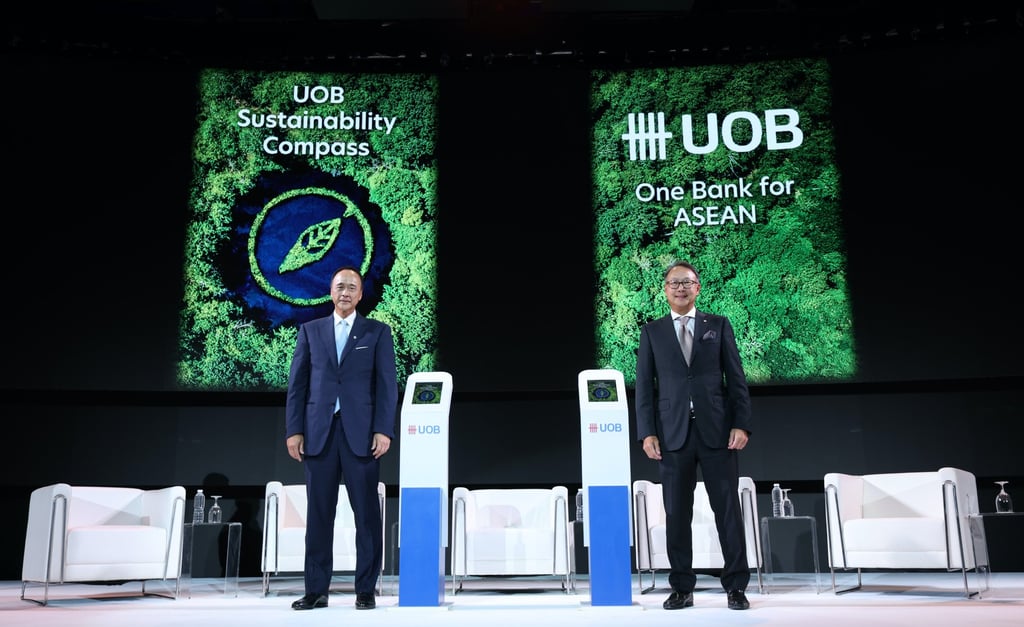
One such tool is the UOB Sustainability Compass, a digital solution co-developed by the bank and PwC to help SMEs take their first step towards ESG integration.
“The Sustainability Compass is a free online tool that enables SMEs to assess their ESG readiness in just five minutes,” says Lee Bing Yi, partner at PwC Singapore for financial services assurance, sustainability and climate change. “This tool generates a customised report that is tailored to the company’s industry and ESG maturity level. By delivering an actionable plan, the tool provides SMEs with insights into their own ESG profiles, empowering them to take the next steps and build momentum in their sustainability journey.”
The UOB Sustainability Compass is already available in Singapore, Malaysia and Thailand, with plans for a further roll-out to other Asean markets. To date, 8,000 companies across Asean have used the tool to initiate or accelerate their ESG journeys.
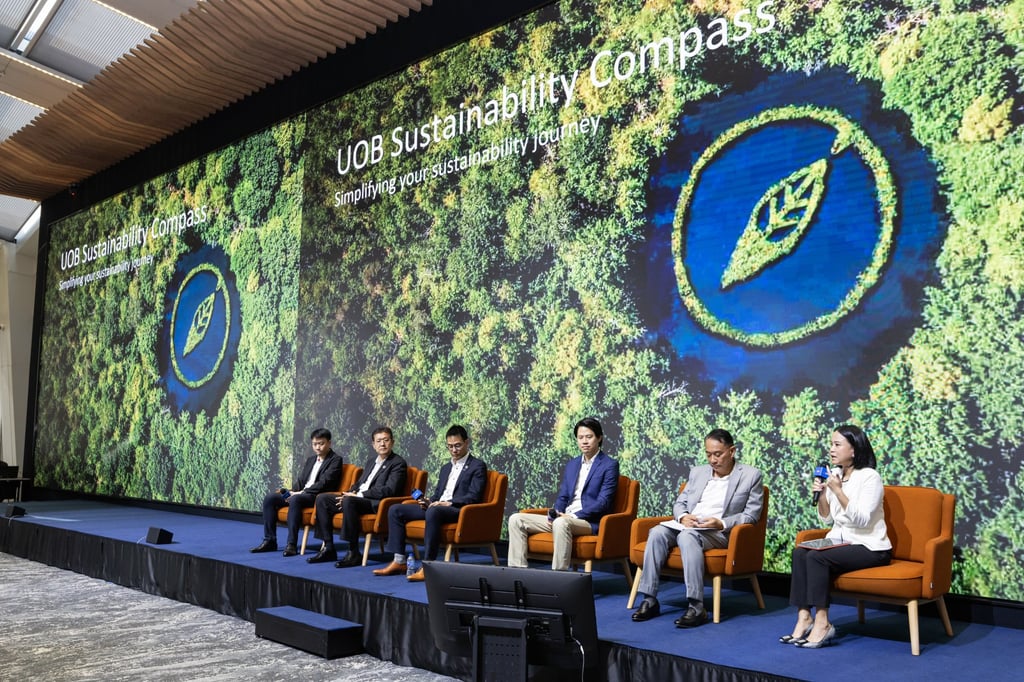
UOB also hosts complementary Sustainability Compass Forums across the region. These events bring together regulators, industry leaders and ESG experts to share insights, case studies and practical frameworks. They equip SMEs with guidance and connections to help them implement strategies within the broader sustainability ecosystem.
Building regional frameworks through partnerships
The diversity of the Asean region means each market is at a different stage of ESG adoption – shaped by national regulations, infrastructure maturity and institutional readiness – and progressing on different trajectories. Cross-sector partnerships between consultants, service providers, banks and governments can significantly reshape Asean’s ESG landscape by fostering a coordinated ecosystem approach.
As part of this effort, UOB is helping lay the groundwork for regionally consistent and locally relevant support. One way it does this is by integrating the Singapore-Asia Taxonomy, a classification system developed by the Monetary Authority of Singapore, into its financing framework. This incorporation ensures that UOB’s ESG approach reflects global benchmarks while also remaining adaptable to the specific needs of different Asean markets.
UOB has developed a suite of practical tools and programmes that lower the barriers to ESG adoption through the power of partnerships. The bank’s Sustainability-linked Advisory, Grants and Enablers (Sage) Programme connects SMEs to a network of service providers, including PwC, offering targeted services that reduce the time and cost of setting sustainability performance targets (SPTs). Businesses can also enjoy financial incentives when these SPTs are met.
“Cross-sector partnerships and collaborations are vital for creating bottom-up solutions to tackle ESG challenges,” Lee says. “ESG is an inherently complex and multifaceted issue. No one has all the solutions, so we need to work with the ecosystem and collectively develop those solutions.”
Complementing this is U-Series, UOB’s one-stop platform that helps businesses access the technologies and partnerships needed to decarbonise, from electric vehicle fleets to energy-efficient buildings. The U-Series also supports companies in their work with globally recognised certification systems that independently verify ESG practices across operations and supply chains, such as International Sustainability and Carbon Certification (ISCC).
Large companies are also taking the lead in driving the transition. Their pioneering efforts in sectors like energy, construction and retail not only demonstrate the feasibility of ESG transformation, but also create a ripple effect across their supply chains. These examples show how businesses of all sizes can work towards shared sustainability goals.
“With integrated solutions like the Sage programme and U-Series, clients don’t need to coordinate separately with service providers, suppliers, contractors and banks,” Silalahi says. “All the stakeholders are lined up, so businesses can adopt sustainability more easily and quickly.”
Together, these efforts reflect a broader shift, as financial institutions move beyond traditional lending to offer the advisory, infrastructure and partnerships that SMEs need to turn their ESG ambitions into action.