UOB links investors to projects powering Indonesia’s growing economy
As the country moves up the value chain, UOB is guiding regional capital to the developments driving its next industrial leap

Indonesia is pursuing one of the boldest economic visions in Asean, aiming to reach annual growth of 8 per cent by 2028. This ambitious target demands a significant shift in how the country produces, processes and exports goods. Downstreaming and logistics efficiency are at the heart of such efforts, and UOB Indonesia is working to channel the investment required to make that transformation possible.
UOB launched its foreign direct investment (FDI) advisory unit in Indonesia in 2013, and has since helped more than 500 companies invest in the country. According to Harapman Kasan, wholesale banking director at UOB Indonesia, the companies supported by the FDI advisory unit since 2020 are projected to invest more than S$20 billion (US$15.3 billion) into Indonesia and create over 100,000 job opportunities there. A major driver of investor interest is Indonesia’s downstreaming agenda, which aims to process raw materials domestically rather than export them unrefined.
“Downstreaming is changing how investors look at Indonesia,” Kasan says. “They see the country pushing into higher-value production, and it makes them more confident about coming in.”
That confidence is also being shaped by improvements to the country’s industrial ecosystem. As an archipelago of more than 17,000 islands, Indonesia faces some of the highest logistics costs in the Association of Southeast Asian Nations. Kasan notes that the costs for domestic and export logistics, which account for about 23 per cent of Indonesia’s GDP, remain one of the biggest obstacles to driving FDI into the country. In other Asean countries with similar economies, such as Thailand and Malaysia, logistics costs comprise less than 15 per cent.
Indonesia’s government is responding by investing in new ports, toll roads and industrial zones designed to reduce bottlenecks and also bring manufacturers closer to suppliers and export routes. UOB Indonesia is helping guide investment into these developments, from modern industrial parks in West and Central Java to new logistics infrastructure like Patimban Seaport, which, according to Kasan, is boosting investor confidence by showing that Indonesia is becoming more competitive.
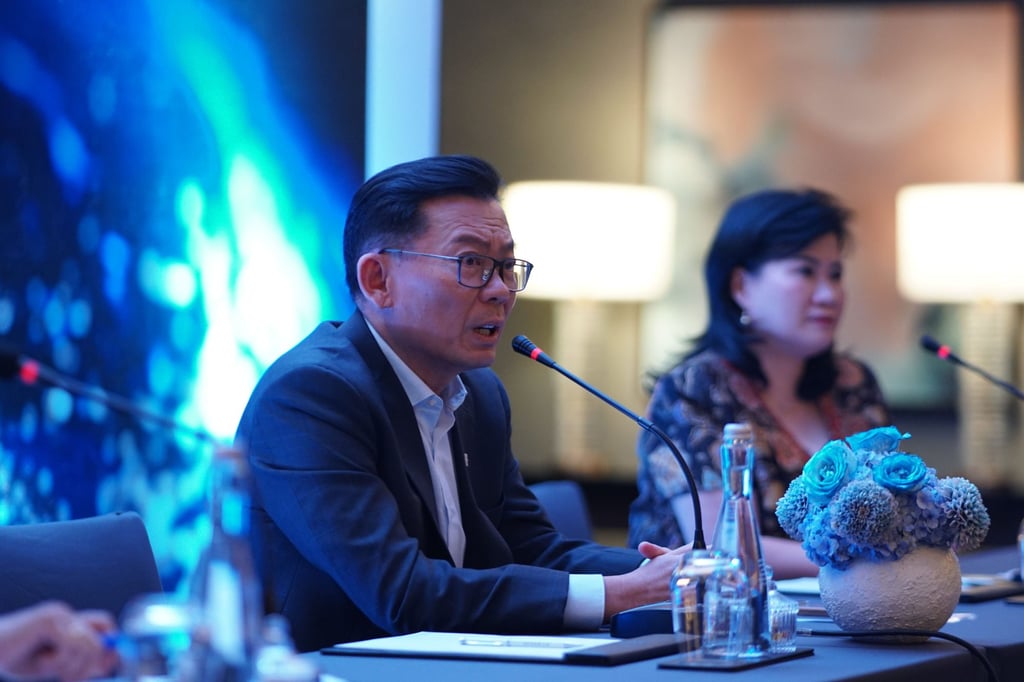
UOB’s ability to channel regional investment into Indonesia rests on its broad cross-border footprint. Its “One Bank for Asean” strategy includes 11 FDI Centres located across Asia, which can link companies exploring expansion in regional markets with on-the-ground support in Indonesia. “When a company begins exploring investment opportunities here, our teams in the region work closely with UOB Indonesia,” Kasan says. “We also collaborate with government investment agencies and professional service providers across the region to help investors enter the market and manage cross-border complexity. That coordination within our existing ecosystem makes the transition much smoother.”
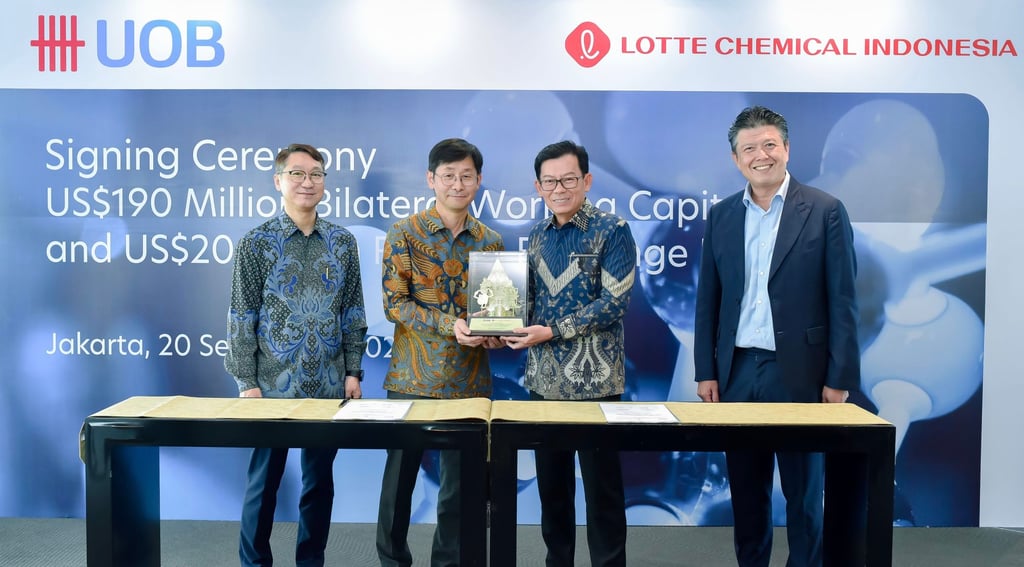
Nowhere is this cross-border coordination more visible than in Indonesia’s push into petrochemicals. One example is the Lotte Chemical Indonesia New Ethylene, or Line, project in Banten province, which will build a facility for domestic production of ethylene and other petrochemical derivatives. It marks the largest investment by a South Korean company in Indonesia, with UOB supporting Lotte through bilateral trade facilities that strengthen the company’s cross-border trade flows and ongoing operations.
“The Line project reflects Indonesia’s shift into higher-value manufacturing and more advanced chemical production,” Kasan says, adding that UOB is working closely with Lotte’s Indonesian and South Korean offices to ensure the company has support across markets.
But downstreaming does not succeed on flagship plants alone. Large manufacturers rely on deep supplier ecosystems, and Indonesia’s next stage of industrial growth depends on whether those networks can scale. UOB Infinity, the bank’s digital wholesale-banking platform, is becoming a strategic connector in this area.
UOB Infinity integrates payments, collections, cash management, trade finance and treasury functions into a single digital environment. Its Voyager financial supply chain management tool enables companies to exchange trade documents electronically, manage cross-border flows and extend supplier financing more efficiently.
For companies like Lotte Shopping Indonesia, the retail arm of Lotte Group that works with a vast network of Indonesian suppliers, UOB Infinity can streamline operations and improve reliability across their vendor ecosystems. “Infinity has helped bring Lotte Shopping Indonesia’s suppliers onto one platform,” Kasan says. “When everyone uses the same system, the whole value chain becomes more efficient.”

That digital infrastructure mirrors the physical upgrades taking place in Indonesia. As more companies move into industrial corridors in Java and beyond, they need both the logistics capacity and the financial connectivity to compete globally. UOB Indonesia’s role, Kasan says, is to support both sides.
“Indonesia will continue to grow,” he says. “Our role is to help investors see the opportunities, invest with confidence and build strong businesses for the long term.”
As the country expands its downstream industries, modernises logistics and builds deeper manufacturing capabilities, UOB is helping ensure that regional capital can flow into the projects shaping Indonesia’s next economic chapter, from petrochemical complexes to data centres and the industrial corridors emerging around them.