Data and VR help dance shows shine spotlight on number crunchers and human connections
The Accountants and +1+1+1+ among Asia+ Festival’s production highlights from region and China’s belt and road global trading network

In the rapidly evolving age of communication technology, where we have so much access to information online, do people really know more about the world in which they live?
In a story told through British multidisciplinary artist Keith Khan’s latest production, two characters of different ethnicities and generations engage in instant text messaging and go on a journey of discovery.
The production from the United Kingdom, named The Accountants, which blends bold storytelling, spectacular dancing and dynamic visual effects, will be performed at the Hong Kong Cultural Centre’s Grand Theatre on September 27-28.
It forms the opening programme of the Asia+ Festival presented by the city’s Culture, Sports and Tourism Bureau and organised by the Leisure and Cultural Services Department.
The three-month festival, which runs until November, aims to highlight outstanding artists from countries in Asia and beyond, especially those linked by the Belt and Road Initiative, China’s plan to develop a global trading network. A Middle East series has been added this year.
The central premise of The Accountants focuses on two of the largest and most populous nations in the world – China and India.
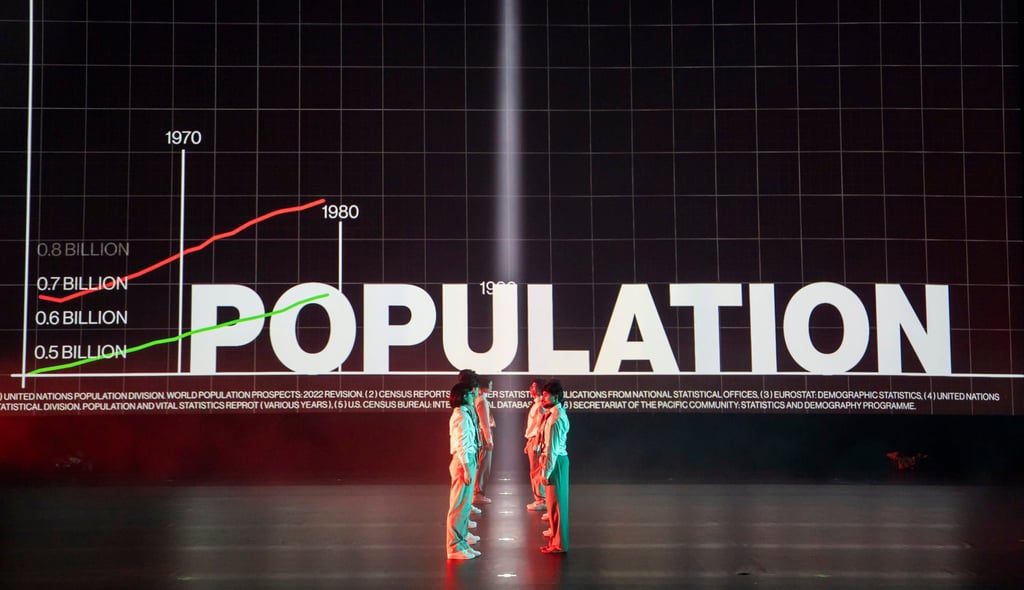
“I wanted to make the show because I wanted to see ourselves,” Khan, who was the head of culture for the 2012 Olympic Games and Paralympic Games in London, says. “There’s very little produced in theatre where you see ‘dull people’ portrayed in a way that is kind of fun.”
One of the characters, Liam, a 20-something British Chinese man, is setting out to travel to China, to find out more about his heritage. He has started chatting with Auntie Kash, an older British Indian woman working as an accountant.
To her, all she needs to know about India, or her heritage, can be found online. But as their exchange continues, they are both led on a path of self-discovery about their own values and cultural identities.
The choice of the ethnicities of these two protagonists is no accident. “There are a lot of shows made around Europe and very little told about Asia,” Khan, who was born in London and is of Indo-Caribbean heritage, says.
“In the West, particularly in Europe, they have very stereotypical views of Chinese and Indian people – they run shops, they run businesses – but actually these are huge cultures with a huge global impact.”
The narrative of the show transpires through text and voice messages between Liam and Kash, voiced by actors Josh Hart and Shobna Gulati.
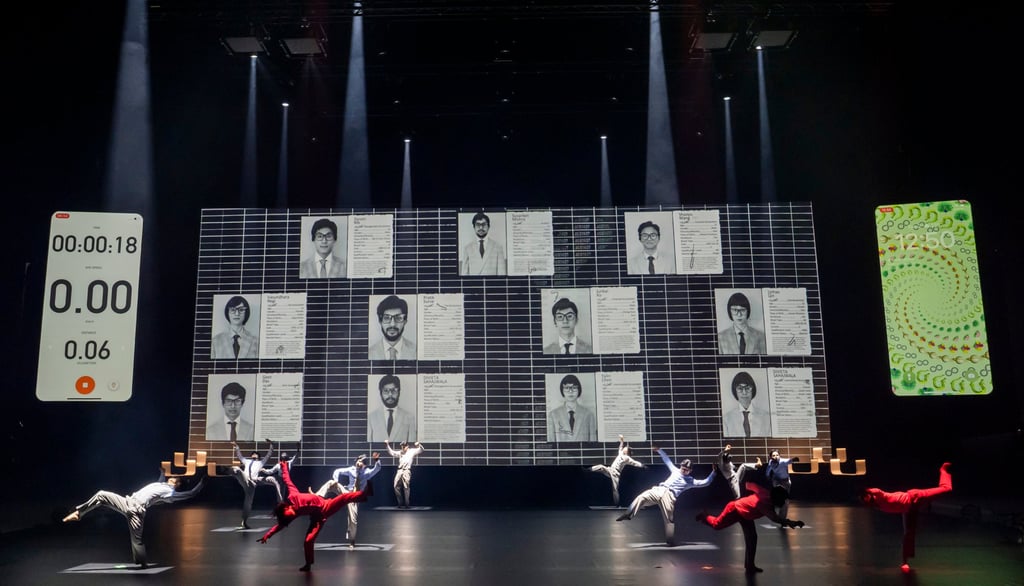
While on stage you will see 12 dancing “accountants”, sifting through a vast amount of data that flashes up on a huge screen behind them, who are portrayed by members of two internationally renowned troupes: Terence Lewis Contemporary Dance Company in Mumbai, India, and Xiexin Dance Theatre in Shanghai, China.
The performers first emerge on stage as one group, whimsically responding to and interacting with what appears to be innocuous data.
“It starts with harmless data and fun data, and then we see how the data starts to box us little by little,” Mahrukh Dumasia, creative head and chief choreographer of the Mumbai-based company, says. “We start to see ourselves as two different groups of people and we are competing.
“Then as the whole message unfolds, it comes to a point where we feel we’re not even competing against one another. We are pitted against technology. We are pitted against our own creation.”
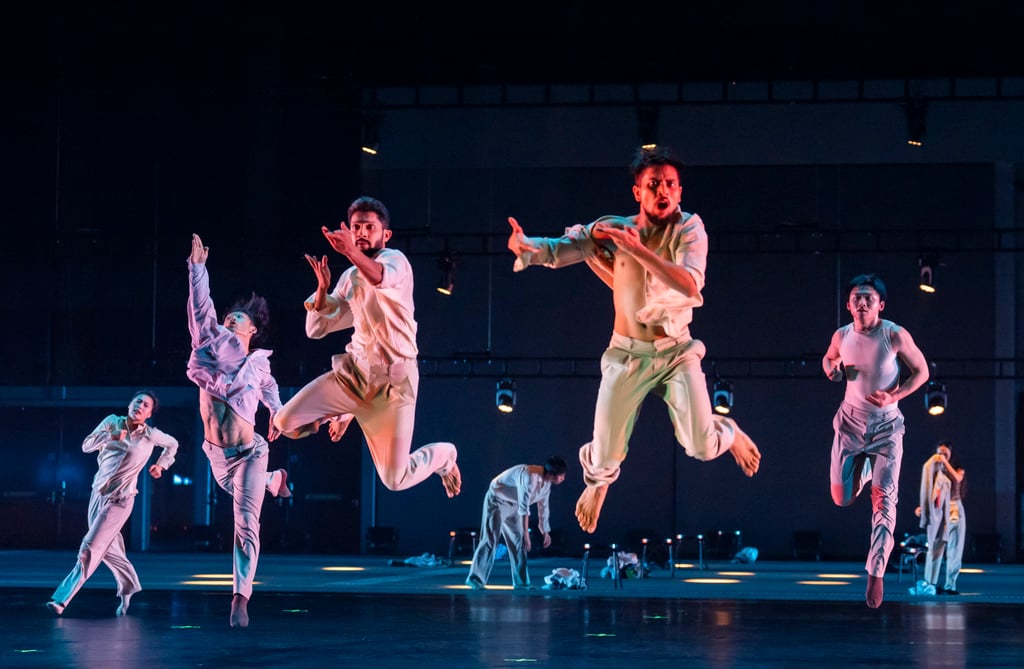
As the “data overload” comes to a climax, the atmosphere dramatically changes, leading to a surprising ending.
However, Khan says the story is not an indictment of technology, rather a reflection of reality. “We’re just trying to find a contemporary way of telling it and digital media seems to be a very good way of doing it,” he says. “I don’t think you can talk about India and China without using digital media.”
The show might be about competition and struggles, but the collaboration between the two dance companies on the production was anything but. For Terence Lewis, founder of his eponymous dance company, it was a learning experience during which human bonds were formed and friendships made.
“People in China look different, of course, and the outward expression is different … but the internal expression of love, kindness, of how human beings feel for each other is still the same and it’s universal,” he says. “It was just uncanny how close we were.”
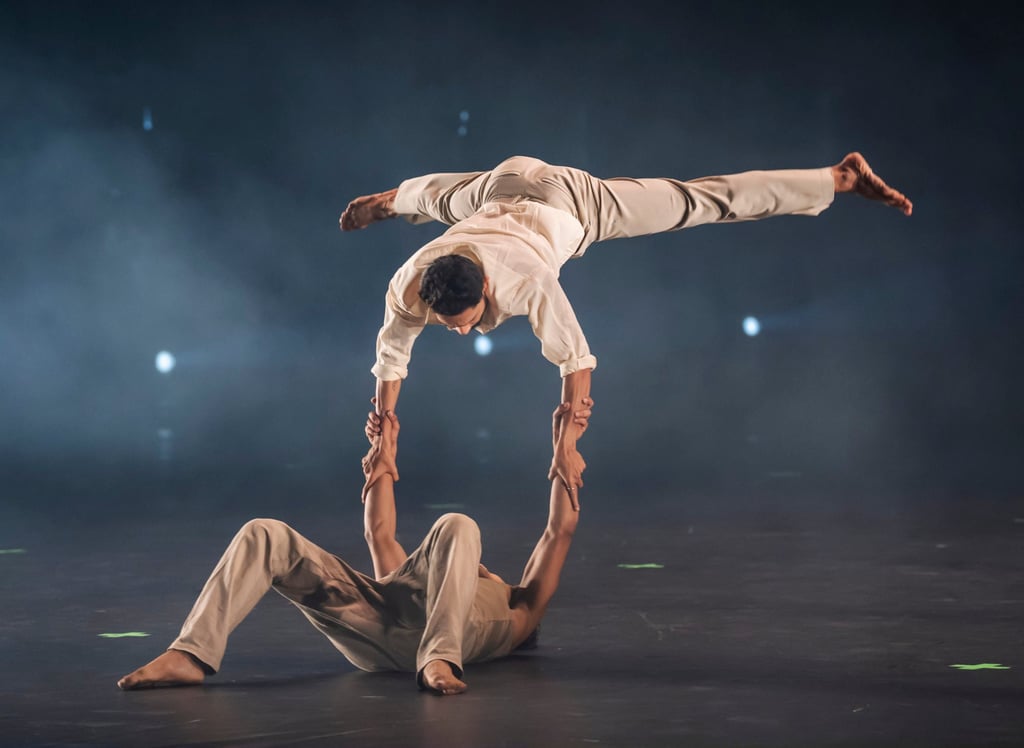
When plans for the production kicked off last year, communication was done online. The actual construction of the production happened in about a month when all collaborators finally met in person. Lewis remembers how he was mesmerised by the style of choreography created by his Shanghai counterpart, Xie Xin, artistic director of her eponymous dance company.
“Xie Xin’s dancers were more of the elements of air and water and, elementally, the Indian dancers were more of earth and fire,” he says. “We exchanged those elements in terms of choreography and then that became a really beautiful space where we were rebalancing these energies and it made the show look bigger.”
The appreciative feelings are mutual. “When the Indian dancers danced, they were very expressive and they used their entire bodies and even facial features,” Xie says. “We each had our prepared material and when we came together, we had the chance to present it to each other and we adapted to each other’s responses.
“It was like I put my hand out, and then they put theirs on it. You can see the dancers from the two countries coming together and becoming friends. The two groups are different, but when they come together, it all becomes one, and it feels very positive and touching.”
The production also features hi-tech immersive visuals by the design studio idontloveyouanymore, acoustic tunes by sound artist Somatic, lighting design by Simon Corder and dramaturgy by Jude Christian.
The show premiered in May at Aviva Studios in Manchester, the permanent home of Factory International, which organises the biennial Manchester International Festival and supports performing artists from around the world.
The audience seemed very engaged during the production, which has received rave reviews. “I could see a lot of people crying in the second half of the show … they were also laughing when the two companies finally came together in the end,” Lewis says
Technology will also be front and centre in another collaborative production combining dance, music and digital visual effects, created by Daito Manabe, a globally acclaimed Japanese media artist, programmer and DJ, and charismatic choreographer Mikiko’s all-women dance troupe Elevenplay.
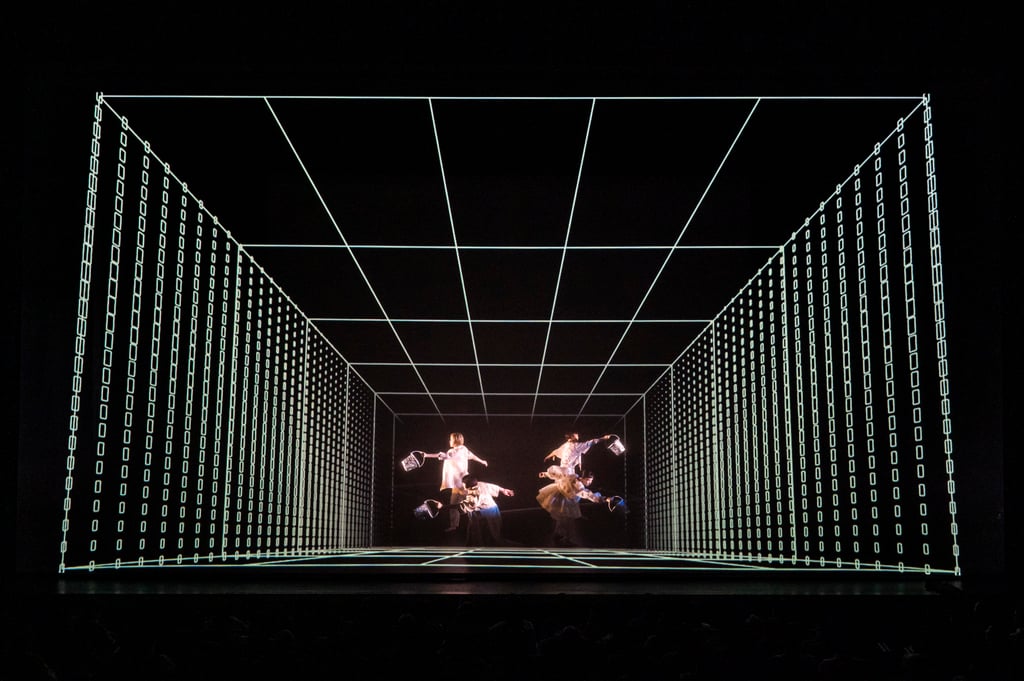
The immersive Japanese show, titled +1+1+1+, incorporating the use of motion capture technology and holographic projection, sees the dancers weave in and out of various digital shapes and scenes amid the continuously evolving stage, scenography and music.
The performance, which builds on the groundbreaking “Tokyo Presentation” given by Manabe and Elevenplay during the 2016 Rio Olympics closing ceremony, aims to immerse the audience in a world where lines are blurred between reality and virtuality.
The show will be presented at the Hong Kong Cultural Centre’s Grand Theatre on November 8 and 9.