Unique auction that queries value of art and underground acoustic experience on show
Post Capitalistic Auction and After the Rain among over 100 performances showcasing cultural traditions and innovations at Hong Kong’s Asia+ Festival

The real value of art – and the question of whether money is the only way to decide its worth – will come under the spotlight during an interactive theatre production where the audience bids for artworks at a real-but-alternative auction.
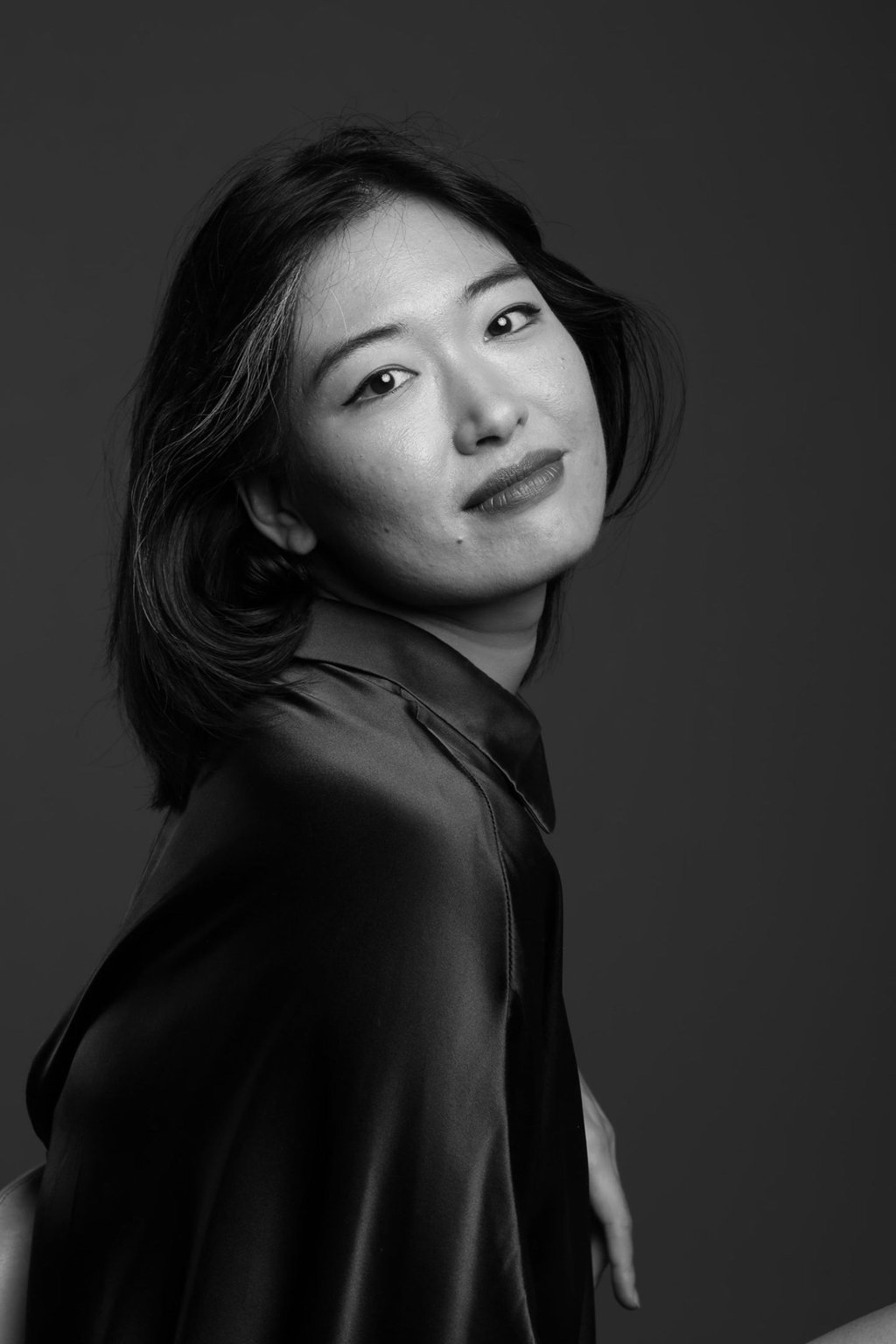
Chinese performance creator and director Jingyi Wang’s touring show, Post Capitalistic Auction, which sees bids made for eight artworks, forms part of Hong Kong’s Asia+ Festival, which is running until next month.
The three-month festival is being presented by the city’s Culture, Sports and Tourism Bureau and organised by the Leisure and Cultural Services Department. It has included over 100 performances and activities that showcase cultural traditions and innovations featuring leading performance artists from nearly 30 nations involved in the Belt and Road Initiative – a plan led by the Chinese government to improve trade and economic integration across Asia, Europe and Africa.
Wang’s first auction was staged in 2018 in the Norwegian city of Bergen, where she lives, and it has since been presented in Yokohama, Japan, and the Canadian city of Toronto.
The audience takes part in each performance as artworks sourced from the region hosting each show are auctioned. They use an online app to place their bids while the process is projected onto a screen in the theatre in real time.
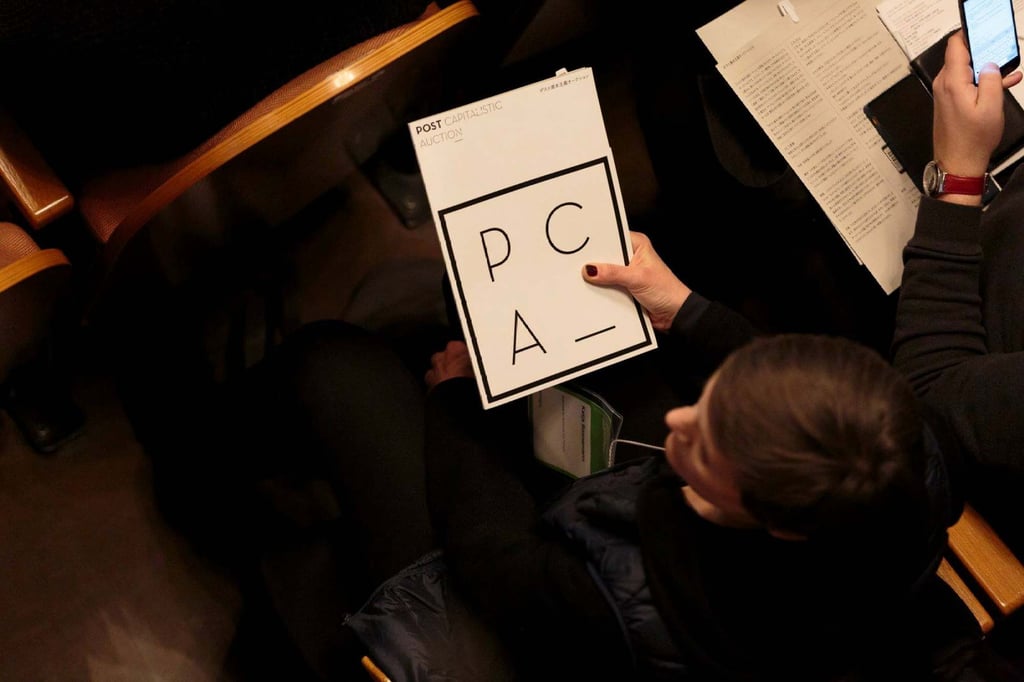
What makes this auction unique is people are to offer bids using currencies such as “opportunity” and “understanding”: what they offer is up to the imagination of the bidders.
Two rounds of auctions in Hong Kong next month will each feature four artists from countries including France, Indonesia and Thailand, who will attend the auction in person to choose each winning bid, guided by advice from an expert panel.
“In Bergen, one of the artworks was a sentence,” Wang says. “The artist printed it on a piece of paper and it came with her signed authentication paper. When the auctioneer announced this sentence, it became clear that nobody could really own a sentence. The artist was challenging the concept of ownership. What does owning a piece of art mean?”
In the end, the successful bid was selected from someone who said he would tear up the paper because it “doesn’t mean anything to me”. But he promised to devote 15 minutes every day to practise the sentence for the rest of his life, which led to his bid being accepted.
At the Yokohama auction, one of the featured artists was Daito Manabe, a Japanese media artist and DJ known for his cutting-edge work that explores the potential of the human body, data, programming and computers. He presented a visual representation of sound created with brain imaging technology, which was sold to a hearing-impaired bidder.
“In an interview, Manabe said the transaction completed his work,” Wang says. “I was very happy that he gave that bidder the work. It made the point of the auction very well.”
She is co-producing the festival’s two auctions next month with Hong Kong-based curator Kyle Chung, who is also head of arts at the British Council in Hong Kong and a lecturer at City University of Hong Kong’s School of Creative Media.
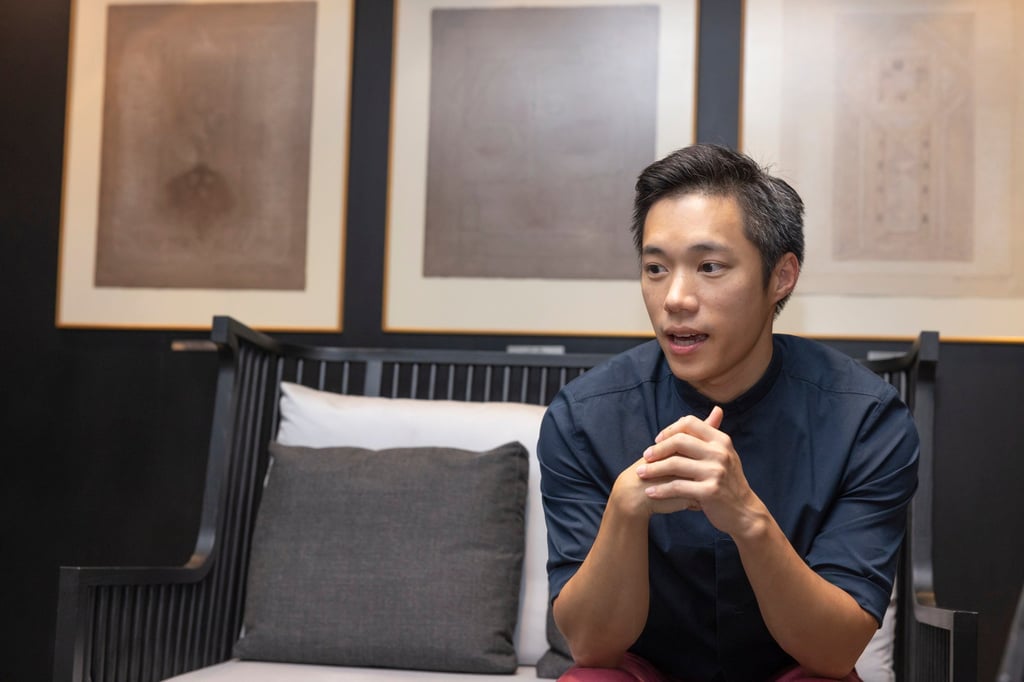
“The premise of the show is perfect for Hong Kong as it’s such a global hub for the art market,” Chung says. “It’s really disrupting the mindset of the audience and also the mindset of the artists.”
Technology will be a prominent feature of each round of auctions, he says. “Art tech is a big part of the cultural landscape in Hong Kong. From early on, Jingyi and I knew we wanted to have a representation of it in the show.”
Maurice Benayoun, a prominent French new-media artist, curator and theorist, is among the artists to have signed up for the show.
“He has been making not just media art, but also very conceptual artworks by bringing in the blockchain technologies, and thinking about values in art from the blockchain perspective,” Chung says. “His participation in the show made a perfect match.”
The two Post Capitalistic Auction performances will be held in the theatre at Hong Kong City Hall on November 16 and 17. The experience will be completed with other activities such as an auction showcase, so potential bidders can view the artworks before the auction, and guided tours.
Another performance during the festival, After the Rain, an acoustic experience with 28 sessions in October and November, has attracted so much interest that tickets quickly sold out. What is most unusual about this production is the venue – the Western Salt Water Service Reservoirs at the University of Hong Kong – which is only accessible with special permissions from the authority.
The experience is being created by Dimension Plus, a Hong Kong media arts collective, with sound from the city’s Toolbox Percussion and music by Singaporean composer Jia Yi Lee, who explores the colours and textures of sound through movement, gestures and spatialisation.
Keith Lam, co-founder of Dimension Plus, who has created many works with natural elements such as clouds and the sea, says After the Rain is a continuation of his exploration of the relationship between people and the natural world.
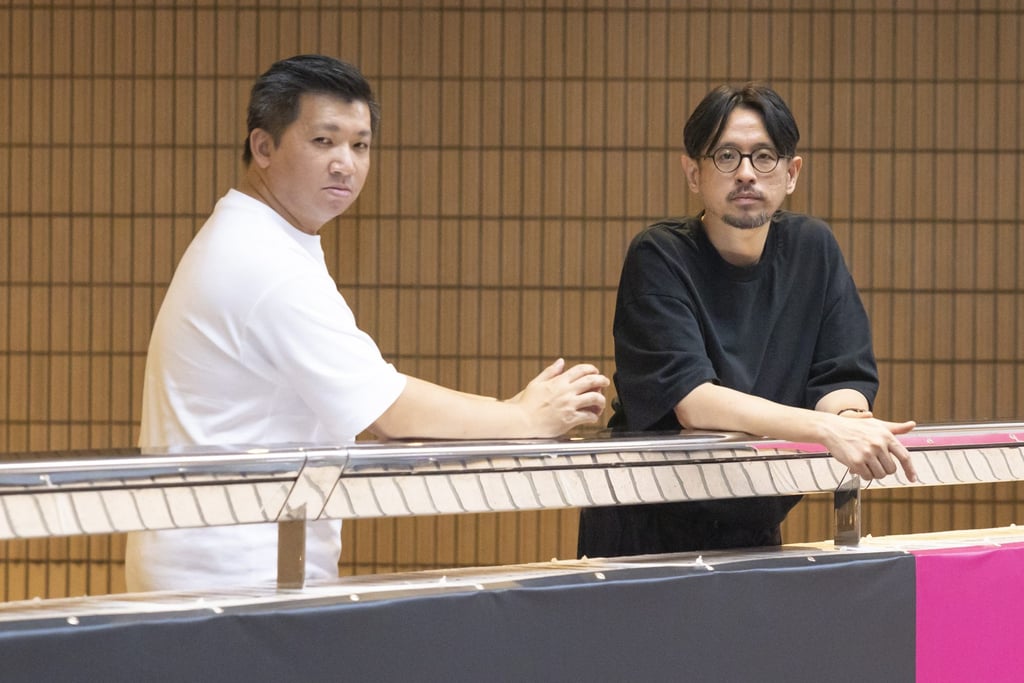
“The reservoirs are the interface between humans and nature, as we need to use the water and this location is where it is collected,” he says. “So, we are inviting the audience to visit the core of the ecosystem.”
The audience will start their 45-minute journey into the venue – a 50-metre-long, 17.6-metre-wide and 17-metre-high hillside cavern – through a tunnel that is about 100 metres long, as they join a performer in creating sound with specially designed rainsticks, hollow instruments that mimic the sound of rain. As they enter the main space, they will come across different percussionists positioned at separate spots playing various instruments.
Lighting will emphasise the natural texture of the cavern’s walls while ripples on the water’s surface and the profiles of the performers are projected and amplified onto them.
“The challenge for the performers is – unlike in a concert hall where they sit closely in a row – they are going to be far apart from each other, literally playing it by ear and responding to music and the projection,” Louis Siu, founder and artistic director of Toolbox Percussion, says.
“For the audience, they are not just listening to music, there is also the natural sound of the water in the reservoirs, the rainstick, and their own footsteps, coming together in this environment to the soundscape. It is an experience of mindfulness.”