Japanese all-women dance troupe creates video soundtrack with their bodies
- Synchronised moves of Elevenplay inspired DJ Daito Manabe’s soundtrack to ‘Tone’ – rather than traditional method where dance matches music
- Dancers also filmed performance, led by principal choreographer Mikiko, which debuted online at Hong Kong’s New Vision Arts Festival 2021
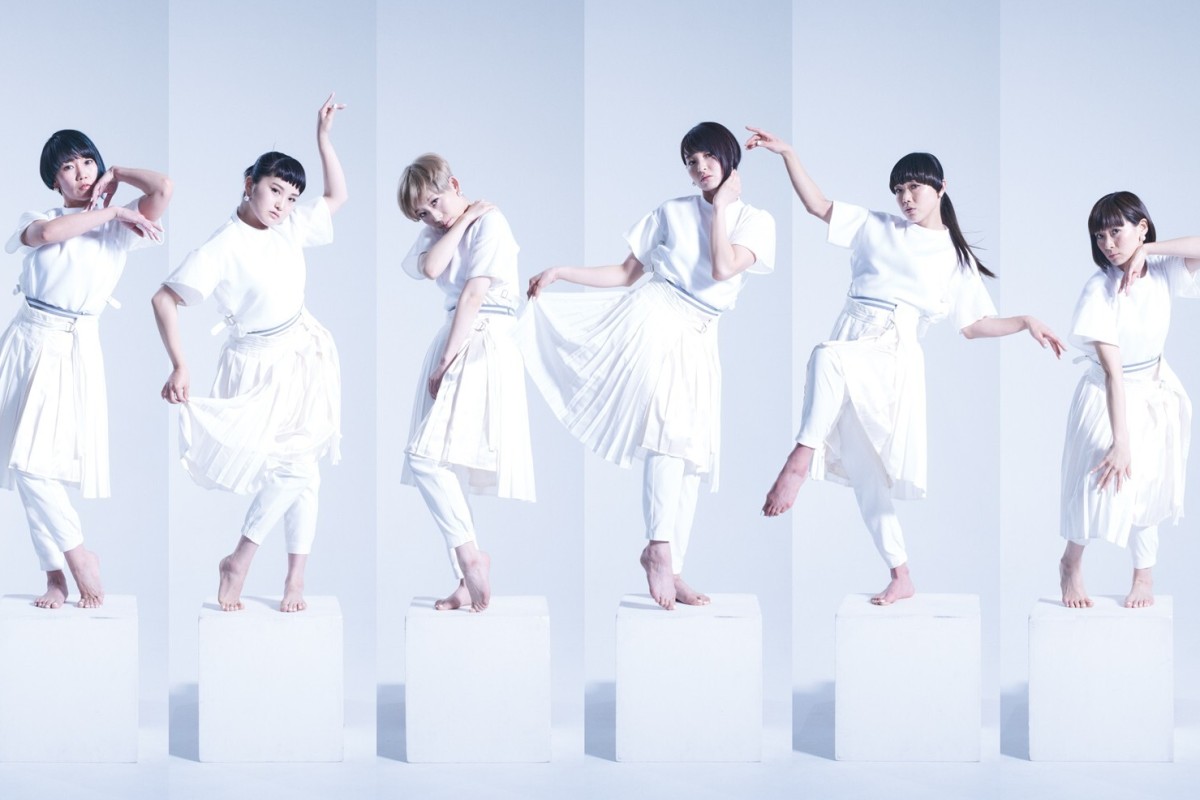
Performing arts productions traditionally consist of defined roles, with team members assigned duties based on their expertise. But increasingly, the lines between these roles are becoming blurred, especially with the aid of new technology.
In “Tone”, a video dance performance created by 22 members of the all-women Japanese troupe Elevenplay, led by director and principal choreographer Mikiko, in collaboration with Japanese media artist, programmer and DJ Daito Manabe, the theme was to “write music with the body”.
It saw the synchronised movements made by the dancers – who also filmed the videos – inspiring the accompanying soundtrack using a reverse process, where the synthesiser-led atmospheric music and rhythmic percussion were inspired by the choreography, rather than the traditional method of matching the dance moves to the music.
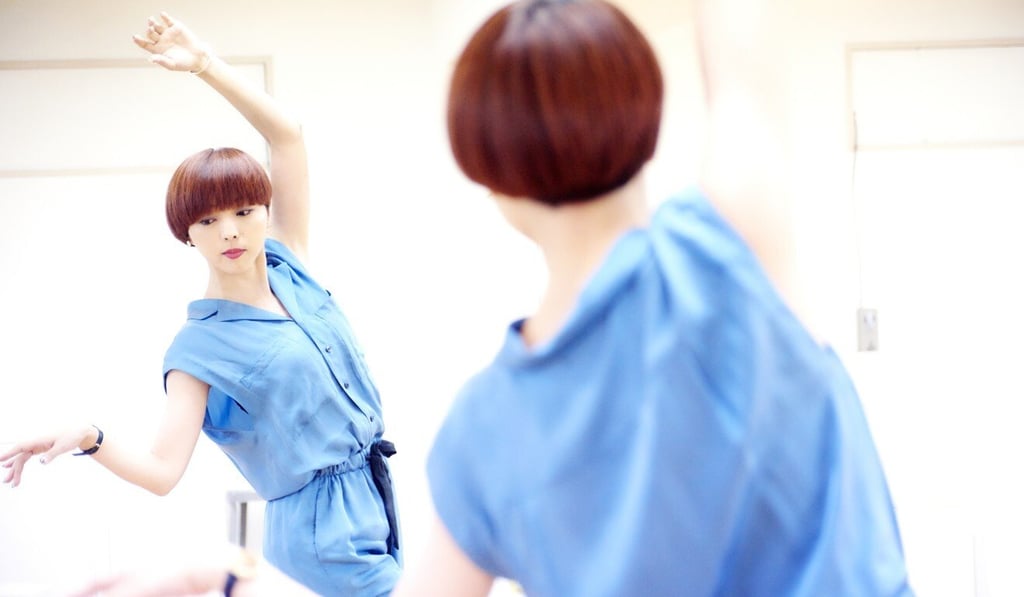
“I named the choreography ‘Tone’ because I wanted to portray the harmony of the dancers’ movements as they dance and help create the music together,” says Mikiko, who choreographed, directed and edited the videos.
Because we filmed and set the music afterwards, the dancers had to learn all the choreography by counting Mikiko, choreographer, director, ‘Tone’
Mikiko, an award-winning stage designer and choreographer who founded Elevenplay in 2009, is one of Japan’s top choreographers, having worked with many of the nation’s biggest pop and heavy metal music acts including the girl groups Perfume and Babymetal, and singer-songwriter Ringo Shiina.
She often works with Manabe, founder of the creative collective Rhizomatiks, which is known for working on music, dance recitals and videos, and for using motion capture and sensors that track dance movements to recreate human forms and movements as 3D representations – and dynamic effects that are featured in the performance.
Mikiko says everything – apart from some solo improvisation – was carefully choreographed, so the performances required many rehearsals. “Because we filmed and set the music afterwards, the dancers had to learn all the choreography by counting,” she says.
“In the solo improvisation, we danced while saying a common poem in our heads. In this way, each one was able to stay in step with their partner.”
By becoming a cinematographer, a dancer who is well versed in choreography understands the lines, rhythms, and places to highlight and shoot
The finished performance, which was filmed in striking black and white and lasts for about 20 minutes, is divided into three movements, but composed as if they are connected.
Mikiko says it made sense for the dancers to film themselves performing. “By becoming a cinematographer, a dancer who is well versed in choreography understands the lines, rhythms, and places to highlight and shoot,” she says.
Her idea to use dancers to carry out the filming is nothing new; in the 1970s, legendary American choreographer Merce Cunningham began to create dance pieces specifically designed to be filmed.
The difference today is that mobile phones such as iPhones allow many people the chance to make films using a sophisticated range of impressive filming and visual effects, including “people occlusion”, where virtual objects can be hidden or “occluded” by real-world objects, Mikiko says.
“Dancers can now use handheld cameras without the need for excellent, expensive, and large special shooting equipment,” she says. Another innovation allows choreographers to use the motion of a camera as part of the dance movement, rather than having to employ a video director to do the work for them.
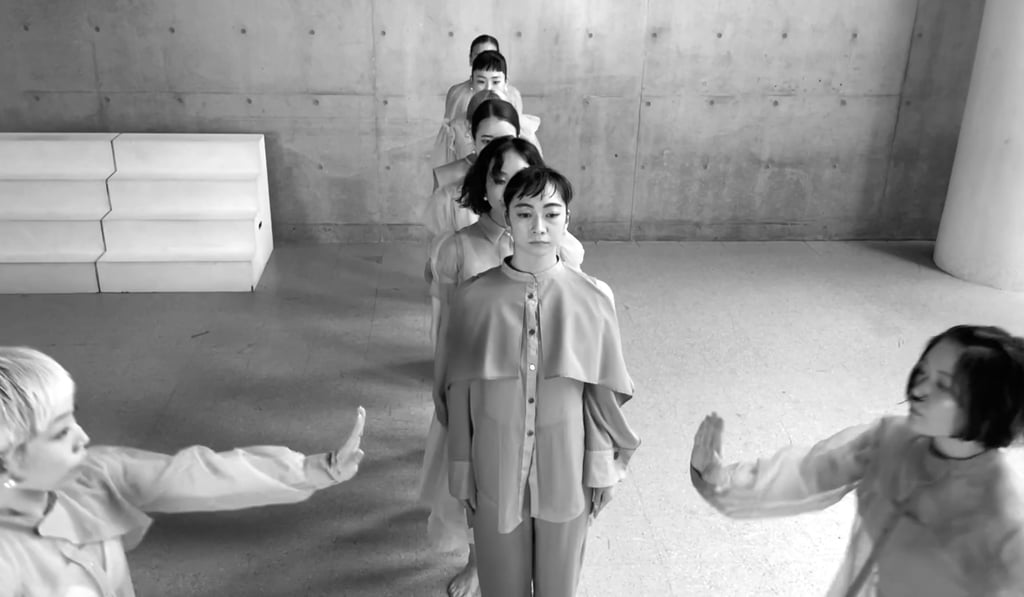
Elevenplay’s performances usually involve the dance group wearing matching costumes. But for “Tone”, the idea was to create a sense of harmony between the different elements, Mikiko says. “So the costumes, hairstyles and make-up had to be different so that the individuality of each of the 22 dancers would stand out.”
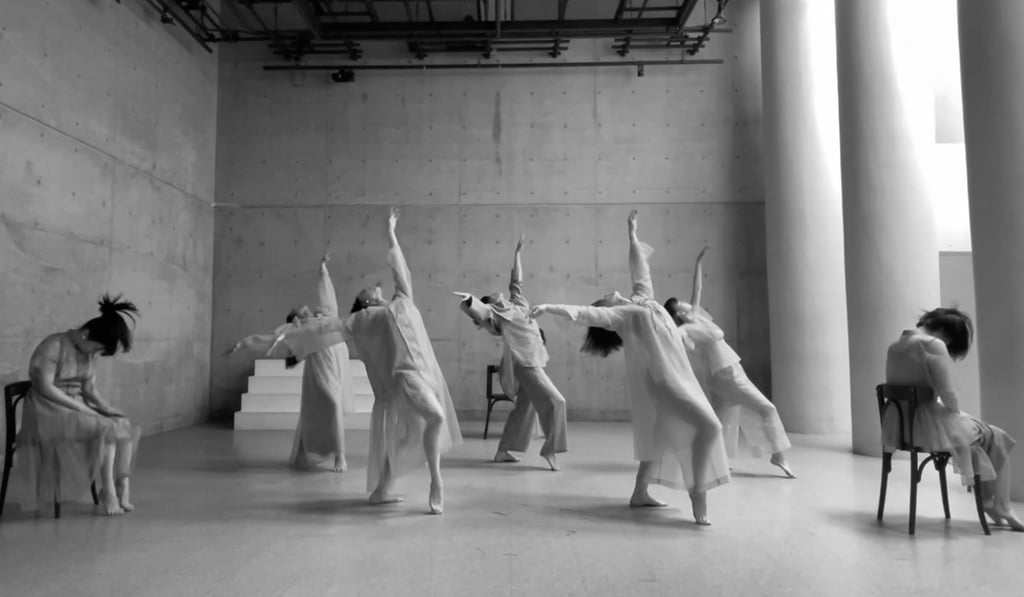
The videos were filmed in a minimalist setting – a room featuring four large circular pillars in front of a floor-to-ceiling window on one side, with light-coloured concrete walls and flooring and a few steps and carefully positioned round-topped chairs.
The dancers’ gauzy, light-hued costumes include a variety of flowing dresses, blouses and trousers, and other outfits that look like gossamer-thin pyjamas.
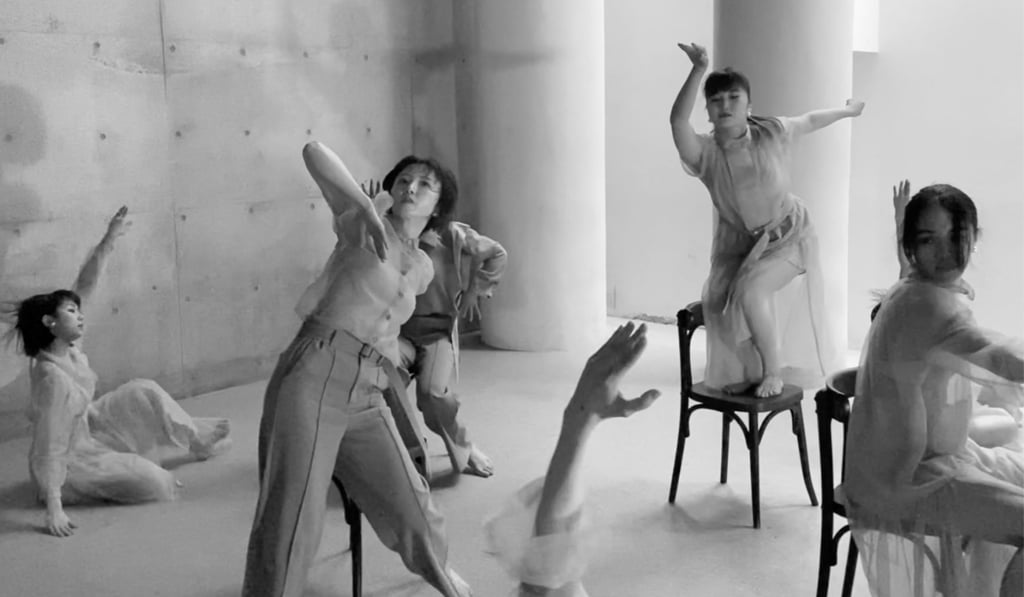
Mikiko’s choreography is deceptively simple; the beauty of the performance lies in the synchronised movements, as the dancers’ legs, arms and bodies move rhythmically in sync, flowing fluidly both with, and around, one another, while creating stimulating patterns that grab the attention of viewers.
Each video also features striking visual effects; by the end of each movement, these effects, including dots and streamers that overlay the dancers, have morphed into abstract swirling patterns that are dancing, and replaced the performers.
These effects – including the waves of spiralling streamers in the second movement – are evocative and moving, and add an extra dimension to the dance performances – something you would not get when watching a live show.