Chinese Culture Festival 2026 brings centuries of legends and glory to life for modern audiences
Hong Kong’s Leisure and Cultural Services Department ensures ‘legendary’ performances have contemporary relevance

Imagine entering the world of China’s White Snake legend, centred on a romance between a mortal man and a 1,000-year-old reptile spirit that has transformed into a woman so it can feel human love, and – instead of finding a historic classic – discovering a modern story charged with dramatic tension, beauty and surprise.
In the compelling dance drama Lady White Snake, elements as familiar as the Broken Bridge, the Dragon Boat Festival transformation and flooding Jinshan Temple have been reinterpreted into unexpected forms, as ballet and Chinese dance lead the innovative theatrical performance combining oriental aesthetics and multimedia imagery, viewed through a contemporary psychological lens.
With internationally renowned ballet artist Tan Yuan Yuan as artistic director, the production assembles a dream team of leading Chinese dancers and creative talent from across the country and abroad, depicting Lady White not just as the heroine of a much-loved romance, but also as a woman on a journey of self-discovery.
As the opening programme of Hong Kong’s four-month Chinese Culture Festival 2026, it immediately makes clear the event’s intentions: tradition is being brought into the present day, alive, relevant and renewed with every generation.
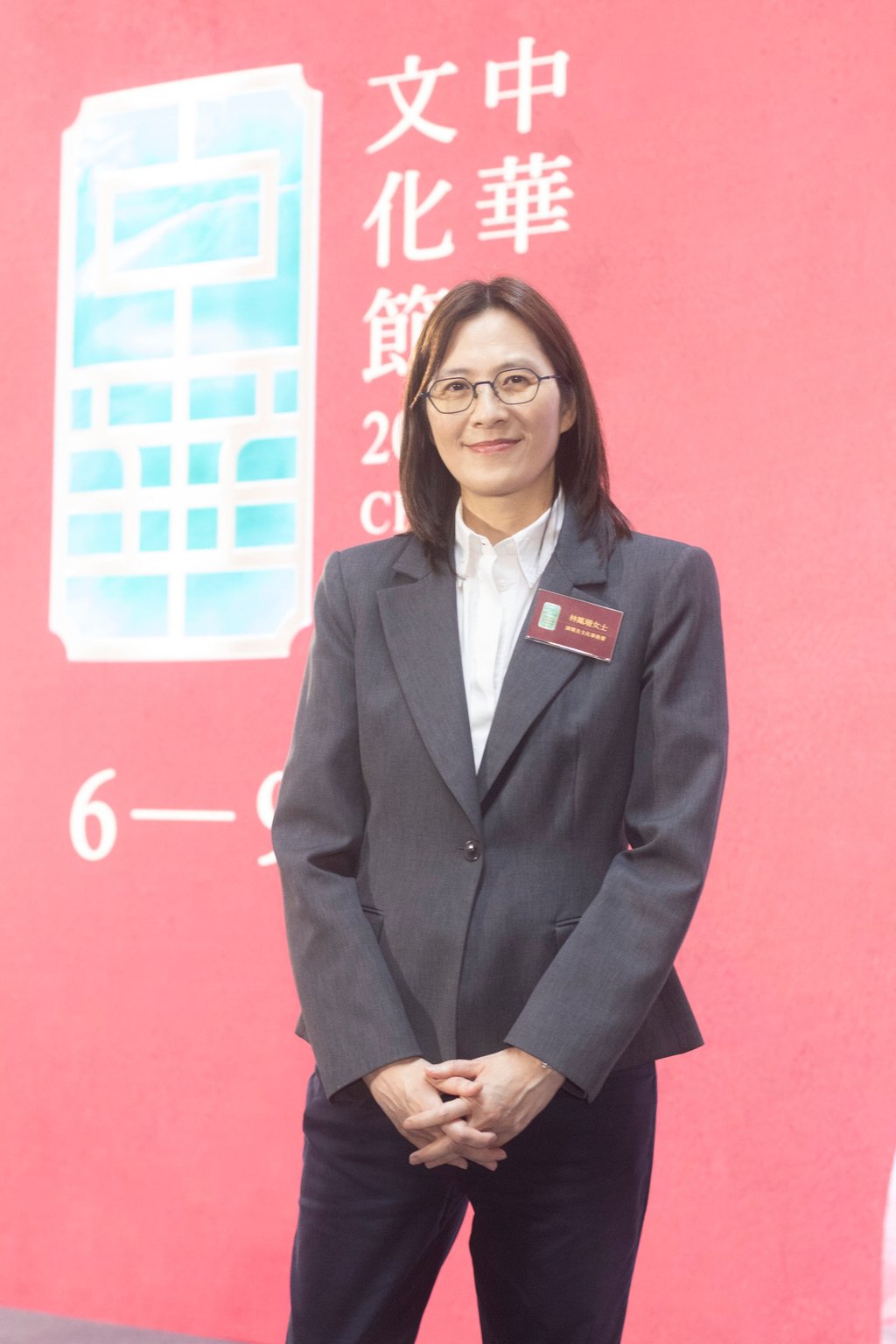
“This year, the prominent theme is ‘legend’,” Veron Lam, chief manager of the Leisure and Cultural Services Department’s Cultural Presentations Section, said. “It gives the programme a clearer centre, with the Tang dynasty [618-907] and its eastern capital Luoyang providing a historical thread.”
That focused structure shapes the third edition of the festival, celebrating the inheritance, exchange and creative vitality of Chinese culture and history, which runs from June to September at venues across the city.
After the first two years – both of which attracted more than 900,000 audience members to a diverse range of performances, and saw about 85 per cent of surveyed audience members report their interest in Chinese culture had deepened – the focus now is not only on scale, but also cohesion.
Another underlying concept of the festival was captured in one of this year’s publicity visuals – the idea of audiences “entering a painted world, rich with life and nuance waiting to be uncovered”. Lam said: “It’s like stepping into a painting where you discover layers of life and hidden details.” The aim was for audiences to experience the festival “not only as performances, but as a kind of cultural space that rewards curiosity at every turn”, she added.
For the local audience, many of the stories featured on stage will have been familiar to them while growing up – through school, film, television or books on folklore – and the festival uses that awareness as a starting point before widening into history, performance and reinterpretation.
The festival’s particular focus on the Sui (589-617) and Tang dynasties deepens that journey. For Lam, the Tang dynasty’s openness and cultural richness make it an especially fertile period. “We hope audiences will not only enjoy the shows, but also get to know more about the culture that shaped so much of what we recognise as Chinese civilisation today,” she said.
That ambition takes different forms across the programme. The drama The Code of The Dynasty – a Chinese-style murder mystery adapted from a bestselling novel – draws on the visual world of the Song dynasty (960-1279) handscroll painting, Along the River During the Qingming Festival, to build suspense on stage as conspiracies are investigated. The production is jointly presented by the Bauhinia Culture Group.
“Journeys to the West: Cinematic Dialogues Across Time” compares three pairs of films, inspired by Journey to the West – a 16th century literary classic based on one of China’s most famous legends – which have helped the novel transcend generations and achieve timeless relevance.
Yao Gongbai, a maestro of the guqin, a traditional Chinese seven-stringed zither, will perform the “Resonance of Strings and Harmonics” recital to demonstrate to the audience the sonorities and cultural resonance of the instrument with his world premiere of a version of Flowing Water sourced from 1821 tablature collection Zhifa Huican Quejie.
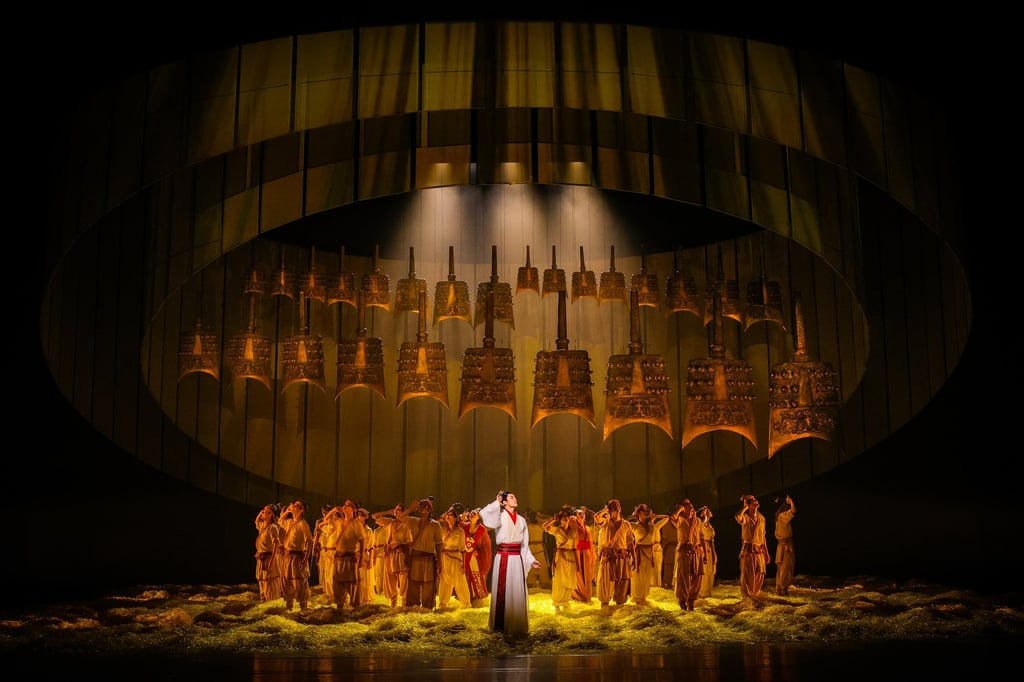
Harmony in Eternal Melody, a dance drama by the Hubei Opera and Dance Drama Theater, tells of a newly crowned king torn between war and peace after assassins strike amid a diplomatic exchange of bronze chime bells. With life-sized replicas of ancient instruments from the Hubei Provincial Museum on stage, the production embodies the Chinese concept of how “rituals bring order to the universe, and music creates universal harmony”.
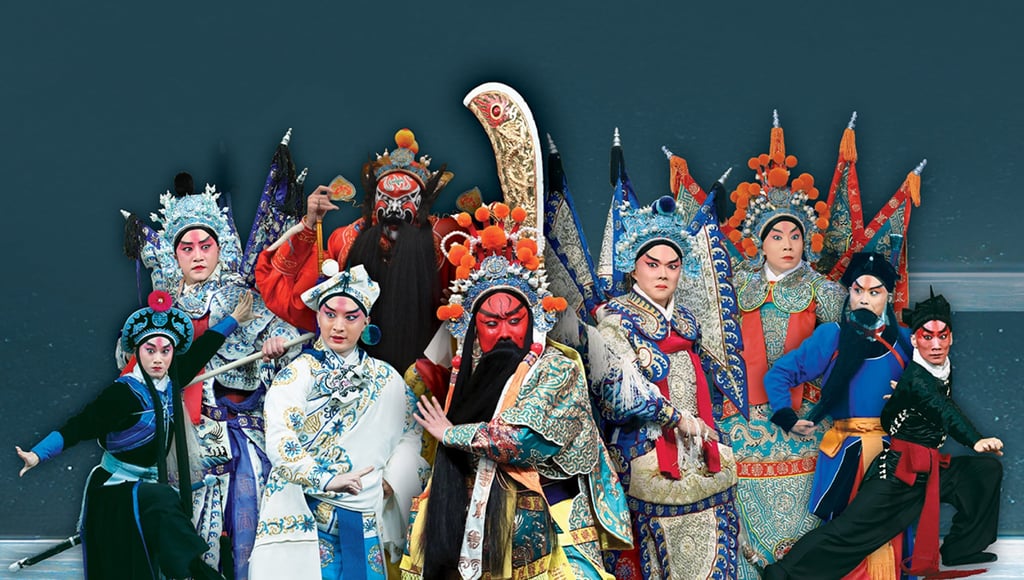
Whether first-time visitors to Chinese opera or lifelong devotees, audiences are sure to be captivated by the sheer spectacle and colour of “Showcase of Peking Opera Actors in Full Armour Roles”.
The production, which headlines the long-established Chinese Opera Festival – now presented as part of the cultural festival – is full of dramatic fight scenes featuring agile, swift and acrobatic movements. The cast is formed by a rare assembly of performers of leading martial male roles (wusheng) from four of China’s top Peking opera troupes from Shanghai, Beijing, Tianjin and Hubei, who share the stage while performing works from repertoires such as Romance of the Three Kingdoms and The Water Margin.
All audience members are also likely to be wowed by the contemporary stage settings, ethereal lighting and innovatively embroidered costumes on display in the Kunqu – the oldest form of Chinese opera, which originated in Jiangsu province – production of A Dream Under the Southern Bough, presented in full across two parts, a rarity in a tradition where excerpts are the norm, as it makes its Hong Kong premiere.
Shi Xiaming, a renowned Kunqu artist and winner of the China Theatre Plum Blossom Award, will play a leading role, alongside younger performers, in the poetic tale of a military officer whose dream empire of love, power and glory dissolves into dust.
He will also interact with audiences through a specialised Kunqu workshop and a meet-the-artists session exploring the production’s creative approach.
The spirit of innovation, which plays a central part in the festival as in previous years, is an important factor in attracting new generations of audiences. It also inspires younger performers to carry the torch of tradition.
A case in point is the headline Cantonese opera performance, Ancient Tune of Guangling, with a cast that features both established and rising stars. The classic story depicts a fiercely moral scholar who steadfastly affirms his integrity, even in the face of his imminent execution, by playing the transcendental music one last time on his qin.
The show will be performed by Cantonese opera virtuosos Loong Koon-tin, Tang Mi-ling, Yuen Siu-fai and Liu Kwok-sum and the rising stars Man Shuet-kau, To Wing-sum and Ng Lap-hei.
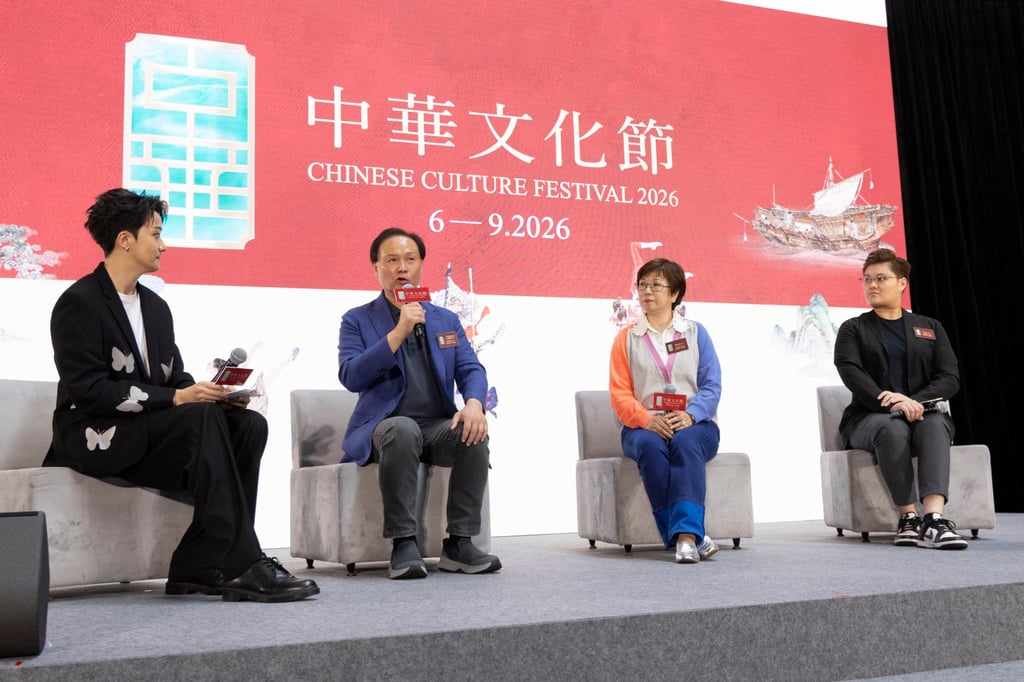
“The younger generation brings new ideas and energy,” Loong noted. “When we work together, the stage becomes more alive.” At the same time, experienced artists have an instinct for how things should be presented. “Some things look good on paper,” he said, “but when you put them on stage, you realise what works and what doesn’t.”
The question of balance – between preservation and adaptation – runs through these discussions. “Tradition is something we must keep,” he explained. “But how we present it can evolve. That’s how Cantonese opera continues to move forward.”
That evolution is visible not only in the style of the performance, but also in the pacing, staging and audience engagement. Faster scene changes, more flexible staging and subtle adjustments in the delivery of the performers all reflect changing expectations.
Audience tastes are shifting, too. “In the past, many people only wanted to watch traditional plays,” To said. “But in recent years, audiences are more open – they’re willing to try new works.”
Reaching new generations, however, requires more than optimism. “If someone has no background knowledge of the art form, and you ask them to sit through a long traditional opera, it can be difficult,” Tang, famous for performing fadan, or female lead roles, noted. “So we need different entry points – short videos, school talks, different formats.”
The goal is to encourage gradual immersion: “Let them come in, find something they connect with, and then slowly they begin to appreciate it,” she said.
That same thinking extends beyond opera. Across more than 280 stage programmes and related activities, the festival builds multiple pathways in – through exhibitions, film screenings, talks, workshops and community events.
“It’s not just about knowledge,” Lam said. “We hope audiences leave with a feeling – a connection, or even a reconnection, with Chinese culture.”
Initiatives such as “Generations Together 1+1,” where ticket discounts encourage older and younger generations to see the shows together, reflect that intention. The annual “Encountering Chinese Culture” Performing Arts Carnival, open to the public on June 28 with stage performances and roving exhibitions, is another clear example.
Luoyang, this year’s city in focus, in China’s Henan province, gives the festival’s historical thread a tangible centre. As an ancient capital and the cradle of Heluo culture, one of the foundational parts of Chinese civilisation, it anchors the programme in a specific time and place.
Performances such as Mu Guiying Takes Command, the definitive story of a military heroine in the region’s Yu opera, celebrating the patriotism of the legendary eponymous Northern Song (960-1127) general, sit alongside the “Heluo Culture Bonds Hong Kong” Exhibition, featuring historical relics and documents, dynamic demonstrations and interactive installations, which allow visitors to encounter its cultural texture across different settings. The exhibition is organised by the China Federation of Literary and Art Circles Hong Kong Member Association.
What ultimately defines the Chinese Culture Festival 2026 is not just its scale, but its widespread appeal. There is no single way in. Some audience members will be enticed by a major stage production such as Lady White Snake; others through a lecture, a workshop or a community event.
For Lam, the festival is about creating moments that resonate, where people rediscover something familiar, or encounter something entirely new. “Each person may take away something different,” she said. “But what matters is that connection with our culture.”
When the festival opens on June 12, it offers exactly that: a chance to step in, move between worlds, and find, somewhere along the way, a point of recognition.