What people living with liver cancer wish they had known earlier about hepatitis B
Greater awareness of viral infection’s impact and effective treatment options is crucial to stop it from progressing to more serious diseases

Although extensive vaccination programmes have been in place since the 1980s, hepatitis B – a serious viral infection that attacks the liver – remains a major worldwide public health concern and the subject of continuing efforts to raise awareness about the importance of early diagnosis and treatment with timely, appropriate treatment.
During the acute infection phase, it can cause a range of symptoms from mild to acute, lasting for up to six months, with the most common signs of the disease including nausea, fever, fatigue, abdominal pain, loss of appetite and jaundice.
However, some cases can progress to a chronic infection and may eventually cause cirrhosis and liver cancer, typically leading to the need for costly long-term medical care. Liver cancer rates in Southeast Asia are expected to double by 2050, resulting in 200,000 deaths per year.
The hepatitis B virus (HBV) is transmitted by exposure to infectious blood or body fluids – most commonly from mother to child during birth and delivery, particularly in highly endemic regions. Among the other risks are blood transfusions, dialysis and travel in countries with high rates of infection.
Up to 254 million people were living with chronic hepatitis B in 2022, with a further 1.2 million new infections occurring each year, according to World Health Organization (WHO) estimates.
These figures are striking, but it is often the experiences of individuals living day-to-day with the disease that most clearly bring home the urgent need for a wider call to action.
Gilead Sciences, a biopharmaceutical company based in the United States, which specialises in the research and development (R&D) of antiviral drugs, is committed to raising awareness of the issue. It recently produced What I Wish I Knew, a short film series featuring four real-life stories of people living with hepatitis B in mainland China, Hong Kong, Taiwan and South Korea, which is both informative and inspiring.
One of them is Hongkonger Ken Wong, 60, who first learned he had hepatitis B when he donated blood while a student at secondary school. He was asymptomatic at first and left the disease untreated for years. Unbeknown to him, the disease had already taken its toll on his body and slowly progressed to other liver illnesses, including cirrhosis and cancer. His only hope was to have a transplant.

“If I knew that hepatitis B was so serious, I would definitely go see a doctor first,” he says. “I believe the results would have been very different.”
However, thanks to his daughter, who donated part of her own liver to him, which enabled him to undergo a successful 11-hour transplant operation, Wong says he has recovered from his illnesses.
Today, he pays careful attention to his health, and also does what he can to offer advice to others living with hepatitis B. In particular, Wong says it is essential to have routine check-ups to know their liver function, keep up with treatments, and remember that it is never too late to slow down or stop the progression of the disease.
This type of practical advice will also be a central part of the message given by the organisers of World Hepatitis Day, which is observed each year on July 28. Their aim is to raise global awareness of how the disease spreads, the methods of prevention and treatment, and the possible consequences of failure to act. By doing so, they hope to move closer to the WHO’s goal of all but eliminating viral hepatitis as a public health threat by 2030.
Most of the people living with hepatitis B are actually based in Asia, which makes it all the more important to raise awareness of the disease in the region.
“Discrimination and stigma are still the biggest barriers to why many people in Asia refuse to get tested and treated for hepatitis B,” says Dee Lee, president-elect of the World Hepatitis Alliance (WHA), an international NGO which raises awareness about the steps needed to eliminate the disease.
Lee, who is one of the many people in the region living with hepatitis B, says that although prejudice against the disease has become more “hidden” in recent years, many people living with the disease are still afraid to seek help because of the potential negative impact that the diagnosis may have on their social life and career.

Here are four lesser-known facts about hepatitis B related to Asia’s population and how treatment guidelines have evolved in recent years in the region.
1. About 75 per cent of people with chronic HBV infections are in the Asia-Pacific region
That statistic, from the National Library of Medicine in the United States, highlights the need for coordinated efforts in the region to tackle the root causes of the disease.
“In any healthcare system, there must be linkage to care so that patients get the right information and regular treatment,” Lee says. “It is also important to define what stage a patient is in and ensure they have the best drug for their status quo.”
2. People with hepatitis B can be asymptomatic for decades
If left undiagnosed and untreated, the disease can lead to serious health problems over time. Chronic hepatitis B is the leading cause of liver cancer worldwide and up to one in four carriers of the disease are likely to develop liver cancer or cirrhosis, according to Stanford University’s Asian Liver Center in California. Moreover, someone who does not feel ill and shows no symptoms may still suffer some liver damage and can pass the virus on to others.
3. In Asia, hepatitis B causes about 80 per cent of all newly diagnosed hepatocellular carcinoma cases
Hepatocellular carcinoma (HCC) is the most common type of liver cancer, which is the fourth most significant cause of cancer-related mortality in Asia. In mainland China, 84 per cent of HCC cases are caused by hepatitis B infections. Hepatitis B also accounts for more than half of all liver cancer cases in various places across Asia.
In Hong Kong, 55 per cent of liver cancer cases have progressed from hepatitis B. The percentage rises to 59 per cent, 59.7 per cent and 62.5 per cent in Taiwan, South Korea and Singapore respectively.
Although liver cancer rates in Southeast Asia are increasing, the region’s coverage of hepatitis B and C testing and treatment remains low. WHO reports that only 2.8 per cent of people with hepatitis B were diagnosed, while only 3.5 per cent of diagnosed patients received treatments in 2022.
4. Evolution of treatment guidelines for hepatitis B worldwide means more people are eligible to receive care
In recent years, countries and regions around the world have updated their hepatitis B treatment guidelines to contribute to WHO’s efforts in eliminating viral hepatitis as a public health threat by 2030.
For example, China’s latest treatment guidelines, updated in 2022, now enable 94 per cent of patients with the chronic form of the disease to be eligible for antiviral treatments. The European Association for the Study of the Liver also updated its clinical practice guidelines on the management of HBV infection in May.
Moreover, thanks to a sustained public health campaign over the past few decades, China’s three-dose vaccination rate for hepatitis B now stands at 99.6 per cent.
“Policymakers in China had a plan for holistic implementation and made sure to move it forward,” Lee says. “They have also introduced large-scale screening for adults with the help of clinicians and local community leaders.
“But it doesn’t mean everything is fixed. There’s still work to be done to raise awareness about the disease, empower people to make the decision to get treated, and for healthcare professionals to work with pharmaceutical companies to come up with different types of treatments.”
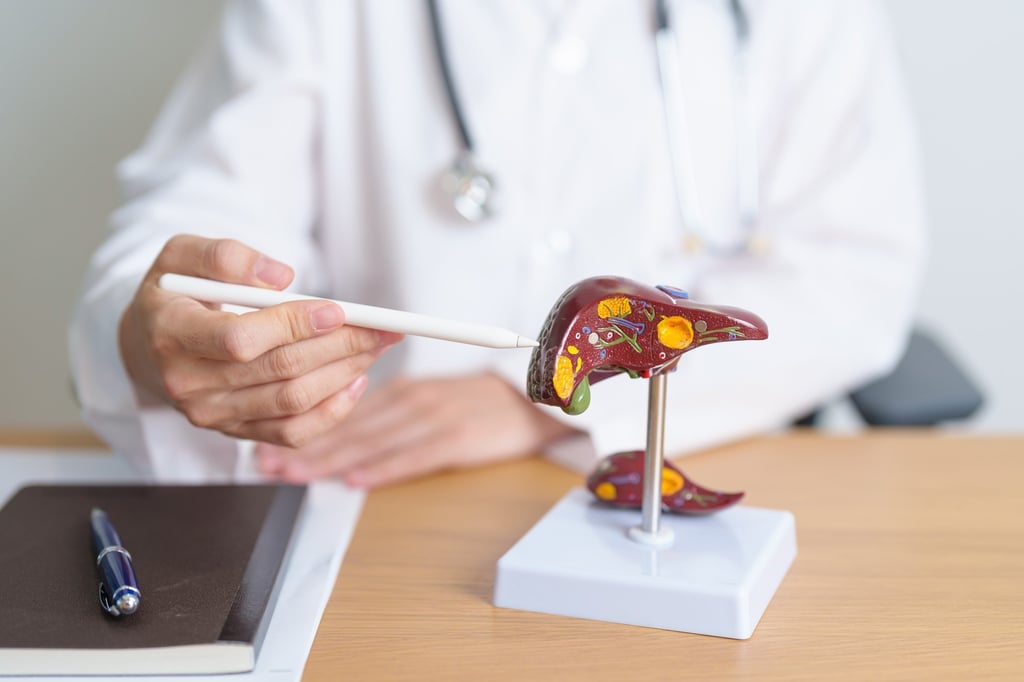
It is essential for anyone diagnosed with hepatitis B to understand the possible course of the disease and, if necessary, work with trained medical experts to identify suitable long-term plans for care and treatment. This can include the use of antiviral drugs, but there should also be regular check-ups and close attention to maintaining healthy practices and routines to slow or halt the progression of the disease.
“Never be afraid to speak to your doctor,” Lee says. “And remember that once you have taken the first step in living with hepatitis B, the next steps are easier.”
Watch a preview of What I Wish I Knew above. Speak to your doctor about suitable hepatitis B treatment options and management plans.