Shaw Prize-winning scientists and mathematician share invaluable life lessons
- Four recipients of 2024’s prestigious international award reveal secrets of their groundbreaking achievements

When experts at the top of their fields offer advice and words of wisdom, we certainly should pay attention and listen, especially if they are recipients of the Shaw Prize – a prestigious annual international honour awarded to individuals who have made recent groundbreaking contributions to modern civilisation through their academic and scientific work.
In May this year, the 21st year since the award was first presented, the winners of the Shaw Prize for 2024 were announced. The Shaw Prize in Life Science and Medicine is being awarded jointly to Swee Lay Thein, senior investigator and chief of the sickle cell branch of National Heart, Lung and Blood Institute at the National Institutes of Health in the United States, and Stuart Orkin, David G Nathan distinguished professor of paediatrics at Harvard Medical School, US.
The Shaw Prize in Mathematical Sciences is to be awarded to Peter Sarnak, Eugene Higgins professor of mathematics at Princeton University, US, while the Shaw Prize in Astronomy is being awarded to Shrinivas R Kulkarni, George Ellery Hale professor of astronomy and planetary science at the California Institute of Technology, US. Each Shaw Prize carries a monetary award of US$1.2 million.
The Post speaks to each of these Shaw Laureates to learn about their challenging career journeys, the secrets of their success and, more importantly, their individual mindsets and common traits which have helped them in their ventures – the invaluable life lessons that everyone, no matter their chosen field, can apply, too.
Expect to be learning your whole life and enjoy it …
Whether you are a scientist, musician or artist, if you are not willing to keep learning and enjoy what you do, then you are in the wrong job, says Swee Lay Thein, a Malaysian haematologist, doctor and scientist. She and Stuart Orkin have been jointly awarded the Shaw Prize in Life Science and Medicine for their discovery of the genetic and molecular mechanisms underlying the fetal-to-adult haemoglobin production switch.
This has made possible a highly effective genome-editing therapy for sickle cell anaemia and beta thalassaemia – two devastating blood diseases that affect millions of people worldwide.

“My discovery was revolutionary in the sense that it identified the gene, which was the key suppressor of fetal [red blood cell protein] haemoglobin.” Thein says. “Suppression of [the gene] BCL11A expression enabled the development of treatments by increasing fetal haemoglobin.”
The early stages of her study, which she began in 1982, involved collecting more than 5,000 blood samples across the United Kingdom to explain the variability in fetal haemoglobin levels. Despite its proven success today, Thein still remains busy with her work, practising what she preaches about perpetually learning.
One’s work is never really completely achieved
“Sickle cell disease is much more challenging and I’m still working on understanding why there’s such a huge variation in the severity of the disease, even though all the patients have an identical mutation in the same gene, regardless of where they come from, regardless of their ethnic origin,” she says. “I have now come to realise that a lot of it is related to the patient’s environment and also the genetic background of the individual.
“One’s work is never really completely achieved. I certainly haven’t really completely achieved my goal; there’s still so much more to be done.”
Stay focused and solve one problem at a time …
To say that American doctor Stuart Orkin has had to stay focused so his research could lead to the first successful trial for patients with haemoglobin disorders, such as sickle cell disease or beta thalassaemia, would be an understatement. He has been carrying out this work for over four decades.
“I’ve been working in the field of haemoglobin genetics and haemoglobin for more than 40 years, so it took a very long time, and we had ups and downs,” Orkin says. “There was a period for a good 10 or 15 years where the work was stalled. We needed new techniques and approaches to advance the field.”
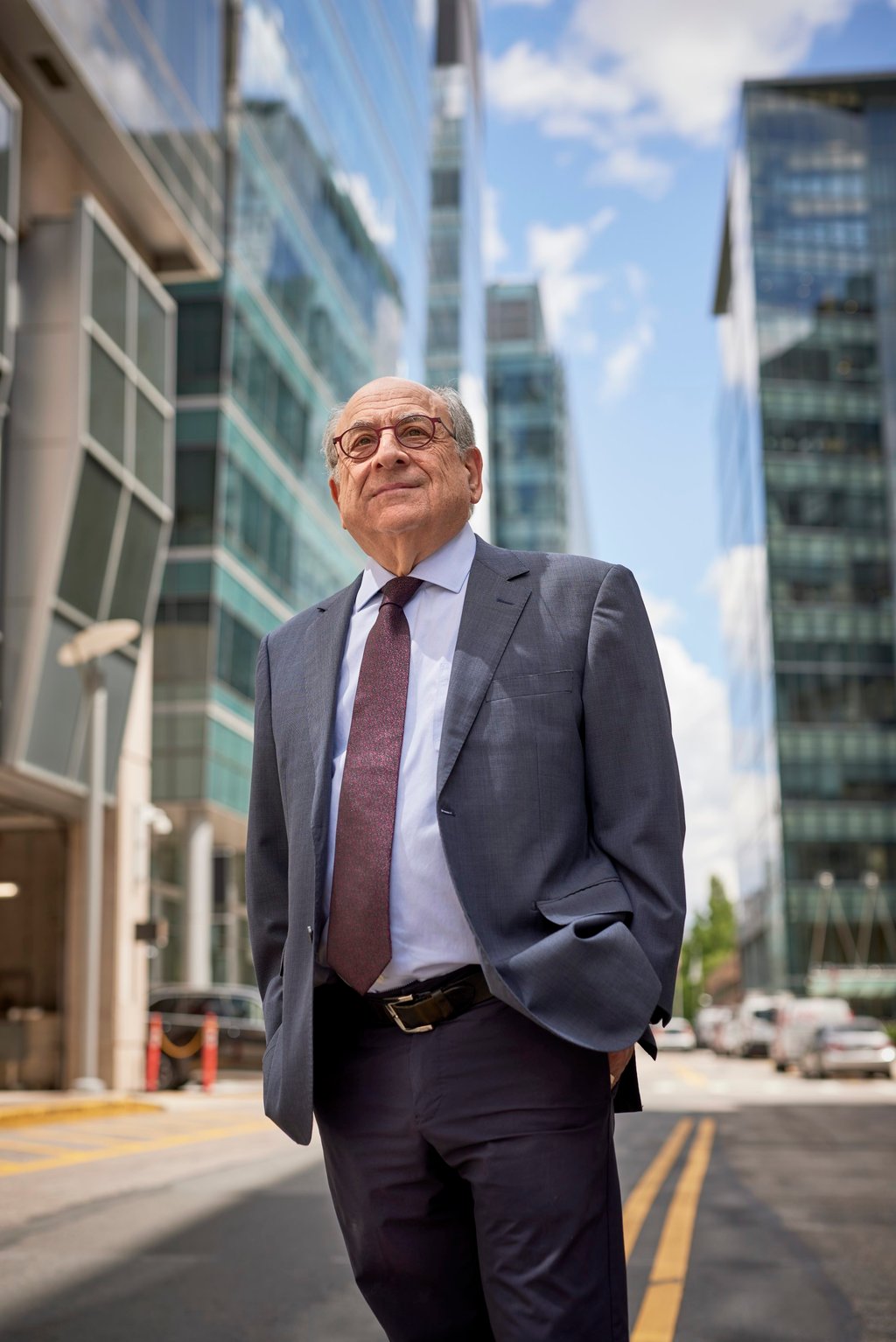
His research was considered groundbreaking as the trial showed that patients have a transformative phenotype. “This means that they no longer need blood transfusions in the case of thalassaemia,” he says. “In the case of sickle cell disease, they no longer have the painful crises that are the hallmark of the disease. Getting to this point has been very gratifying.”
However, the stalled research was not the biggest problem he faced during his long journey of discovery. “The greatest challenge was maintaining focus and interest in doing this because, if something is difficult to do, very often, the temptation is to go do something else,” he says. But Orkin’s endurance and dogged determination finally paid off.
The greatest challenge was maintaining focus and interest
“We were fortunate that technology developed just at the right time,” he says. “Genome-wide association studies [observational research that examines whether any genetic variant in different people is associated with a particular trait, such as major human diseases] were developed, which allowed the genetics to be done. Molecular biology became very sophisticated and gene-editing [tool], CRISPR, too came along.
“So in a way, it was a convergence of good events, but they didn’t occur all at the same time. So, it required persistence as well as perhaps the vision of how to get there.”
The process is never as polished as the result …
South African mathematician Peter Sarnak was previously on the selection committee of the Shaw Prize, but news that he is being awarded the Shaw Prize in Mathematical Sciences came as a “complete shock”, he says. He learned about the announcement only after a sudden barrage of congratulatory emails from his peers.
Sarnak has been recognised for his development of the arithmetic theory of thin groups and the affine sieve, but he is quick to point out that this has been a collective effort. “The question appealed to many experts in different areas and so, when we finally came to a solution of this problem, it was based on many people’s efforts,” he says, citing his peers Alexander Gamburd and Jean Bourgain among his crucial collaborators.
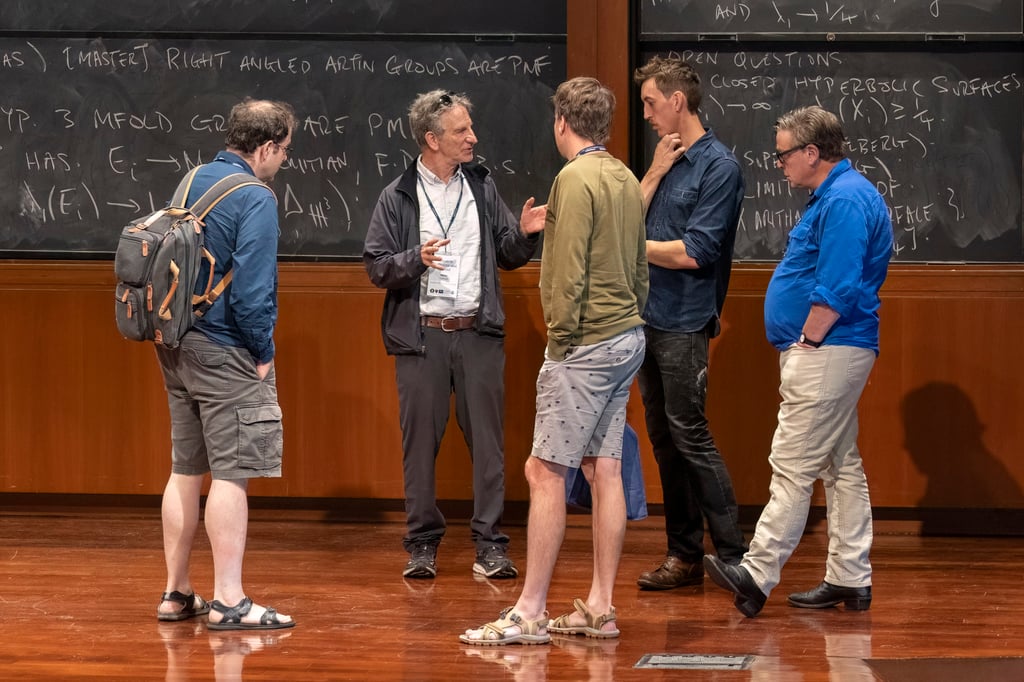
Completing the solution took Sarnak about 10 years – a time frame that never fazed him. “To be honest, most of the problems that mathematicians attack, we never solve,” he says.
“Our steady state is to be frustrated,” he adds with a chuckle. “So if you are interested in having a high every few months, math[s] is not the right field. It happens once in five or 10 years. But when you do solve a problem, it’s a real high.”
Most of the problems that mathematicians attack, we never solve
Sarnak’s advice to young mathematicians is not to be discouraged by the polished, brilliant solutions that are presented to them. “You’ll wonder how on Earth you could have done something as clever as that,” he says.
“But usually it’s because there was a natural evolution. You’re seeing only the end of something, not the messy, robust beginning. Read the source of the idea because then you’ll understand how you might’ve been able to do it, too.”
Be true to yourself – and don’t pretend otherwise …
Shrinivas R Kulkarni never expected that he might receive the Shaw Prize in Astronomy.
“I have not been a usual scientist,” he says. “I switch my area of study about every five to 10 years. I don’t have a body of work which goes all the way from the beginning to some glorious conclusion, and that’s what prizes are usually given for, so I was surprised.”

Nevertheless, his achievements have been groundbreaking. Kulkarni, who was born and raised in India, has been recognised for his discoveries of the millisecond pulsars, gamma-ray bursts, supernovas and other variable or transient astronomical objects.
His contributions to time-domain astronomy led to the conception, construction and leadership of the Palomar Transient Factory – an automated astronomical survey using a wide-field camera designed to search for variable stars, supernovas, asteroids and comets – and its successor, the Zwicky Transient Facility. They have revolutionised our understanding of the time-variable optical sky.
I’ve always been motivated to understand the universe as it is
“I’ve always been motivated to understand the universe as it is, rather than approaching it with a hypothesis I have to prove – that has been my working style, however unpopular it is,” Kulkarni says.
Novelty is what keeps him going, he says. “I’m one of these people who, even as a kid, liked the novelty of doing something new, and that’s a very frivolous way of approaching life, but that’s what drives me. So, my advice to young people is, be who you are, don’t pretend otherwise.”
Kulkarni’s future as an astronomer continues to look bright and exciting. “My colleague and I just scored a big space mission called the Ultraviolet Explorer, a space telescope that will provide more insight into how galaxies and stars evolve,” he says. “It’s a US$300 million Nasa-approved mission, and we hope to launch it in the year 2030. It’ll operate for a few years, and that’s when I’ll retire. I’ll be 75 by then.”
The 2024 Shaw Prize award ceremony will take place in Hong Kong on November 12. To learn more about the Shaw Prize and the winners’ research discoveries, go to shawprize.org.