Global collaboration key to the future of science, say 2024 Shaw Prize laureates
This year’s winners of the prestigious awards stress the importance of fostering partnerships and embracing new technologies

Technology has changed the way we work, communicate and collaborate with others. For this year’s winners of the prestigious Shaw Prize, collaboration and embracing new technological advancements have enabled them to make significant contributions to society through their work and research in science and mathematics.
On November 12, the four 2024 laureates gathered in Hong Kong to receive their award medals and certificates, while each prize also carries a value of US$1.2 million. Two days later, the winners took part in an engaging panel discussion at the “Roundtable with Shaw Laureates” event held at the Hong Kong Science Museum. The conversation focused on the importance of collaboration and partnerships in scientific research, and shared the laureates’ insights on how emerging technologies will present opportunities and challenges to the international scientific community.
Collaborating to change lives
Sickle cell anaemia and beta thalassaemia are two devastating blood diseases that affect the haemoglobin molecule in red blood cells. Swee Lay Thein and Stuart Orkin, the co-recipients of this year’s Shaw Prize in Life Science and Medicine, were honoured for identifying the genetic and molecular mechanisms underlying the fetal-to-adult haemoglobin switch, which paved the way for a revolutionary genome editing therapy that could change the lives of millions.
Malaysian-born doctor and haematologist Thein, senior investigator and chief of the sickle cell branch of the National Heart, Lung and Blood Institute at the National Institutes of Health in the United States, has been researching blood cell disorders throughout her decades-long career. She is credited as the first person to make the connection between red blood cell disorders and the BCL11A gene, laying the foundation for curative therapies that focus on manipulating that gene.
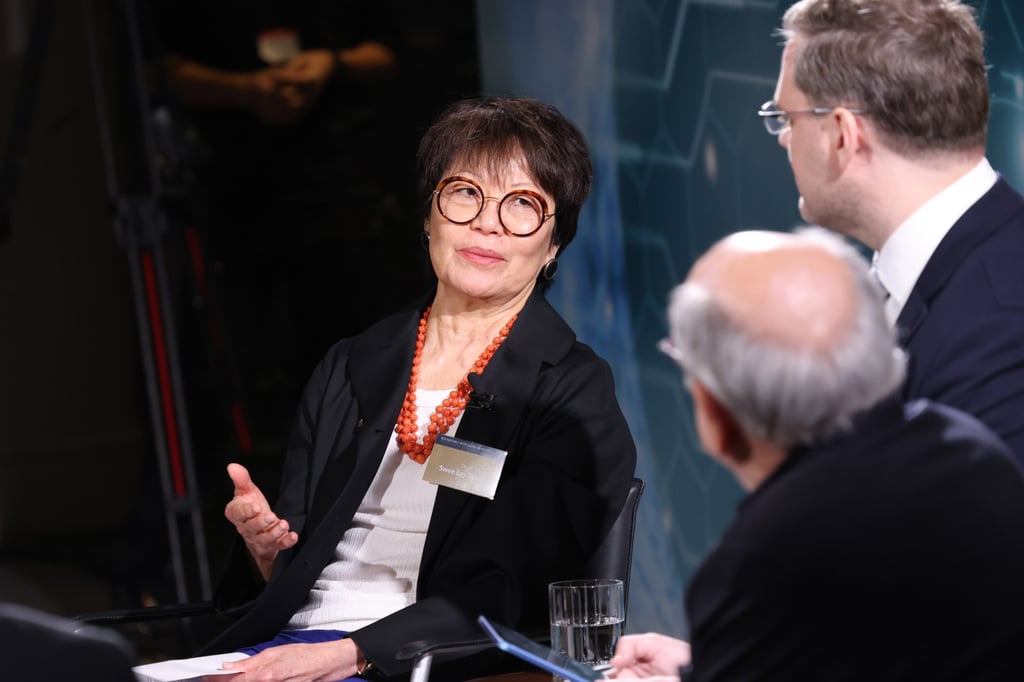
Thein believes collaboration has been central to her research and to the advancement of science. Whether partnering with other researchers to collect blood sample data, or teaming up with biophysicists for drug screening, working with people who have the right resources, expertise and skills has helped her to achieve faster results.
“Take clinical trials as an example,” Thein said at the event. “After showing promising results in the first phase, you’ll then need to do randomised and double-blind trials. This involves collaborating with other centres to ensure the [research] population covers different ethnic groups and to validate the data.”
American doctor and stem cell biologist Orkin, David G Nathan distinguished professor of paediatrics at Harvard Medical School, added that the most important collaborations for sickle cell disease and beta thalassaemia research are still ahead of us.
“People most affected by these diseases live in countries with very limited healthcare resources,” he said. “As we learn more, and develop more tools and innovative therapies to treat these diseases in more advanced nations, the challenge will be to bring them to the rest of the world.”
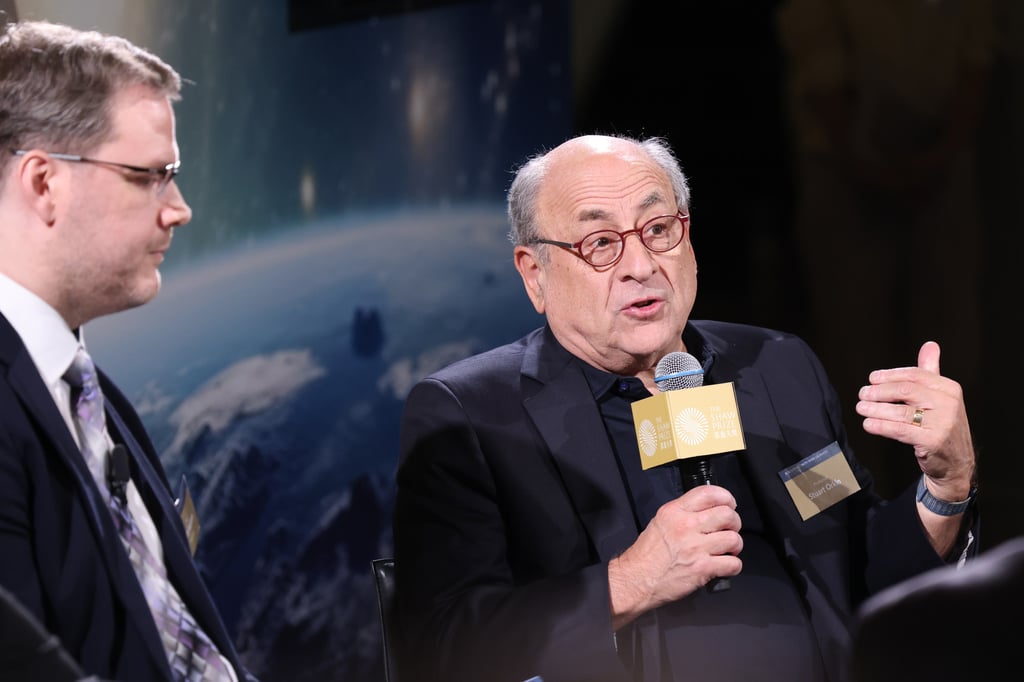
Like Thein, Orkin has been studying haemoglobin genetics for decades. His research demonstrated that decreasing the BCL11A gene expression can correct sickle cell disease. Casgevy, a stem cell therapy approved by the US Food and Drug Administration, is based on Thein and Orkin’s findings.
“We are also actively collaborating with experts in structure and chemistry,” Orkin added. “We need to continue to evolve in what we do in the laboratory. The only way to advance is to keep up with new technology. It’s just a fact – technology drives discovery.”
Finding strength in numbers
For Peter Sarnak, Eugene Higgins professor of mathematics at Princeton University, collaborating with other mathematicians was crucial for developing the arithmetic theory of thin groups and the affine sieve, which led to his Shaw Prize in Mathematical Sciences. This collaborative approach to research, the South African-born mathematician observed, is becoming increasingly common in his field.
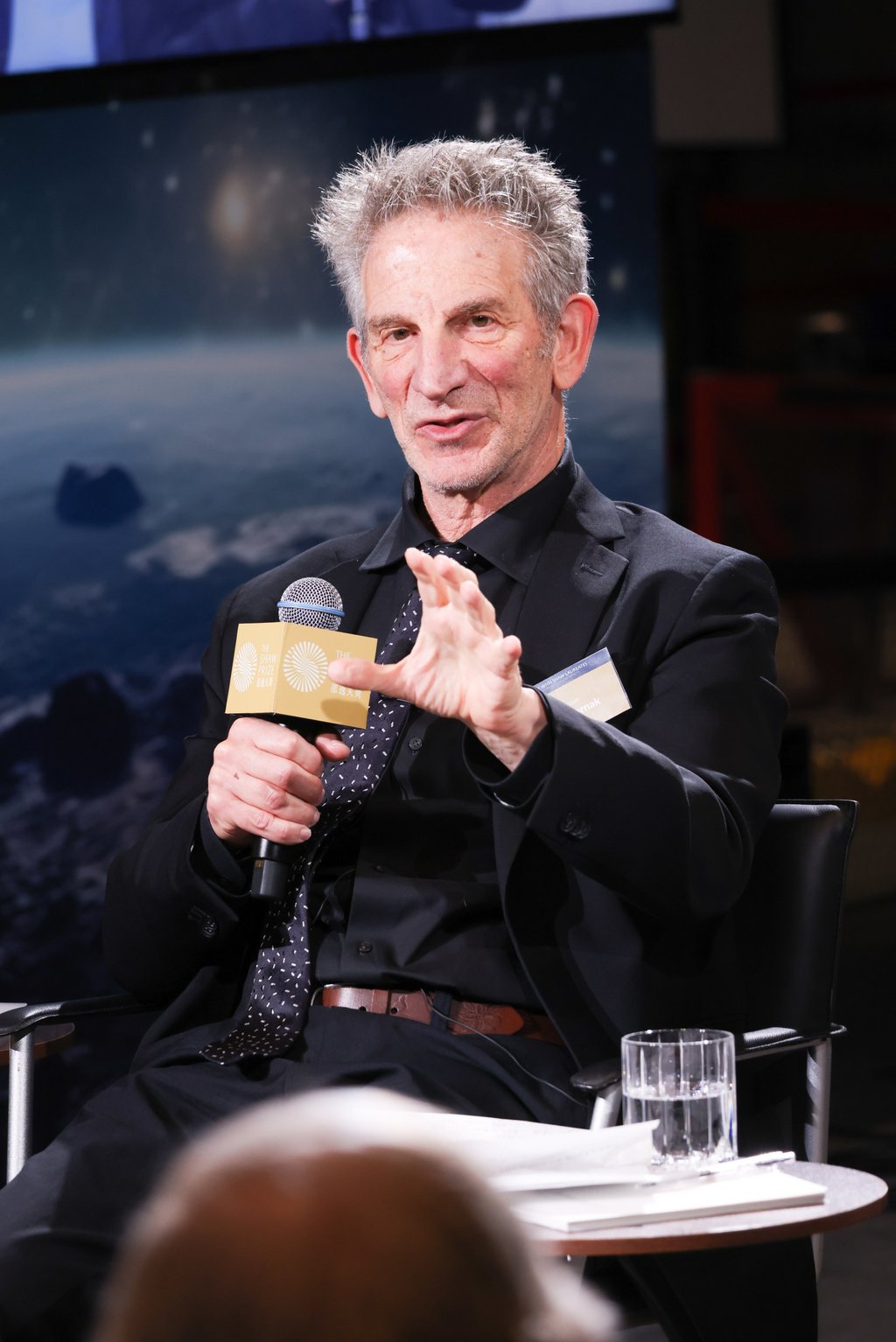
“When I first started in mathematics more than 40 years ago, most papers had just one author. Nowadays, they’re often written by three or four people,” Sarnak said. He also stressed the importance of attending academic conferences in person, despite the convenience of joining them online.
“Workshops and seminars are extremely important in fostering collaborations, especially among young mathematicians,” he added. “Attending them allows you to get to know people with a common research interest. Governments around the world are putting a lot of resources into facilitating these events.”
Democratising a sky full of data
By its nature, astronomy is a collaborative field, as all researchers are essentially studying the same sky, said Shrinivas R Kulkarni, George Ellery Hale professor of astronomy and planetary science at the California Institute of Technology and the winner of the Shaw Prize in Astronomy.
The Indian-born astronomer was honoured for his pioneering work in time-domain astronomy. One of his most notable achievements is his contribution to the conception, construction and leadership of the Palomar Transient Factory (PTF) and its successor, the Zwicky Transient Facility (ZTF), at the Palomar Observatory in California.
The ZTF, which scans the entire Northern Sky every two days, analyses the data and shares its findings with astronomers around the world within minutes. This data has revealed thousands of rare events, including extremely bright supernovae and disruptions of stars by black holes. This real-time data sharing has been called a “remarkable example of the democratisation of science beyond national borders” by the chair of the Shaw Prize in Astronomy selection committee, Scott Tremaine.
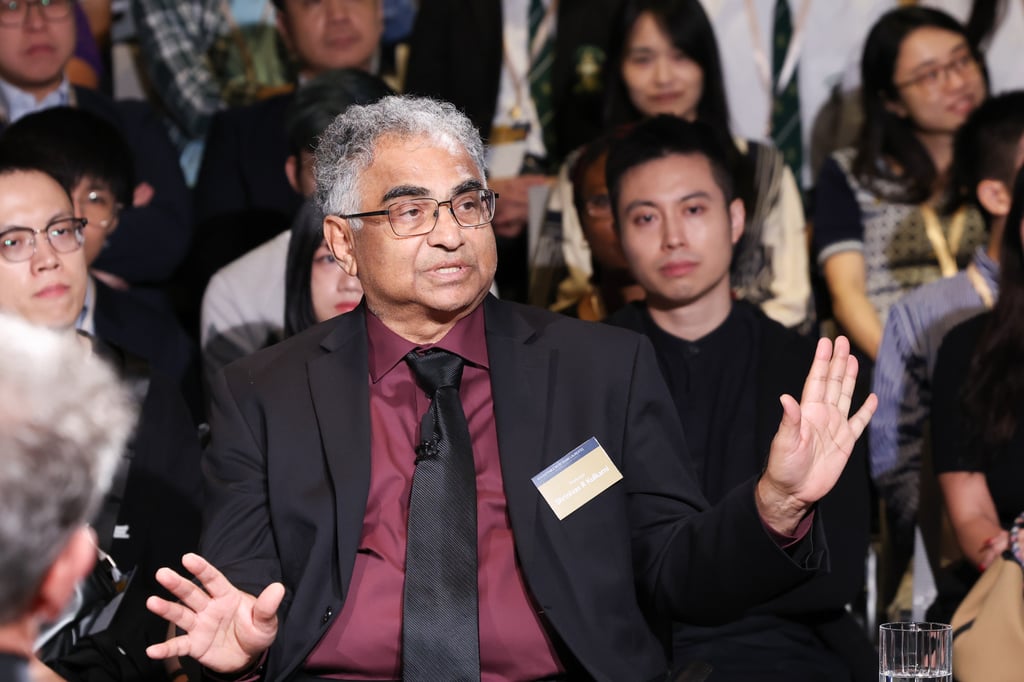
“I treated ZTF like a brand,” Kulkarni explained. “Within about six years of ZTF’s operation, our team published about 200 papers, whereas the rest of the world has written 800 papers [with data gathered by ZTF] – it created a strong halo effect.
“Data has become so freely available, so the question becomes, what do you want to do with it? Would you rather save all the data for yourself, or share it with others, get some paper published and get some credit? For fields like astronomy and biology, which produce a lot of data regularly, this is the future.”
The use of AI and machine learning has played a major role in the fields of research in which the laureates specialise. From analysing research data and images to predicting disease severity in patients, these tools have helped advance their research.
Kulkarni, for example, has been exposed to machine learning since 2009, when PTF was launched. At first, he was sceptical of the technology but soon became a convert when his colleagues showed him it could help eliminate some of the more tedious data analysis processes.
“Machine learning has come at the right time for me,” Kulkarni said. “As we went through the next two phases of the project, the data flow increased exponentially. Since last year, we proved the telescope can execute total automated data collection and perform the whole process without a human in the loop.
“This progress is wonderful because my job is to discover the universe. These tools can help me do that.”