How 3 women scientists have overcome gender bias and stereotypes in astronomy, genetics and mathematics
- Planetary astronomer Jane Luu, geneticist Huda Zoghbi and mathematician Hélène Esnault show they can excel in fields dominated by men
- The Shaw Prize winners and members of the award selection committees say society must help encourage more women to pursue – and remain – in science

The presence of women in science should be normalised today, but research shows there is still some catching up to do. According to the Unesco Institute of Statistics’ data, focused on women working in science, fewer than 30 per cent of the world’s research scientists are women.
The South China Morning Post interviews three renowned women scientists – planetary astronomer Jane Luu and geneticist Huda Zoghbi, who are both Shaw Prize winners, and mathematician Hélène Esnault, who is a Shaw Prize judge.
The trio reveal how they have established successful careers in their chosen areas of expertise, despite challenges that come from being women working in fields dominated by men.
The accidental astronomer
The Vietnamese-born planetary astronomer Professor Jane Luu, of the Institute of Theoretical Astrophysics at Norway’s University of Oslo, was the first woman to become a Shaw Laureate in 2012 after jointly receiving the Shaw Prize in Astronomy with British astronomer Professor David Jewitt, of University of California, Los Angeles, in the United States.
They were honoured for their discovery and characterisation of the Kuiper Belt, a doughnut-shaped ring of icy objects beyond the planets. The Belt is a relic from the formation of the Solar System, consisting of material that never coalesced into planets.
Luu, who lives in Lexington, Massachusetts, in the US, and continues to work with Jewitt, says she was convinced that the email she received announcing they had won the prize was spam. “It felt surreal,” she says with a laugh. “I’d never heard of it before because I just don’t think of prizes. After realising the award was real, I felt huge amazement.
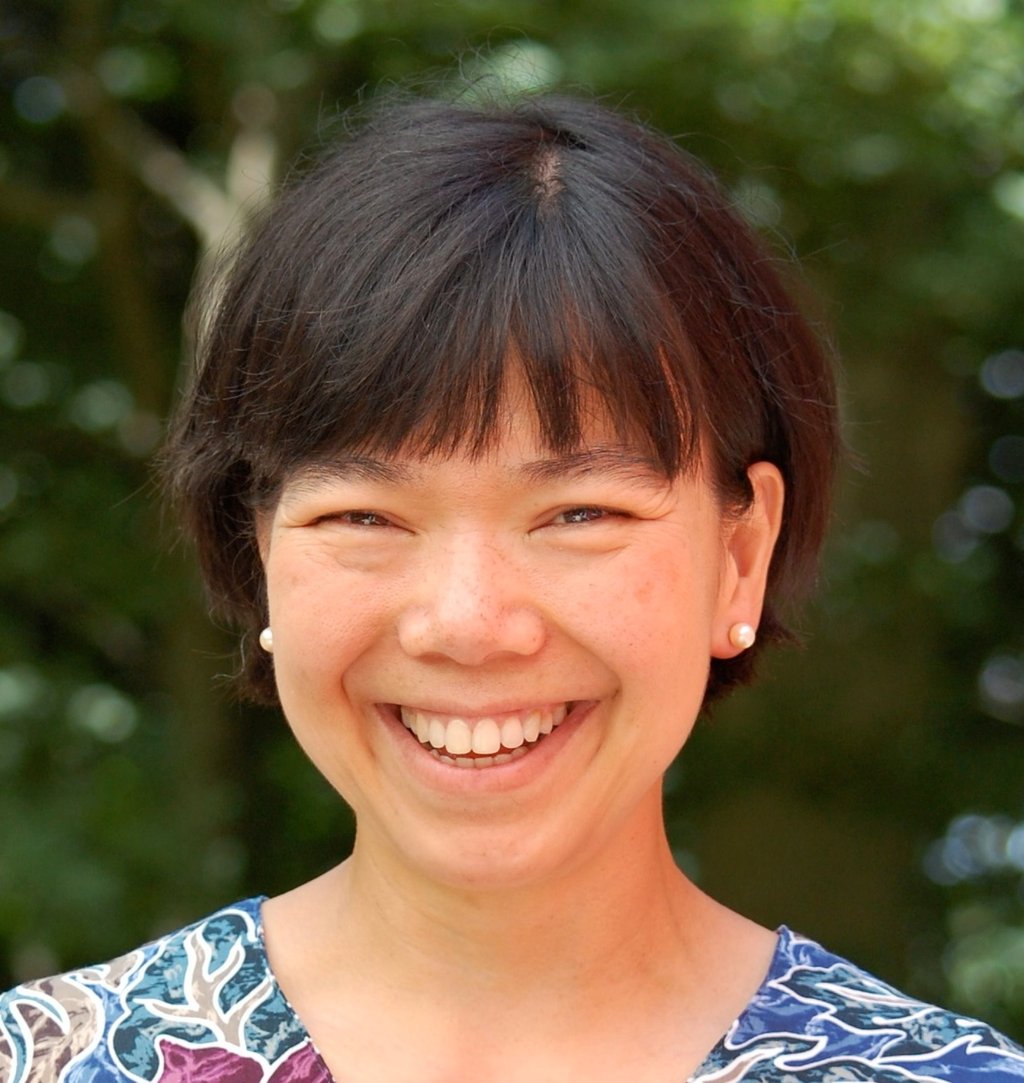
“Dave and I discovered the Kuiper Belt – a population of icy bodies beyond Pluto. And it was a big deal because at that time everybody thought that there was nothing beyond Pluto.”
Besides learning about the existence of prizes, the award also helped to “open doors” for her, she says. “I was offered more invitations to give talks and suddenly got some respect from people who, before that, maybe did not think very highly of me.”
Talking excitedly about her current research, which Luu likens to “being on adventures”, it is hard to believe that she became interested in astronomy “mostly by accident” while studying physics at Stanford University. She was only introduced to the speciality while doing a summer job at the Jet Propulsion Laboratory in California.
“I was so impressed by the pretty pictures taken by the [US] Voyager spacecraft, and discovered this was something I could do for a living,” she says. “I thought that was pretty cool.”
I was told that smart girls did not get husbands. Boys are certainly not told anything like that
However, astronomy remains a field dominated by men, Luu says. “Women are still outnumbered by men, although we are in a much better situation than in pure physics.”
She believes change is possible only if people stop treating girls and boys differently from a young age. “From preschool, girls are praised for being pretty or wearing nice dresses, and given the impression that doing maths and science are hard,” Luu says, recalling her own childhood in Vietnam before her family moved to the US in 1975 after the South Vietnamese government’s collapse.
“I was told that smart girls did not get husbands. Boys are certainly not told anything like that. This unconscious gender bias by society makes it an uphill battle very early on for girls,” she adds. “We have to start changing the conversation with children.”
Finding her voice and balance
Professor Huda Zoghbi, a Lebanese-born American geneticist, who works at Baylor College of Medicine in Houston, Texas, says that early in her illustrious career in medicine, she found it difficult for her voice to be heard when serving on national committees.
“I would have to raise my hand so many times for someone to call on me,” says Zoghbi, who not only calls Houston her “home”, but also Beirut, the capital of Lebanon, where she was born and grew up before moving to the US as a result of the 1975-90 civil war.
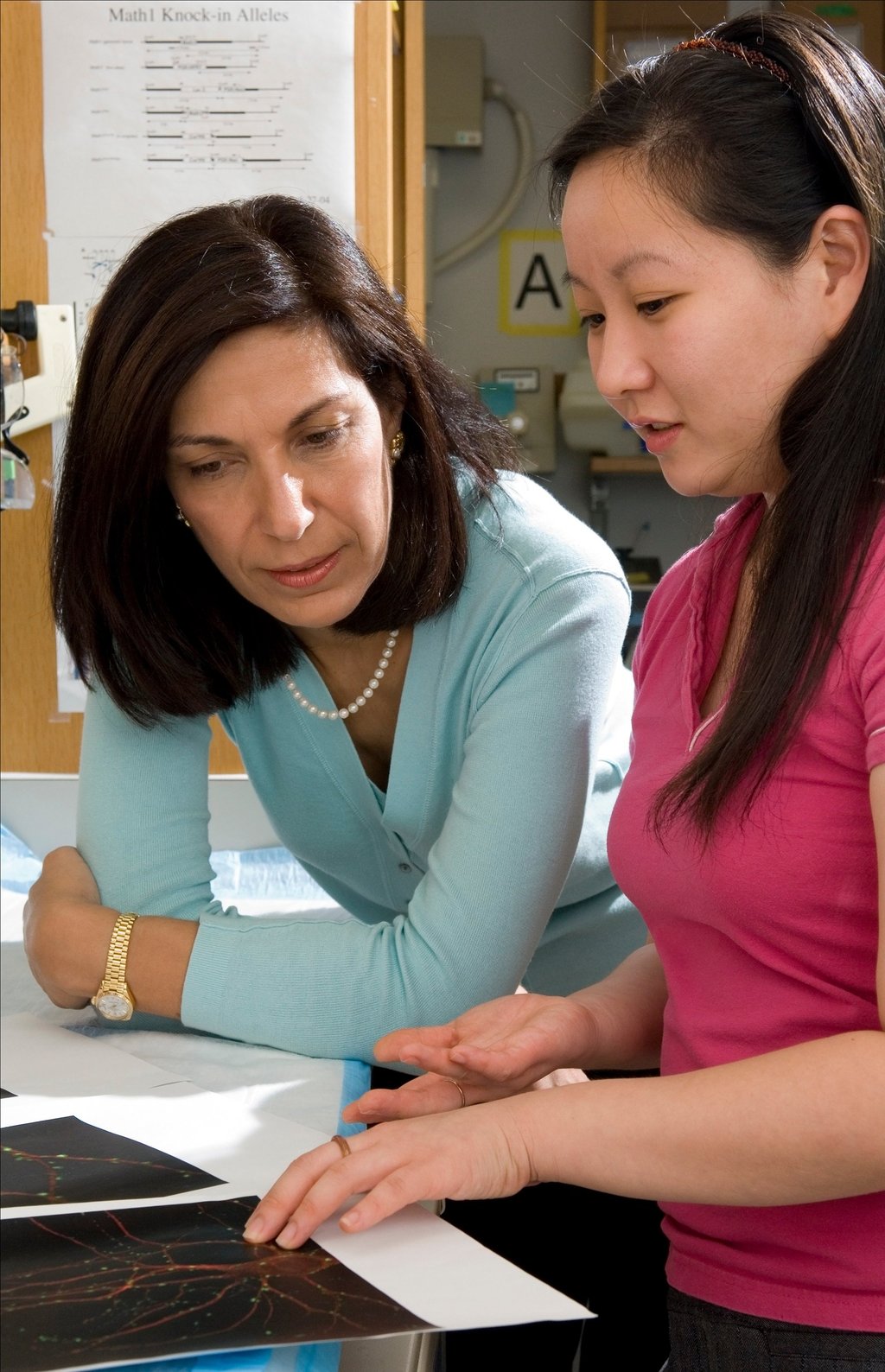
“If I managed to say something, somebody would jump on louder and it would immediately become their opinion rather than something I had suggested. I found that really frustrating early on.” Yet her passion for medicine meant she persisted in her chosen field.
Since then, she has received many awards for her discoveries in neuroscience, including the 2016 Shaw Prize in Life Science and Medicine, which she jointly won with Professor Adrian Bird, a British geneticist at the University of Edinburgh in Scotland, for their discovery of the genes and proteins involved in the development disorder Rett syndrome.
“I remember being in Beirut at the time visiting my mum and family when I received the call, and was just speechless, feeling totally in shock – excited of course – and honoured,” says Zoghbi, who also serves on the Prize’s selection committee in the same category.
I was looking for a female mentor who is a scientist and has a family; it was difficult to find
“I discovered the gene that, when mutated, it causes a neurological disease called Rett syndrome, a terrible neurological disorder that affects many girls,” she says. “I’m really proud because, before the discovery of the gene, it used to take about seven years after a child experiences a regression of development, for all the symptoms to develop to label it Rett syndrome. Now we can diagnose an infant or toddler and initiate therapies and better treatments a lot sooner.”
Women scientists are much more commonplace today than when Zoghbi started her career, which she finds heartening. “When I was in the lab and I was looking for a female mentor who is a scientist and has a family, it was difficult to find,” the mother of two says.
“They’re very rare and few, but today you see more and more women in science who have really wonderful balanced lives and who did not have to give up other aspects of their lives. So I hope the number continues to grow.”
Career driven by passion
As a child, French-German mathematician Professor Hélène Esnault, of Germany’s Free University of Berlin, who specialises in algebraic geometry, never knew that her chosen profession was even a possibility. “As a girl and later a young woman, I had no idea I could pursue mathematics as a career,” she says from Berlin, which, like Paris, she regards as her home.
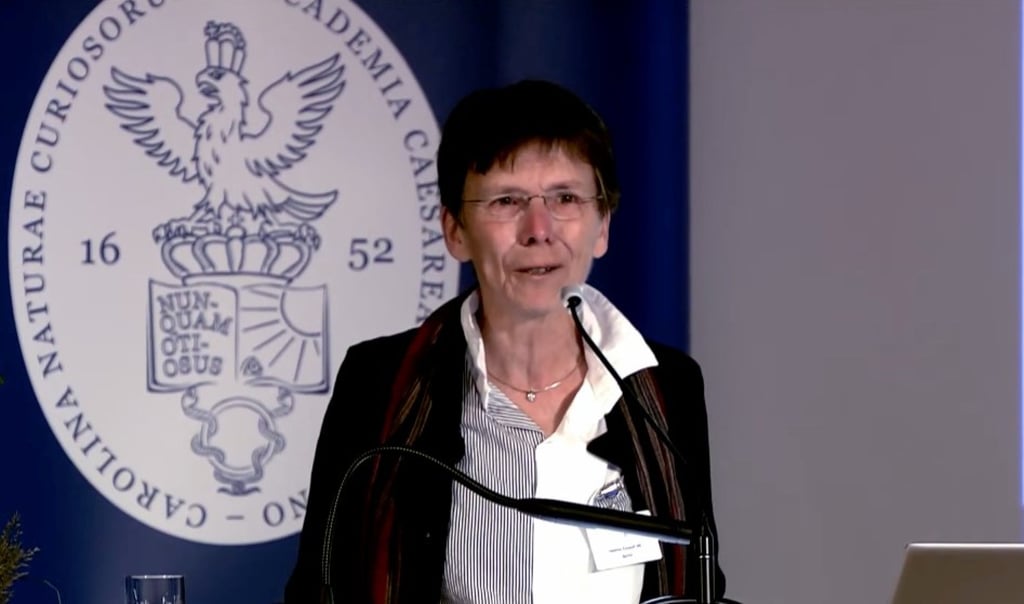
Esnault, who is chair of the Shaw Prize selection committee in the mathematical sciences category, says her eventual decision to be a mathematician was a “partly socially motivated” one.
“I was born in France and I grew up in the French system, which at the time – and still now – reproduces social classes,” she says. “The society does not offer children from a poor, underprivileged background many options to get out of their difficult situation.”
Although she was keen on literature, philosophy and languages, Esnault knew she could not take up these disciplines professionally. “In our culture, it is possible to recognise people’s social and cultural backgrounds based on their work in the humanistic fields, but that is not the case in mathematics,” she says. “Mathematics erases the social background, so that certainly was a motivation for me.
There are clearly more women scientists today than when I started, but there is still a disbalance
“There are clearly more women scientists today than when I started, that is for sure, but there is still a disbalance,” Esnault says. “One issue I can think of is that in science today, it is essentially compulsory to change places all the time – one year of postdoctoral work here, the next half of the year doing research there. That makes it very difficult for a person wishing to have a family, partner, or even close friends.
“Of course this is true for everybody, not only for women, but it is all the more true for women,” she adds. “Statistically, women are still in charge of the organisation of our social and family lives.” She also points out the lack of childcare in and around scientific institutions. “Even if it is available, it is very expensive.”
To those considering a career in mathematics, her advice is blunt: “This is going to absorb your days and your nights, and your past and your future, so you must be in love with mathematics.”
The 2023 Shaw Prize award ceremony will take place in Hong Kong on November 12. To learn more about the Shaw Prize and the winners’ research discoveries, go to shawprize.org.