Macau chef Justin Paul captures the ‘sweet perfume’ and legacy of cardamom in his cooking
The founder of Justindia restaurant explains how the Portuguese-Goan dish chicken cafreal reflects Macau’s history as a spice trading hub
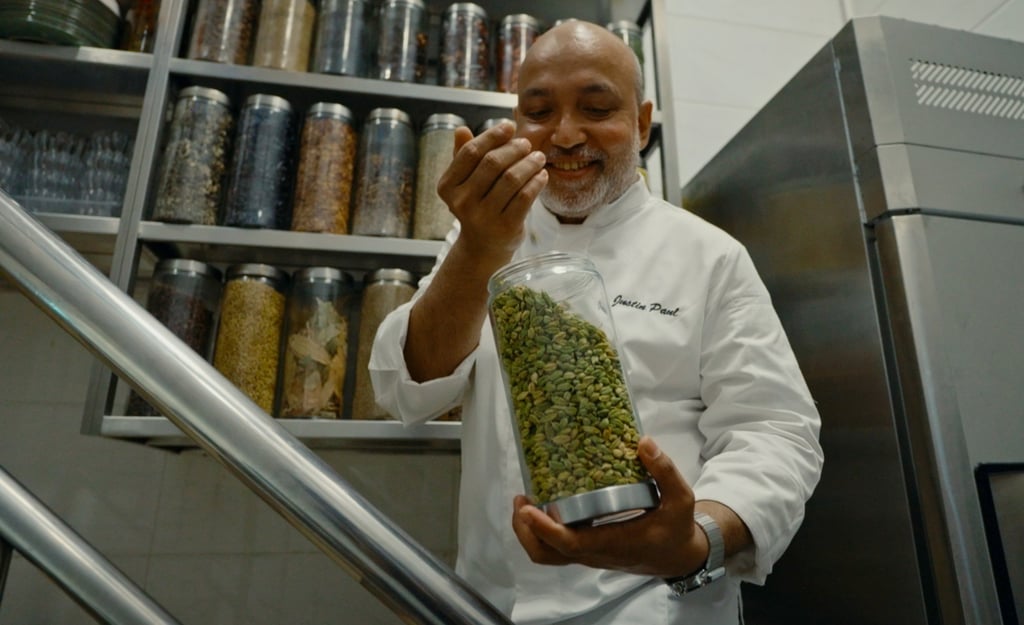
For chef Justin Paul of the Michelin Bib Gourmand restaurant Justindia in Macau, green cardamom is best described as “sweet perfume”.
This “queen of spices”, which originated from the Cardamom Hills of Kerala state on the southwestern coast of India, is commonly used in popular Indian dishes and drinks such as biryani and mango lassi.
“Green cardamom has a delicate flavour,” says Paul, who also hails from Kerala. “And it is powerful in the sense that people will taste it, but they cannot say what kind of flavour it is. So it is, in a way, almost an indescribable flavour.”
Historically, the Portuguese liked cardamom so much that they set sail to find a direct maritime trade route to Asia, with explorer Vasco da Gama first landing in India in 1498 and Jorge Alvares reaching Macau in 1513. During its time as a Portuguese trading outpost, Macau was a key port between Europe and Asia, which brought in spices like green cardamom that played a significant role in shaping the city’s culinary identity.
“Macau was a spice hub for the Portuguese; they exported spices from countries across Asia such as India and Malaysia,” Paul says.
The influence of the Portuguese settlers in Macau combined with the spices flowing in via trading activities gave birth to Macanese cuisine, a unique fusion of Chinese, Portuguese and Southeast Asian flavours.
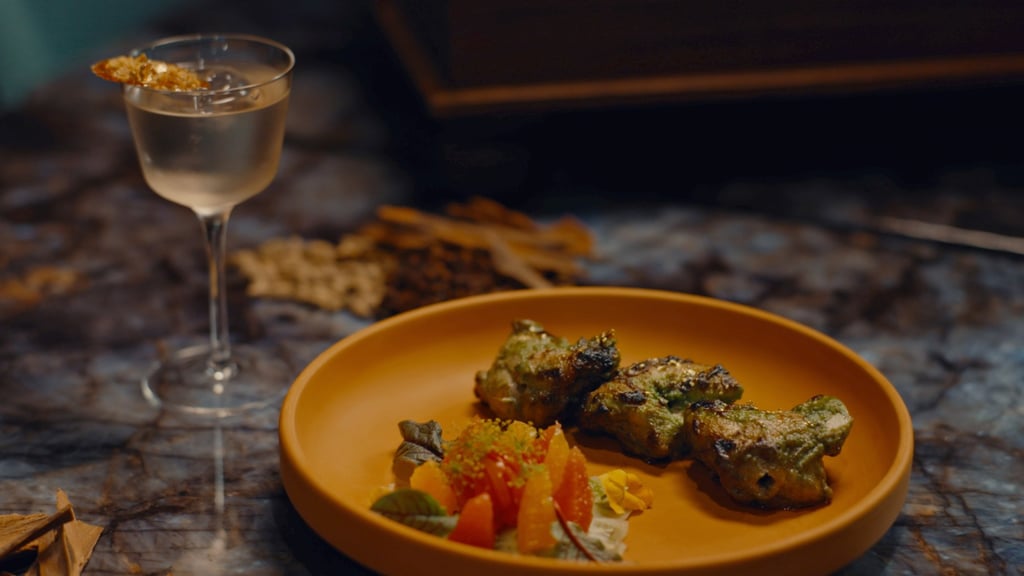
Asked which dish containing green cardamom best represents Macau, Paul points to chicken cafreal. This barbecue chicken fusion dish originated in Portugal’s African colonies before it was brought to Goa, India, the first Portuguese colony in Asia.
“After the Portuguese introduced chicken cafreal to Goa, the Goan people started to make it the Indian way, with spices such as green cardamom, cinnamon, cloves and fresh coriander,” Paul explains. “After the chicken has been marinated, you then barbecue it. It’s a very special dish in Goa.”
The lucrative maritime route that Portugal carved out across Asia mirrors Paul’s culinary journey, which also spans from India to Macau with a touch of Portuguese influence.
After growing up in Kerala, known as the spice capital of India, Paul began his career at five-star hotels in Mumbai and Goa before moving on to fine-dining restaurants in Hong Kong. In 2007, he came to Macau, where he became head chef of The Golden Peacock, an Indian restaurant that earned a Michelin star under his leadership.
Last year, Paul opened his own restaurant, Justindia, a 20-seat establishment on the Macau peninsula that offers a menu of specialities from across India.
Paul’s family name, Thakolkarran, translates to “key man” and refers to the role his great-grandfather and grandfather held as the keeper of keys for one of the churches built by Portuguese missionaries in Kerala. Paul, in turn, is at the helm for a restaurant that is a gateway to Indian cuisine for diners in Macau.
Having cooked in Asia for over 25 years, Paul knows how to tailor dishes around local flavours. “I always try different types of Chinese food, so I know how to make our food balanced for the local palate,” he says. “I know the style of food and tastes that they prefer, and I don’t use a lot of spices or strong flavours.”
In addition to Justindia, Paul runs a company that imports spices from Kerala, which he originally started as a way to source quality Indian ingredients for his own kitchen. In time, Paul also started supplying spices to hotels, thereby paying homage to Macau’s legacy as a spice hub in his own way.
Watch the video to hear more about Macau’s history in the spice trade and see chef Justin Paul prepare his chicken cafreal dish using green cardamom.