Brothers showcase turmeric and its golden status in Macanese cuisine
Portuguese chefs Mauro and Pedro Almeida of Casa Maquista in Macau talk about the spice and its role in the world’s first fusion food
Back in the 1500s, when the Portuguese were sailing to and from Asia on their spice trade routes, turmeric was among the goods carried aboard their ships. This earthy, warm spice from the ginger family is instantly recognisable for its golden-orange hue and prized for its superfood properties.
Fast-forward to 2025, and brothers Pedro and Mauro Almeida are experiencing their home country’s maritime history in their own way. Both came to Macau from Portugal and are discovering the aromatic power of turmeric through their work as executive chefs of Casa Maquista, a Macanese restaurant located in the city’s Taipa Village.

“If I have to pick a spice to represent Macau, it will be turmeric – it is found in a majority of Macanese recipes,” Mauro says.
Pedro moved to Macau first, in 2016, and his first taste of the local cuisine was at a friend’s home. His initial impression was that of familiarity: “I found it similar to some Portuguese dishes, although it seems like they replaced the main ingredient with something sourced locally. It happens in many Macanese dishes.”
He notes that the elements of Macanese cooking mirror the centuries-old sailing routes of Portuguese explorers and traders. “In my opinion, Macanese cuisine reflects the journey of the Portuguese around the world. They picked ingredients from Brazil, ingredients from Africa, ingredients from India. And when they arrived in Macau, they finally put it all together and they created Macanese cuisine.”
Mauro, who arrived in Macau in 2018, says: “The flavours are very similar to Portuguese cuisine, but they have the smell of Asian cuisine.”
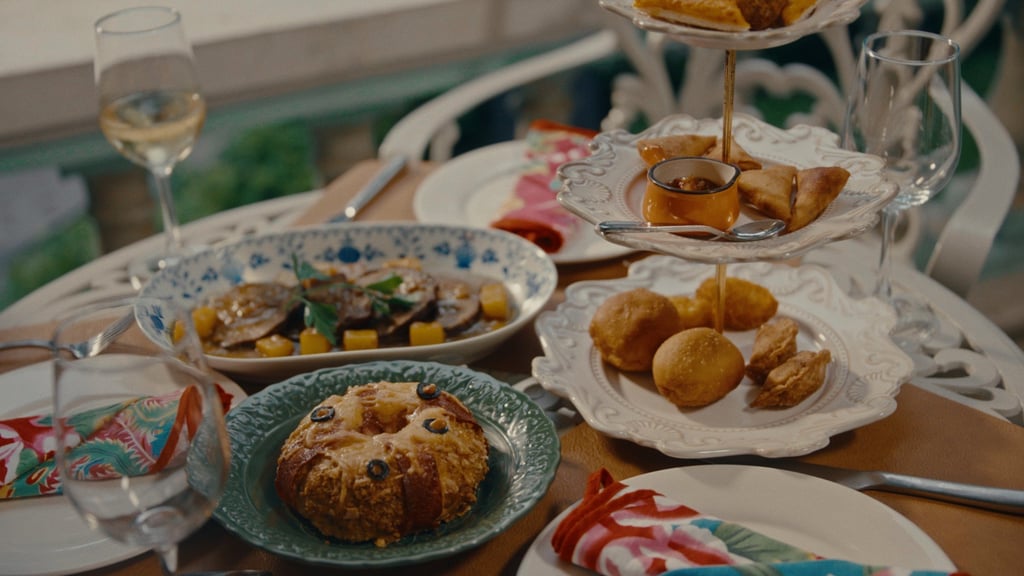
When asked to pick a turmeric-based dish that best represents Macau’s culinary heritage, the chefs turn to porco bafassa. To make this classic Macanese dish, pork is marinated in turmeric, along with other spices, braised and then roasted. The result is tender cuts of pork covered in a golden sauce, and it shows why Macanese cuisine is recognised by Unesco as the world’s first fusion food.
“Porco bafassa combines spices from India, techniques from Portugal and pork from China that, back then, was locally sourced,” Pedro explains. “So it is like a marriage of the three countries, and I think it makes the dish more special.”
He adds: “The turmeric is the king. If you don’t have good turmeric, you basically won’t have a good dish. You can have the best pork, the best onions, but if you don’t have good turmeric, your dish is not going to be the best.”
The Almeida brothers are dedicated to showcasing Macanese cuisine, and with turmeric being a popular ingredient in its recipes, they wanted the spice to be as flavourful as possible. When they found that the ready-made turmeric powder available in local markets was not up to their standard, they decided to make their own using fresh turmeric root.
It is a labour-intensive process that involves peeling the root, dehydrating it and then grinding it, but it pays off as the house-made turmeric powder packs more punch.
“It works in the same way, but full of flavour, and the colour is much better,” Mauro says. “When we had to buy the turmeric powder, we had to use a lot of it. Now when we use the natural one, we just have to use a little bit.”
While Macanese cuisine has already been evolving for centuries, both chefs want to take it further by elevating it to greater prominence. Pedro points out the surprising fact that there are not many restaurants in Macau which focus purely on Macanese cuisine.
“We can offer a little more knowledge on the technical side – knowing the temperatures, the right cut for the right dish – keeping the traditional taste but adjusting a little bit,” he says. “Because this cuisine is great, and it deserves more.”
Mauro says: “I hope for more restaurants for Macanese cuisine. I hope we have a big evolution, a big boom.”
Watch the video to learn more about turmeric and see the Almeida brothers make their own spice powder to use in their porco bafassa dish.