Chef Denver Govender shares how coriander connects South African and Macanese cuisines
The co-owner of Aria by Chef D, the first South African restaurant in Macau, highlights the spice’s versatility by making a dish from home
Among the many words that can be used to describe the foundation of Macanese cuisine, “versatility” comes to mind. When the Portuguese settled in Macau during the 16th century, they brought along spices from their maritime trade route. As they established new households there, often by marrying local women, Macanese cooking adapted to this combination of cultures, blending the spices from overseas with Chinese ingredients to create the world’s first fusion cuisine.
Versatility is also the word that Macau-based chef Denver Govender uses to describe coriander, which was among the various spices carried onboard the Portuguese ships that sailed around Africa’s Cape of Good Hope on the trade route to Asia. He is the co-owner and head chef of Aria by Chef D, which has the distinction of being the first South African restaurant in Macau.
“Coriander is very versatile. It’s used in our curries, our boerewors [sausage] – all of our staple foods that we know as South African food,” says Govender, who hails from Durban, South Africa. “So to understand and respect it, it is very important to know how to use it, as well as to use the best quality.”
When asked which dish containing coriander best represents his home country, Govender points to boerewors. A popular South African dish, boerewors means “farmer’s sausage” in Afrikaans. At Aria by Chef D, it is made in-house and is a labour of love.
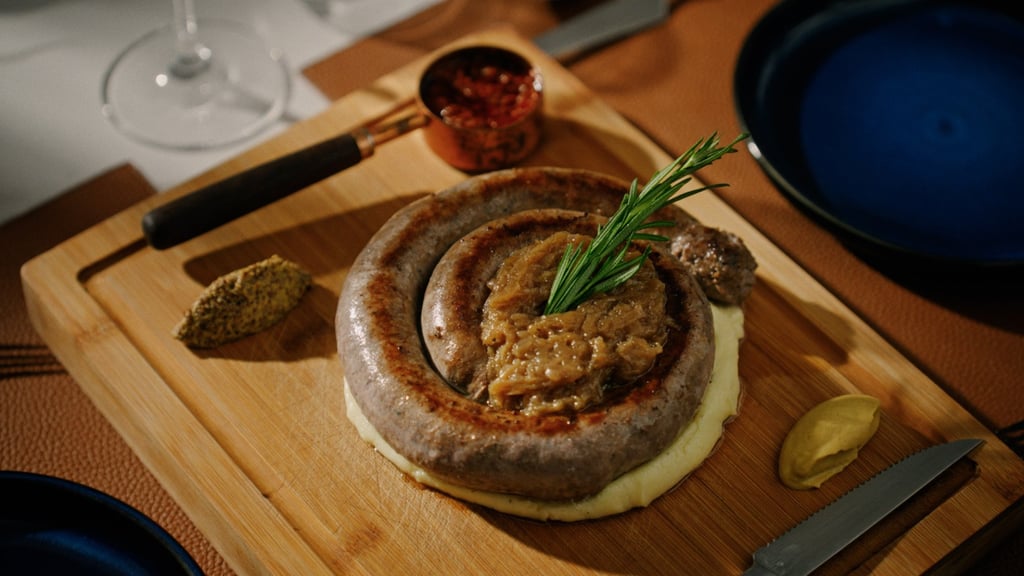
“Boerewors, if done correctly, takes two to three days,” Govender explains. The first step in its preparation is to marinate the meat in a mix that includes beef fat, pork fat, whisky, malt vinegar and spices, with coriander as the star. The next day, the meat is ground and then chilled until the third day, when it gets put into the sausage casing and left to air-dry.
“The reason we separate [the process] into three days is to initiate the flavour, to build the flavour like a pyramid,” the chef says.
Much like the spice trade route that curved around the southern tip of Africa, Govender’s journey from South Africa to Macau took a circuitous path, but via the US. He came to the city for his wife, Vanessa Fajardo, whom he met when they were both working at Walt Disney World Resort in Orlando, Florida.
Fajardo’s parents are originally from the Philippines, and they immigrated to Macau in 1989. “My two siblings and I were born and raised in Macau,” she says.
In 2015, Govender followed Fajardo back to Macau, where they eventually started their family and then their own restaurant, which is named after their young daughter, Aria. “I met my wife in the US, and she brought me over here. Now I’m trapped,” Govender jokes.
“It was his choice; I didn’t force him,” Fajardo says with a smile.
Govender’s first impression of Macau was one of amazement at how the city packed such a culinary punch. “It was quite a cultural shock seeing the food scene in Macau, because it is a very small place but you can get a lot of diversity in cuisines,” he says. “I never experienced a small place being so diverse.”
He also sees similarities between Macanese and South African cuisine – not surprising given that both places were linked by the Portuguese spice trade. “The spices used for making minchi [a Macanese minced meat dish], for example, the curries and the way in which they are cooked, the ingredients that are added, have a lot of similarities to South Africa,” Govender says. “With a curry in South Africa and a curry here, the only thing different will be a few ingredients. The idea of a curry will always be a curry.”
With Govender and his wife co-owning Aria by Chef D, the restaurant is a family affair in many aspects. Some of its food offerings are supplied by Fajardo’s family, who own several eateries in Macau.
Anak Philippine Bread, a popular bakery opened by Fajardo’s parents in 2003, provides the dough for the bread that Aria by Chef D bakes daily for its dinner service. In addition, the pastries served at the restaurant come from another bakery run by Fajardo’s brother.
The inspiration behind the naming of Aria by Chef D also came from Fajardo’s family. Anak Philippine Bread took its name from the Tagalog word for “child”, so Govender and Fajardo thought it fitting to follow suit by naming their restaurant after their daughter.
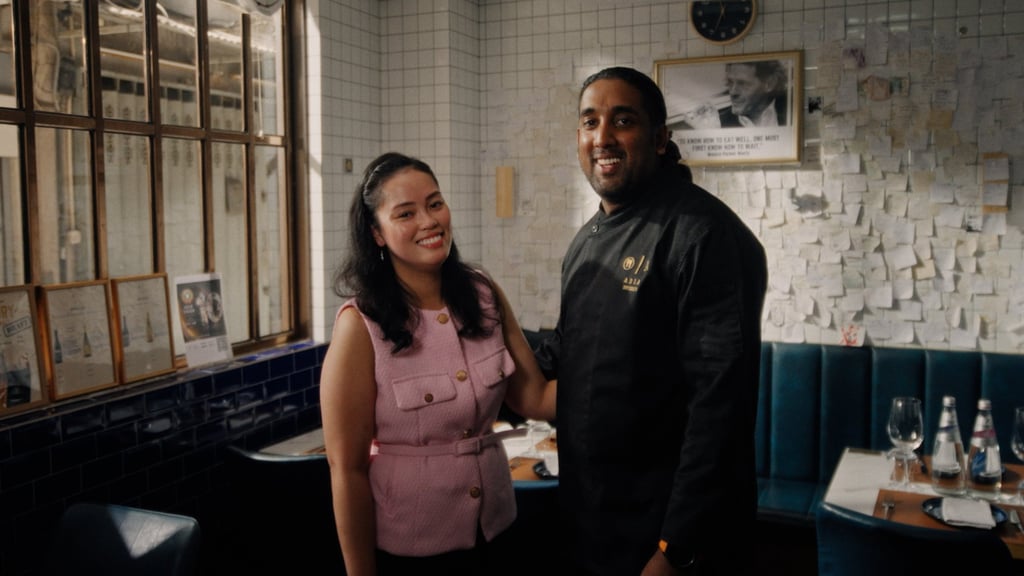
Govender and Fajardo’s love story and shared business not only reflect the merging of cultures that defines Macau, but also how family-run restaurants are the foundation of Macau’s vibrant culinary scene. When Govender first arrived in Macau, he did not picture himself adding to the city’s gastronomic identity – he recalls that he simply wanted to be with Fajardo while she finished her studies, after which they planned to return to the US together.
“And here we are, 10 years later,” Govender says.
Watch the video to learn more about the history of coriander and see chef Denver Govender make his version of boerewors.