Hong Kong swimmer Siobhan Haughey reveals how she balances life in and out of the pool
The star athlete has learned the importance of prioritising her mental health and personal time amid the demands of her athletic career
One of Hong Kong’s most celebrated athletes, Siobhan Haughey, thought she had a rather balanced life. That is, until the swimmer was given a month-long leave after the 2024 Paris Olympic Games, where she won bronze in both the 100-metre and 200-metre freestyle events.
Those victories brought the total number of Olympic medals under her belt to four, adding to her two silvers from the same events at the Tokyo Games. This makes Haughey the city’s most decorated swimmer at just 26 years old.
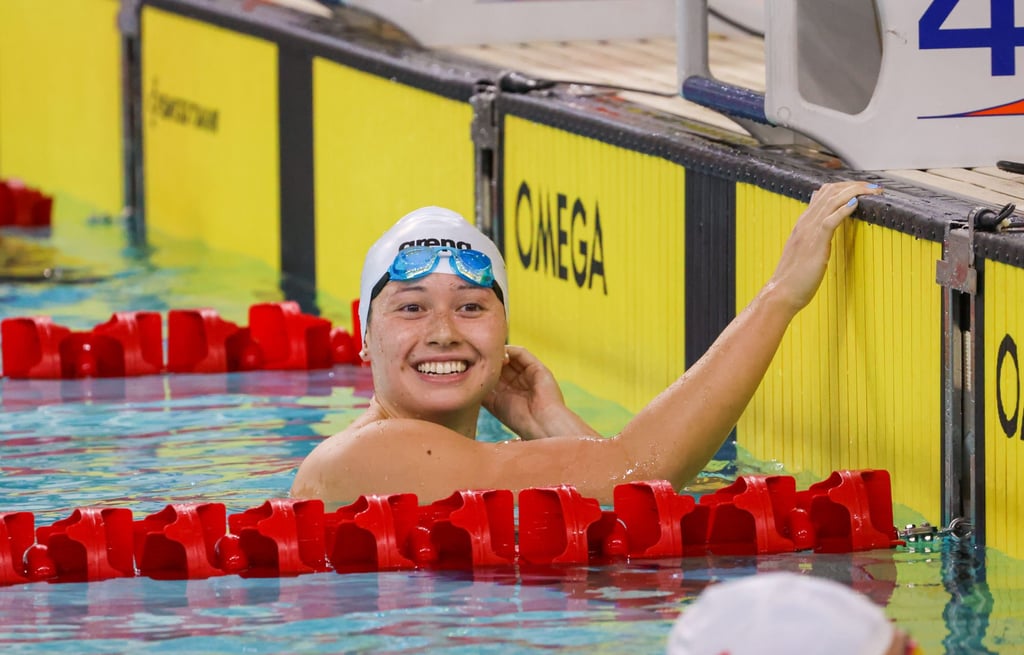
“I took a month off after the Paris Olympics, and I think it was my first real long break in seven years,” she recalls. “It was very weird in the first two weeks; I didn’t really know what to do with all this free time. So I was still working out Monday to Friday, finding different exercises to do.”
Eventually, Haughey took a trip with her friends, but she still felt an urge to load up her days with activities. “That was a pretty interesting experience for me. Now I know that I need to work more on this and learn to just sit still. It’s OK that you don’t fill your schedule with 100 things to do,” she says.
“It’s hard to find that balance at first. You really need to go through trial and error to see what works for you, and how much downtime you need in order to feel rested to do things again.”
But Haughey – who is also Hong Kong’s first world record-holding swimmer, having claimed the title in the 200-metre freestyle at the 2021 World Short Course Championships – has always treasured her family and close friends as much as her illustrious athletic career.
“I travel a lot for competitions, and it can be quite lonely a lot of times. So when I have time, I make sure to focus on my social relationships,” she says.
“If I’m not training, I like to wake up early and have a good breakfast, which is my favourite meal of the day. And then I spend some time with my family and friends, whether it’s going for a hike or a walk, or just hanging out at home.”
Haughey also values “me time”. She explains: “I like to find a quiet place – maybe a cafe or somewhere at home – just to read a book. I mainly read novels, but since I’ve been out of school for a few years now, I like to read more intellectual books, maybe some psychology books from time to time.”
Not surprisingly, the elite athlete also pays attention to her physical well-being, with two of her favourite ways to sustain the body being soaking in a cold-plunge tub and getting a massage.
“If it’s a normal training week, I make sure I get at least one to two massages every week to help relax my muscles,” Haughey says. “I also find it quite relaxing during that time when you’re just laying there and someone’s working on you.”
She adds: “I also regularly foam-roll and stretch, and after each long day of training, I do the cold tub. I feel like all of this helps me recover physically.”
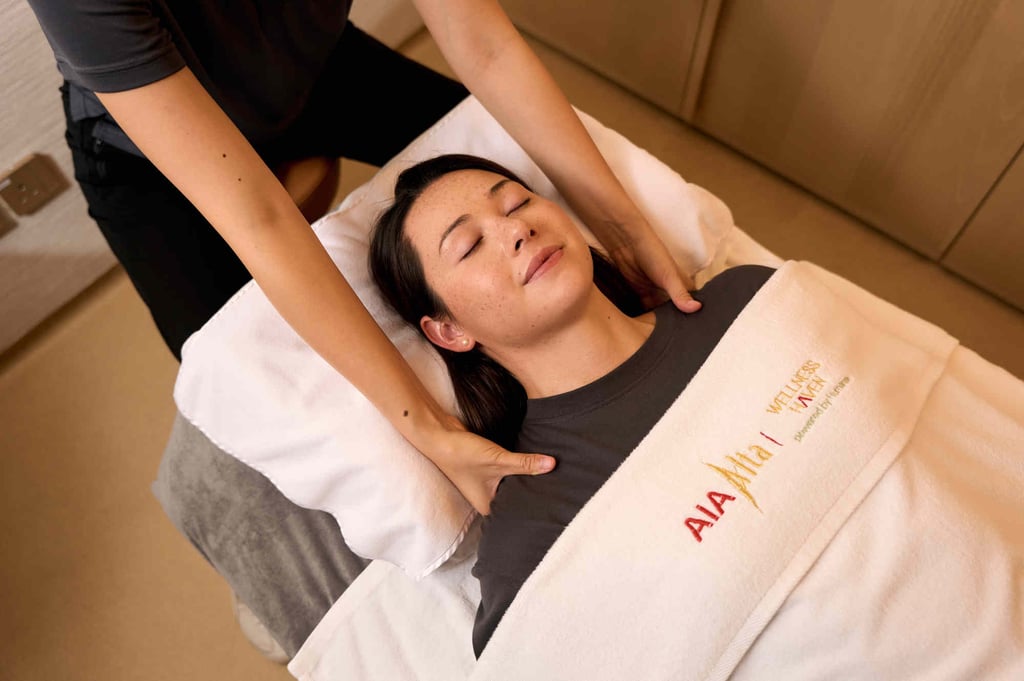
In addition, Haughey was invited to try out the quantum harmonic audio treatment, an offering from the Mind and Body Balance Programme at the AIA Alta Wellness Haven. The treatment is among the many experiences offered at this wellness space that merge scientific approaches with traditional Eastern and Western philosophies to promote holistic well-being.
“That was my first time doing it, so I wasn’t quite sure what to expect,” Haughey says. “You put on the headphones, and you hear this really relaxing music – I think they call it sound waves – while the therapist massages your head and your temples, so it’s very relaxing. I think at one point I almost fell asleep.”
She found parallels between the audio treatment and her usual meditation practices. “The sound that I was listening to is kind of similar to my sleep meditation. I can see why that’s very relaxing and very peaceful. It’s useful and good if the treatment is backed by science.”
Taking time to relax is what helps Haughey unwind from the day. “When in intense training, I can’t sleep at night, or I can’t sleep as well, because my mind is just so awake and my body is still really tense,” she says. “I tend to read before bed, and then once I start getting tired and sleepy, I do meditation. I find that really helpful.”
Sleep is an important factor in keeping Haughey at the top of her game. “I value sleep a lot,” she says. “I try to get at least eight hours of sleep every night. On top of that, I also take an hour-and-a-half-long nap every day, or as much as I can. It’s really good for your physical recovery.”
She has also learned how to calm her mind when pressure mounts, especially before a race. “I think that helps, to bring my focus back to my breath instead of all these different thoughts,” she says. “And that’s why when I’m behind the blocks during a competition, you see me taking deep breaths all the time just to remind myself: it’s OK.”
Haughey adds: “Another thing I find really helpful is to stay off my phone, especially during competitions. I try not to go on social media, because I find it quite distracting.”
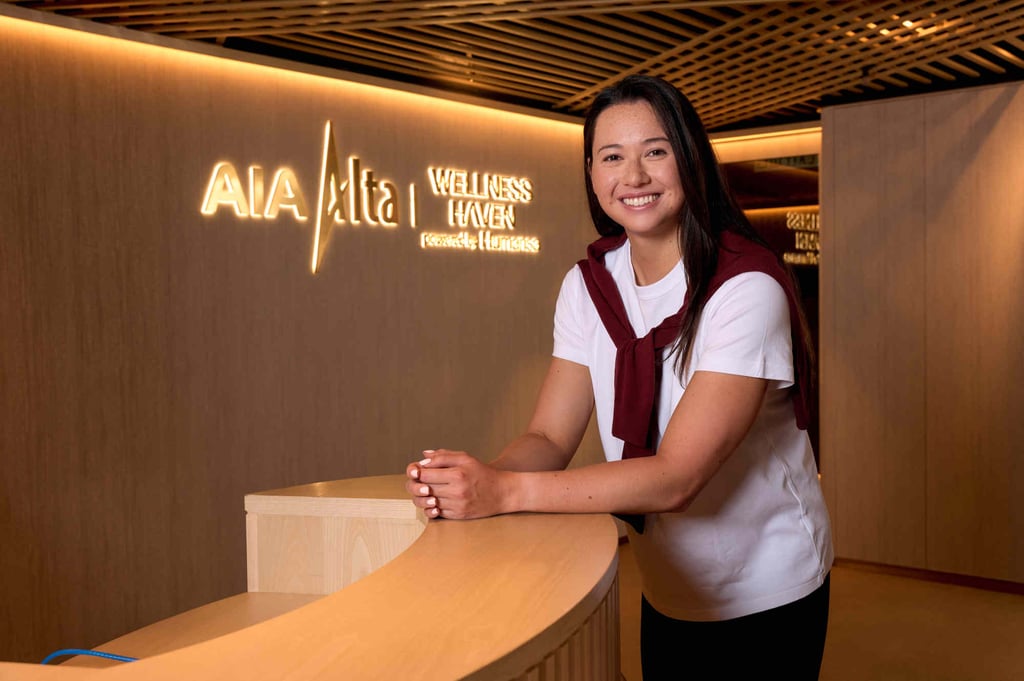
All of these informed habits have built a stronger foundation for her mental well-being. “Swimming is my life, but I always remind myself that it’s not my whole life,” Haughey says. “I like to journal, meditate or do anything to calm myself and to keep my mind off of swimming.”
Maintaining a balance between personal time and swimming is crucial to her continued success in the sport. “My coach keeps encouraging me to stop swimming and do other things, saying, ‘If you want to keep going for a long time, you don’t want to be burned out’.”
For now, Haughey’s athletic career is showing no signs of slowing down. But she already knows what she wants to do when she moves on from swimming: furthering her studies for a career in psychology.
“If I want to become a licensed psychologist, then I would have to go back to school. But I think it’s worth it,” says Haughey, who has a bachelor’s degree in psychology from the University of Michigan. “I want to do something with children and with psychology. That’s my second passion outside of swimming.
“I think letting children know how important mental health is from a young age can really help and benefit them into their adulthood.”