Tomorrow’s world: innovations that promise to improve your life at home and on the road
- Robotic airport delivery service and ‘sporty’ AR sunglasses among highlights at Hong Kong’s Tech Trends Symposium 2019 – Roadmap to the Future
- This month’s event, run by Hong Kong Trade Development Council, reveals how soon some of these hi-tech breakthroughs will appear

Beyond handy smart home gadgets and phones that put a computer in our pockets, technology is set to enhance everyday lives in ways unimaginable even a decade ago.
A symposium held in Hong Kong this month provided a peek at what’s going on behind the scenes to make these innovations happen – and showed how close some breakthroughs are to coming to market.
The Tech Trends Symposium 2019 – Roadmap to the Future, held at Hong Kong Convention and Exhibition Centre, in Wan Chai, on April 13, was organised by Hong Kong Trade Development Council as part of the Hong Kong Electronics Fair (Spring Edition) and four-day International ICT [Information Communications Technology) Expo.
Here are some of the event’s highlights.
‘Sporty’ AR sunglasses
Kopin, an American augmented reality (AR) and virtual reality (VR) company, with an office at Hong Kong Science Park, is working to overcome the constraints of bulky hardware, such as headsets.
Kenny Cheung, Kopin Asia’s general manager and vice-president, said the practical applications of these technologies outside of gaming, enterprise or military applications might not seem obvious, but much of it has to do with finding the right fit – literally.
He said the weight and cumbersome nature of existing headsets was hindering AR and VR adoption.
However, Kopin had overcome this with its AR-enabled SOLOS smart sunglasses – a stylish line of wearables designed with professional cyclists and runners in mind.
Developed with feedback from Team USA Cycling, these sunglasses can deliver real-time information to the wearer about pace, heart rate and distance travelled, among a host of other useful features.
Cheung said Kopin had teamed up with a software platform that delivers a live coaching regimen during a workout, allowing athletes to receive complex coaching directives remotely as they trained.
“Their performance and other vitals are recorded and sent directly to their coaching team, who can then feed back to the athlete at a later point,” he said.
The advantages for competitive sports “are obvious”, Cheung said, adding that Kopin’s innovation is “compelling proof that solving the idea of wearability is key to expanding the use of AR/VR”.
Stroke patients ‘regain’ their voice
The speech disorder known as dysarthria, or slurred speech, often experienced by stroke survivors or people with cerebral palsy, doesn’t affect their intelligence, but it does impede their ability to communicate.
Ground-breaking work in Hong Kong has now found a solution.
Our program uses voice conversion technology to convert synthetic speech so that it sounds more natural
The automatic dysarthric speech recognition technology developed at the Chinese University of Hong Kong (CUHK) is a world-leading speech-recognition program capable of understanding the words of affected patients with about 70 per cent accuracy.
Helen Meng, the university’s professor of system and engineering and engineering management, who led the research with associate professor Xunying Liu, said the technology was an improvement on the text-to-speech synthetic speech technology used for communication by Stephen Hawking, the late British theoretical physicist, which sounded mechanistic.
“Our program uses voice conversion technology to convert synthetic speech so that it sounds more natural,” she said.
The technology worked across languages, including English and Cantonese, and enables cross-gender conversion.
Meng said the technology would be available for patients to use soon.
Easy diagnosis of sleep disorder
It is estimated that about 80 per cent of people suffer from sleep apnoea, or irregular breathing patterns during sleep – and are also possibly unaware they are affected.
What may seem to be an annoying problem of snoring can actually be a medical condition that can develop into more serious ailments, such as depression, heart disease and diabetes.
Crystal Fok, associate director of the MPE cluster & robotics platform at Hong Kong Science and Technology Parks Corp said that a medical-grade wearable ring developed by local start-up Belun Technology could help to diagnose sufferers of sleep apnoea in their homes.
This would avoid the inconvenience and waiting times involved in participating in sleep studies in hospitals.
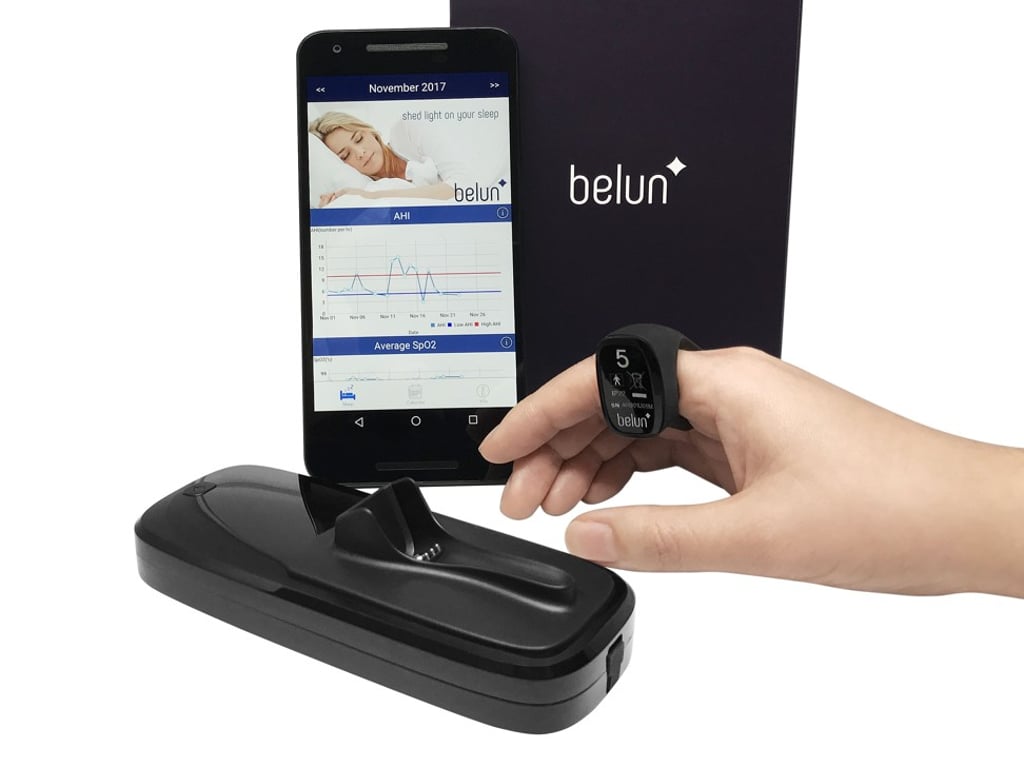
The Belun Ring weighs only 10 grams, is comfortable to wear and, most importantly, it provides an accurate measurement.
Dr Lydia Leung, CEO of Belun Clinic, said trial results had shown that the device was reliable and accurate.
“Medical-grade, reliable and comfortable wearable is [the] key for preventive health care and chronic disease management,” she said.
“[The wearable], based on Belun’s compact and highly sensitive bio-sensing design with proprietary artificial intelligence-based algorithms, [is able to] shed light on your sleep.”
Smarter autonomous driving
Studies have shown that driving assistance technologies can reduce road accidents, injuries and deaths.
However, Dr Charles Cheung, a deep learning solution architect and data scientist at American technology company Nvidia said that it would take 500 years of human time to compile the scale of data collection, analysis and testing required to make autonomous vehicles a reality.
However, Nvidia, which has a base at Hong Kong Science Park, has found a fast track alternative by developing Nvidia Drive Sim, a VR simulation software that tests different scenarios and environments without the need for an actual road test in the real world.
Cheung said that by artificially building and manipulating the environment within which an autonomous driving model operates, the model became more intelligent, nimble and safer for individuals who would be riding in the self-driving cars of the future.
Our vision is to enable self-driving vehicles with the ultimate goal of reducing fatalities to zero
In a recently announced partnership, the Toyota Research Institute-Advanced Development (TRI-AD) is using the technology to develop, train and validate self-driving vehicles.
The agreement enables the architecture to be scaled across many vehicle models and types, accelerating the development and production timeline and simulating the equivalent of billions of miles of driving in challenging scenarios.
“Our vision is to enable self-driving vehicles with the ultimate goal of reducing fatalities to zero, enabling smoother transportation, and providing mobility for all,” Dr James Kuffner, CEO of TRI-AD, said.
“Our technology collaboration with Nvidia is important in realising this vision. We believe large-scale simulation tools for software validation and testing are critical for automated driving systems.”
More efficient ‘robotic’ airport
Hong Kong International Airport is taking biometrics and robotics to new levels as it seeks to improve both the passenger experience and its operational efficiency.
Andy Bien, chief information officer at Airport Authority Hong Kong, told the International ICT Expo, which ended on April 16, that five key enabling technologies would help to realise the authority’s “Smart Airport Vision”: big-data intelligence, advanced biometrics, mobile technology, robotics and the “digital twin” reality modelling system.
Advanced biometric applications will combine all passenger airport interactions – self-bag drop, e-security gate, immigration, transfer security gates and self-boarding gates – into a single token.
“When the system is complete, the passenger will be able to walk into the restricted area in about 10 seconds,” Bien said.
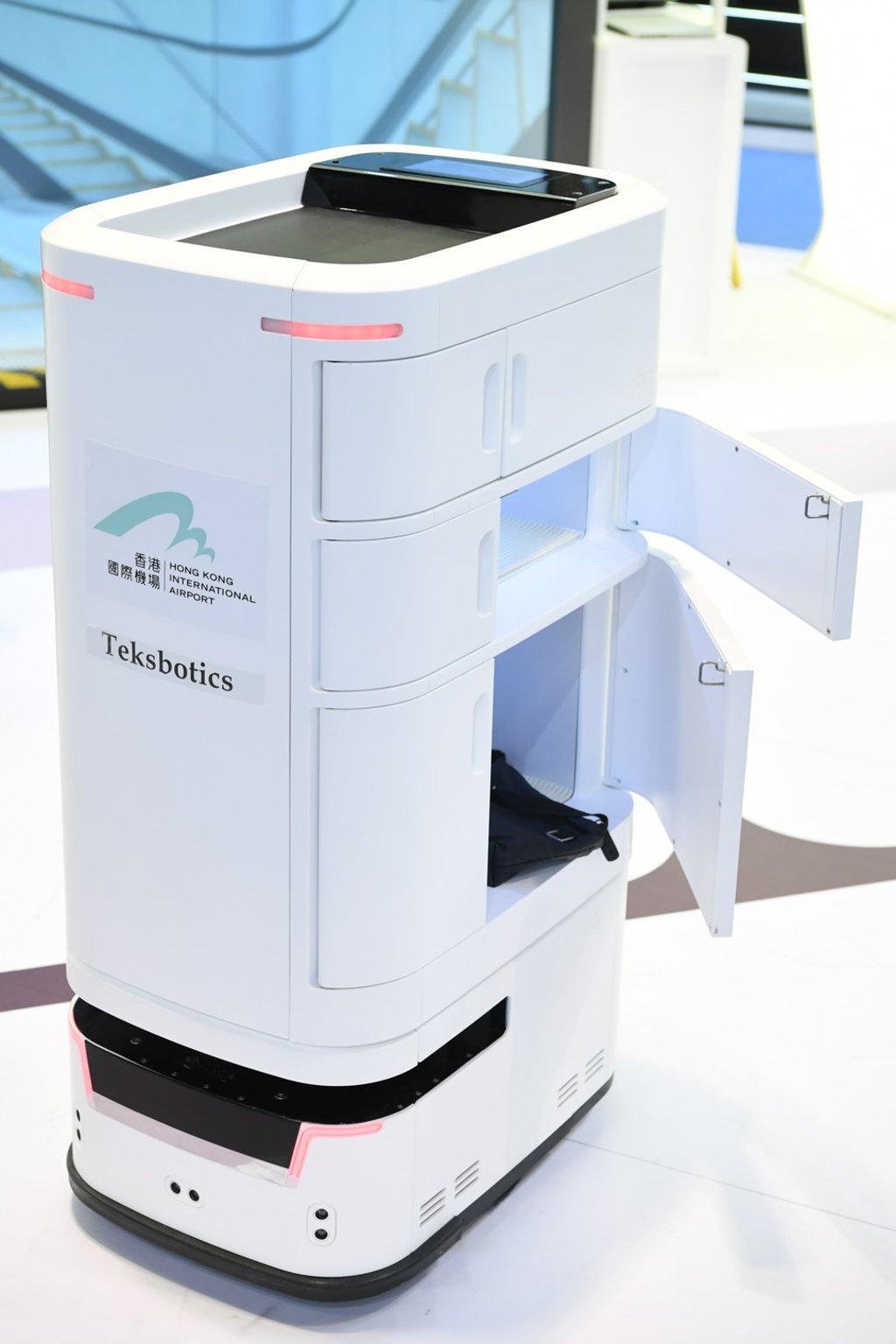
The authority was also developing long-range iris, and palm- and finger-vein scanning, and deeper functions such as emotion recognition via smart CCTV for enhanced security, he said.
The analysis of each detected face will provide a confidence score for seven different kinds of emotions: anger, disgust, fear, sadness, happiness, surprise or neutral.
When the system is complete, the passenger will be able to walk into the restricted area in about 10 seconds
Robotics is another area the authority is focusing on to supplement its huge labour force.
Driverless tractors will soon be deployed to tow luggage carts and indoor multi-function robots are also being tested to perform a range of delivery services.
Bien said that robotics integration was intended to supplement, but not replace, the airport’s workforce.
The airport’s current workforce of 75,000 people is forecast to increase to 130,000 staff when the third runway – scheduled to be ready by 2024 – is opened.