Beyond the plate: Hong Kong’s food tech innovators cultivate a sustainable future
Local Michelin-star chef famous for ‘nature-inspired’ cuisine sources innovative green ingredients from three entrepreneurs
Today’s advanced food production methods allow people to access a larger variety of produce from around the world, but this has also brought about issues such as food wastage and bigger carbon footprints from transport.
Fortunately, Hong Kong companies and start-ups are embracing technology to come up with pioneering solutions to these issues, thereby making the food supply and its consumption more sustainable. The number of these innovative food tech businesses in Hong Kong has grown significantly in recent years, from 40 in 2022 to 106 in 2023.
That is good news for Joris Rousseau, executive chef of Feuille, a one-Michelin-star French restaurant in Hong Kong that serves “nature-inspired” cuisine.
Being a chef who likes to think out of the box, Rousseau often seeks out unusual ingredients to experiment with. When he heard about Breer – a Hong Kong company dedicated to upcycling unsold, uneaten and surplus bread by turning it into craft beer – he decided to pay a visit.
“They inspire me, because I love to reuse bread from the bakery,” Rousseau says. “I love this type of mentality.”
Breer’s co-founder and CEO, Anushka Purohit, recalls how she and her business partner came up with the idea while they were still students at the Hong Kong University of Science and Technology. They were celebrating the end of exams at a bar with some beers when they made the connection that both beer and bread contain barley.
“We thought, why not collect food that otherwise goes to waste – in this case, the bread – and turn that into beer?” she says.
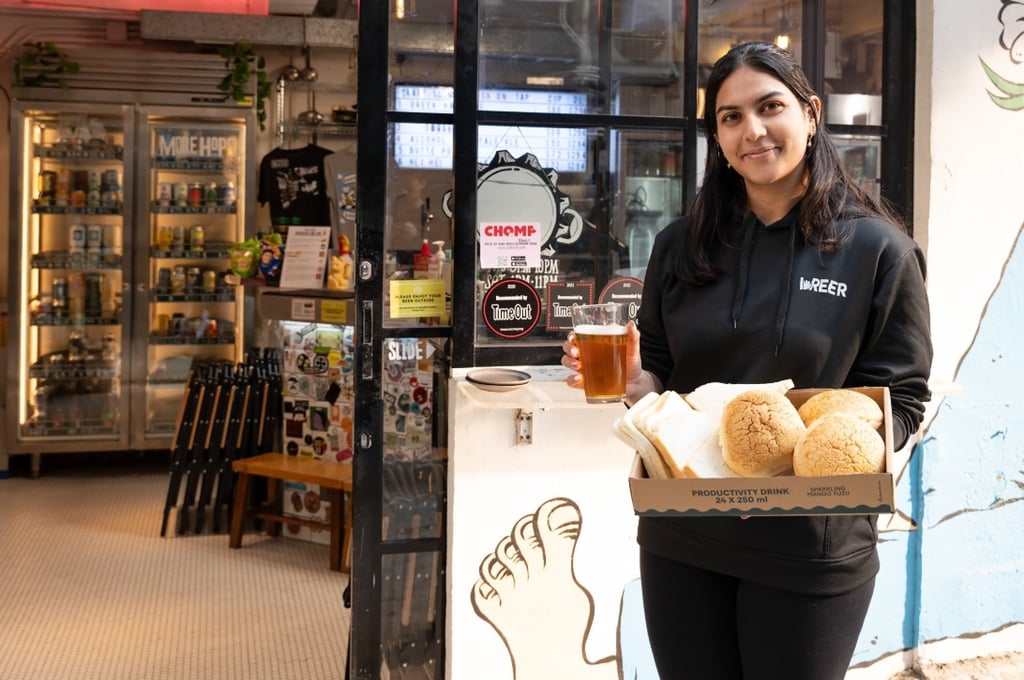
Behind the scenes, Breer collects data on how much food from bakeries goes to waste, and then shares it with those businesses to help them adjust their production volumes.
Purohit believes that the company’s technology can be easily exported. “Breer’s goal for this year is to expand beyond Hong Kong. We’re looking at India and Singapore as two key markets,” she says. “We have an extremely light asset model, which means we’re able to pick it up and apply it to any other country.”
Another factor that makes Breer’s products extra special is that the beer flavours are determined by the leftover bread available, which includes the city’s iconic pineapple bun.
Rousseau says: “When I taste the beer, I have a lot of ideas. Pineapple bread is a dessert, so I can do my dessert with this beer.”
The chef decided to make ice cream with the pineapple bun beer, and pair that with a smooth milk veil.
Dairy is commonly used in French cooking, but because dairy production emits a large volume of greenhouse gases into the atmosphere, Rousseau wanted to find a more environmentally friendly alternative to keep his dish in line with his vision for sustainability.
His search led him to Edmund Chan, co-founder and chief operating officer of Meat the Next. This Hong Kong company uses technology to produce food that is healthy for both consumers and the planet.
One of Meat the Next’s products is Tiga Milk, a composite plant-based milk made from tiger nuts, oats and non-genetically engineered soy. “Tiga Milk has a creamy and smooth texture that is similar to dairy,” Chan says. “It has a subtle sweetness as we extract the natural sweetness from plant sources, such as tiger nuts, with no added sugar needed.”
Meat the Next has become a success and expanded its production capabilities beyond Hong Kong and mainland China to Southeast Asia and the Middle East, allowing it to reach more markets in other regions.
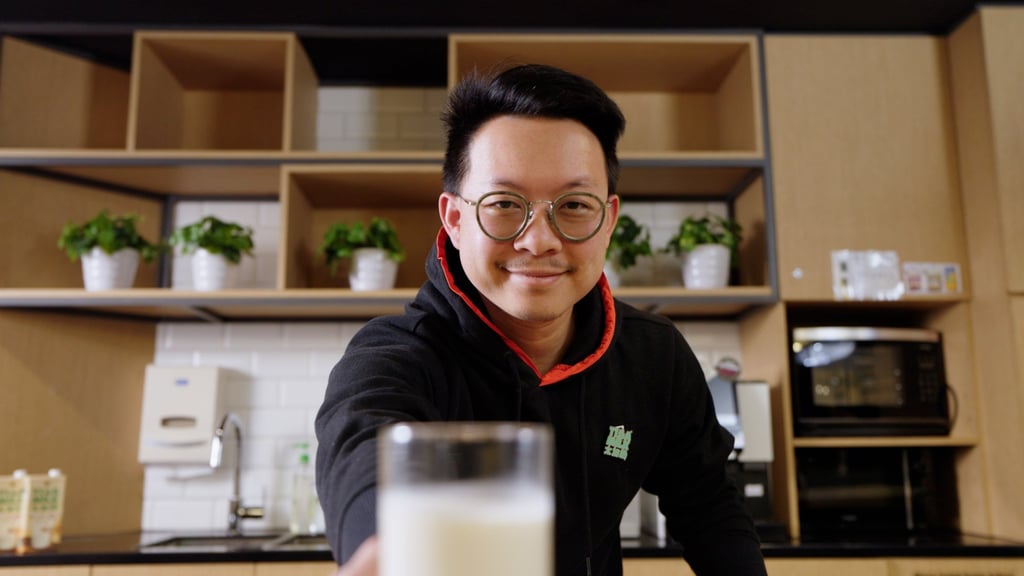
There is also a feel-good factor to consuming Tiga Milk, thanks to the fact that the main ingredient, the tiger nut, is grown in arid areas. That means it requires 90 per cent less water than other crops do, and planting it can help reverse desertification. It can also help improve the livelihoods of farmers in these arid and often impoverished areas.
“Without farmers, we are nothing,” Rousseau says. “We need people with the passion, with the connaissance [knowledge].”
That is what the chef found in Ray Lok, co-founder and CEO of Full Nature Farms, which runs a 3,500-square-foot vertical farm in Kwai Chung. The facility can house a total of 38,000 pots of edible plants such as microgreens, flowers and herbs at any given time.
Lok explains: “In this farm, we utilise sensors, LED lights, controllers, software and also artificial intelligence. We combine all of these elements to improve our cultivation efficiency, which is around 20 times that of outdoor farming.”
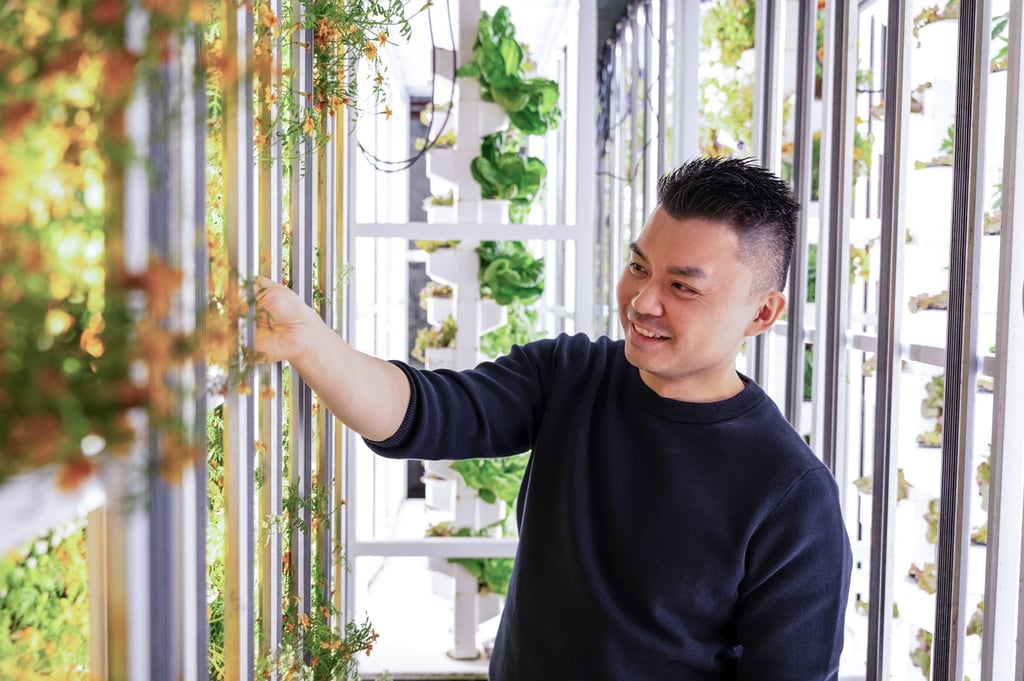
At the farm, Rousseau feels completely in his element. “I get inspiration when I run between the shelves,” he says. “I see, I taste, I smell, I do everything, and the idea starts to grow.”
Lok adds that Hong Kong has proven to be the perfect testing ground for vertical farming, as it is a small city where the company is in close proximity to its target customers. This has resulted in less food mileage and lower costs.
“Our farm tech solution is suitable for a wide range of farms, including banana farms, rice fields and vineyards. We’re offering our technology globally, including in Southeast Asia, North America, the Middle East and China,” he says.
Rousseau is excited by the energy he has seen in these company founders. “It’s important to respect the produce, because we respect the people behind it, and we respect the soil and the Earth,” he says. “We’re building a community of people who are finding solutions, sharing solutions and then making the change together.”
HKSTP is the city’s largest I&T ecosystem, with more than 2,200 tech companies calling it home. Among them, over 200 are driving groundbreaking sustainable solutions as they cultivate Hong Kong’s largest green tech hub.