Advertisement
Wilczek’s Multiverse
The Nobel Prize for Physics that proves big things can be quantum too
This year’s winners were honoured for their work with an electrical circuit that could open up a path for further computing breakthroughs
4-MIN READ4-MIN
Listen

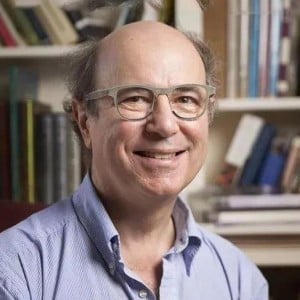
Frank Anthony Wilczek, an American theoretical physicist and mathematician, was awarded the Nobel Prize in Physics in 2004 for his discovery of asymptotic freedom in the theory of the strong interaction.
In the eighth instalment of his exclusive series for the South China Morning Post, American theoretical physicist and Nobel laureate Frank Wilczek explores the big world manifestation of small world quantum mechanics. Read his previous articles here.
The Nobel Prize in Physics for 2025 was awarded to John Clarke, Michel Devoret and John Martinis “for the discovery of macroscopic quantum tunnelling and energy quantisation in an electric circuit”. The trio collaborated on a series of groundbreaking experiments during 1984 and 1985.
The phrase “quantum leap” is often used, in common language and popular culture, to mean a big change. In nature, though, individual quantum leaps are generally both tiny and unpredictable. This year’s Nobel Prize was awarded for the creation of controlled, tangible quantum leaps in electric circuits.
Their work laid the foundation for a major approach for building a new kind of computer: the quantum computer. Eventually, quantum computers could take much of the guesswork out of chemistry and materials design.
While the promise of quantum computing has not yet been fully realised, the superconducting-circuit approach inspired by Clarke, Devoret and Martinis has made spectacular progress in recent years and leads the field so far.
To appreciate the Nobel committee’s citation, we need to grasp the two central ideas of quantum theory that it highlights: quantum tunnelling and energy quantisation.
Advertisement
Select Voice
Select Speed
1.00x