Advertisement
Chinese scientists put quantum chaos in ‘slow motion’
Researchers have controlled a temporary stable phase in the system, offering a possible avenue for preserving quantum information
3-MIN READ3-MIN
2
Listen

Zhang Tongin Beijing
In a landmark achievement, Chinese scientists have directly observed and manipulated prethermalisation – a critical transitional state in quantum systems – using the 78-qubit “Chuang-tzu 2.0” superconducting processor.
This allows researchers to “tune” the speed of quantum decoherence, providing a vital tool for managing complex quantum environments.
If a quantum system is disturbed, it naturally returns to a balanced state. The energy and information within it spreads out until they are evenly distributed. It would be similar to nudging a pendulum: it swings for a while but eventually slows down and stops.
Advertisement
This is a major challenge for quantum computing, which relies on keeping information perfectly intact. If a quantum system changes too quickly, its computational results become difficult to save and retrieve. However, predicting how long this process takes or what affects it is beyond the power of existing classical computers.
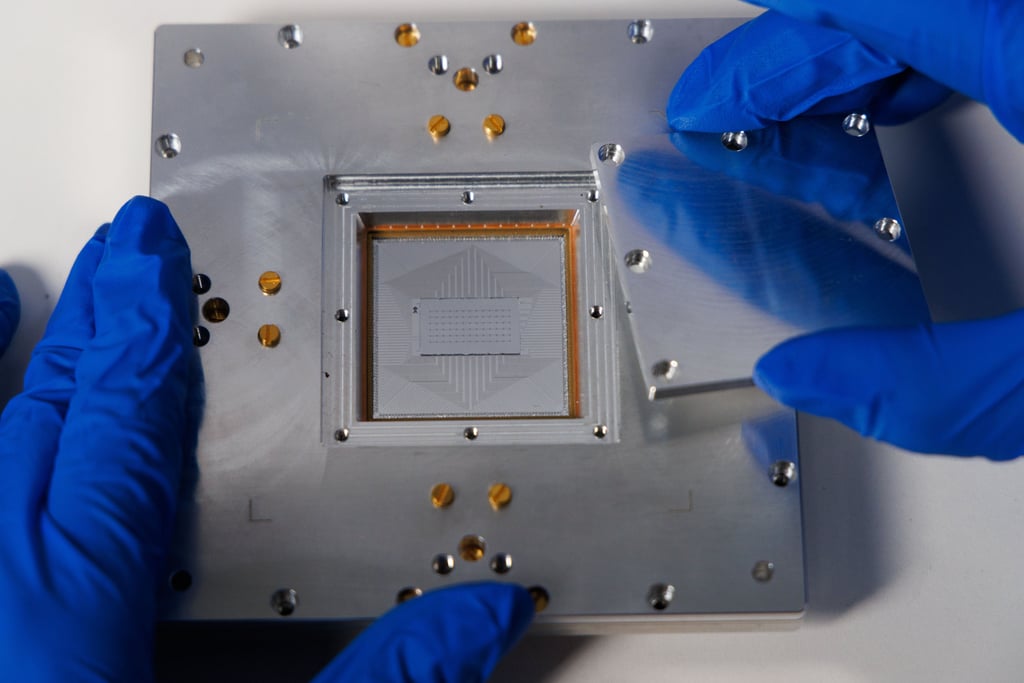
In a study published in Nature on January 28, researchers from the Institute of Physics at the Chinese Academy of Sciences reported the first observation of a counter-intuitive intermediate stage during this evolution. This stage is transient, relatively stable and, crucially, controllable, offering a possible avenue for preserving quantum information.
Advertisement
Advertisement
Select Voice
Select Speed
1.00x