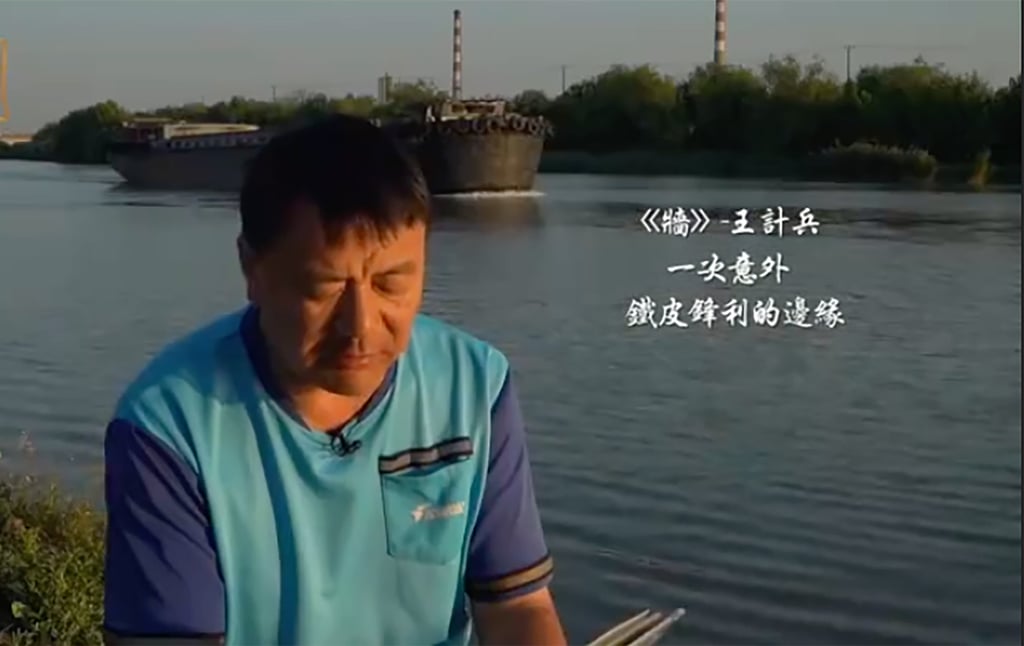
China ‘delivery rider poet’ known for writing verses on scrap paper wins elite literature prize
Wang rejects claims that the previous two decades prior to his fame were wasted, describing them as ‘a heavy snow’ that enriched his life

After winning China’s prestigious Lu Xun Literary Prize, grass roots delivery rider and poet Wang Jibing expressed his intention to continue delivering food, describing himself as “a river that quietly flows.”
Wang, 57, widely known as the “delivery rider poet”, won the elite literature prize in the poetry category for his third collection, Low Flight.
The Lu Xun Literary Prize, named after one of China’s most celebrated modern writers, Lu Xun, is regarded as one of the nation’s most respected literary awards. Established in 1996, it is awarded every four years. Previous winners include renowned Chinese writers such as Shi Tiesheng, Bi Feiyu, and Chi Li.
This year’s edition recognised 35 works across seven categories.
Wang, who has worked as a delivery rider for eight years in his hometown of Kunshan City in eastern China’s Jiangsu province, gained attention for his dual identity as a poet around 2020. He began posting poems he wrote between deliveries on social media, with his verses vividly capturing the experiences of Chinese gig workers. In his most famous poem, People Who Rush Time, Wang wrote: “Rushing wind out of air; Rushing knife out of wind; People who rush time have no seasons.”
Since then, Wang has published four poetry collections. In January, he also released his first essay collection titled Chengzhen, named after his mother.
Wang has been writing since 1988. He shared that he was once so consumed by his passion for writing that he often fell ill and required hospitalisation, to the point where his father banned him from writing. His father burned manuscripts totalling over 200,000 characters, yet sparked a dream within him. He recorded in his notebook, “I will be a great writer.”