How China imperial exam leaves historical footprint and impact on gaokao, modern education
Ancient forerunner of today’s national college entrance examination saw candidates housed in cells, cheats executed, exiled or flogged

In the first of a two-part series focusing on China’s hugely important national college entrance examination, or gaokao, the SCMP examines and explains the origins of the test and how it influenced not only the nation’s modern education system but those elsewhere in the world.
Each June, China’s gaokao turns the country’s classrooms into arenas of aspiration as millions of students sit an exam seen as a path to university and a better future.
Its cultural ancestor is sometimes traced to the keju, the imperial Chinese civil service examination system, which lasted over 1,300 years and allowed men outside hereditary elites to vie for government positions.
Chinese scholars generally date the origins of the keju system to the Sui dynasty (581–618), when officials began to be selected through subject-based tests rather than birth or recommendation alone.
The system was refined under the Tang dynasty (618–907), allowing educated men to register for exams themselves.
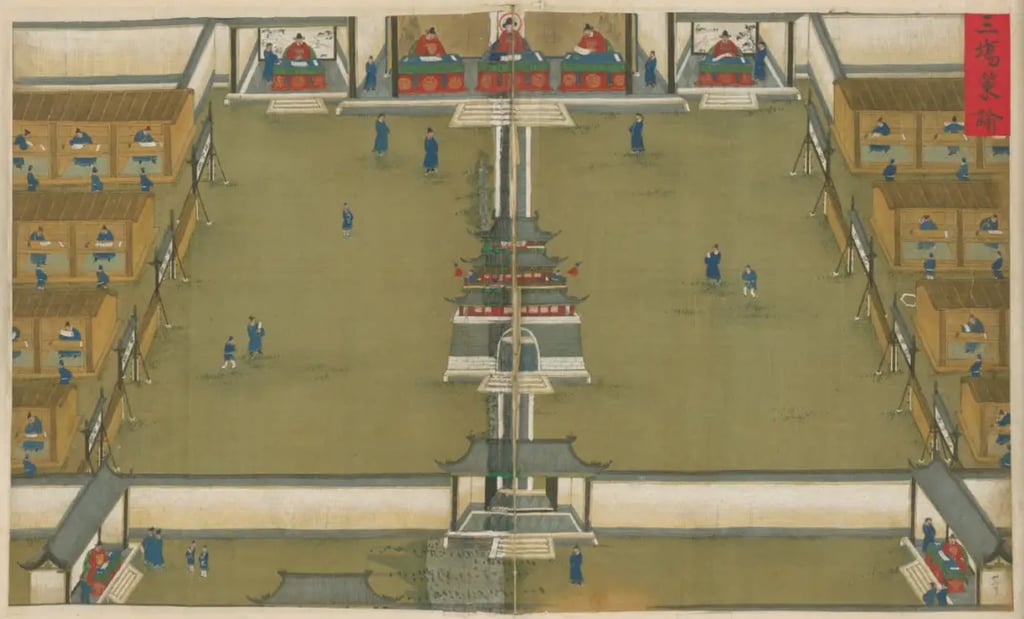
At the time, the exams were held annually and tested candidates on practical policy questions and classic literature texts.