Advertisement
Trump’s military push confronts US lawmakers and China’s shipbuilding edge
Congressional resistance, war costs and industrial limits could constrain ambitions, even as Beijing expands its naval capacity
6-MIN READ6-MIN
22
Listen

Yuanyue Dangin Washington
US President Donald Trump’s long-standing obsession with sea power was underscored by his pledge to rebuild the US Navy into what he called a “Golden Fleet” as he returned to the White House.
His financial year 2027 budget released on April 3 puts a price tag on the ambition: US$65.8 billion for 34 warships, including initial funding for a next-generation battleship he wants to name after himself, part of the largest US$1.5 trillion defence-spending request in history.
But analysts say the record budget blueprint must first survive a sceptical Congress focused on voter affordability in a midterm election year – and, even if it does, the money alone cannot rescue an American shipbuilding industry that has fallen far behind China’s.
Advertisement
The annual presidential budget is more a policy statement outlining priorities than a legally binding document, with the final total up to Congress, which controls the purse strings.
It is also unclear how much the war launched by the US and Israel against Iran will shape debate. But most acknowledge that Trump’s outsize military budget accurately reflects long-standing US naval shortcomings – and his own outsize ambitions.
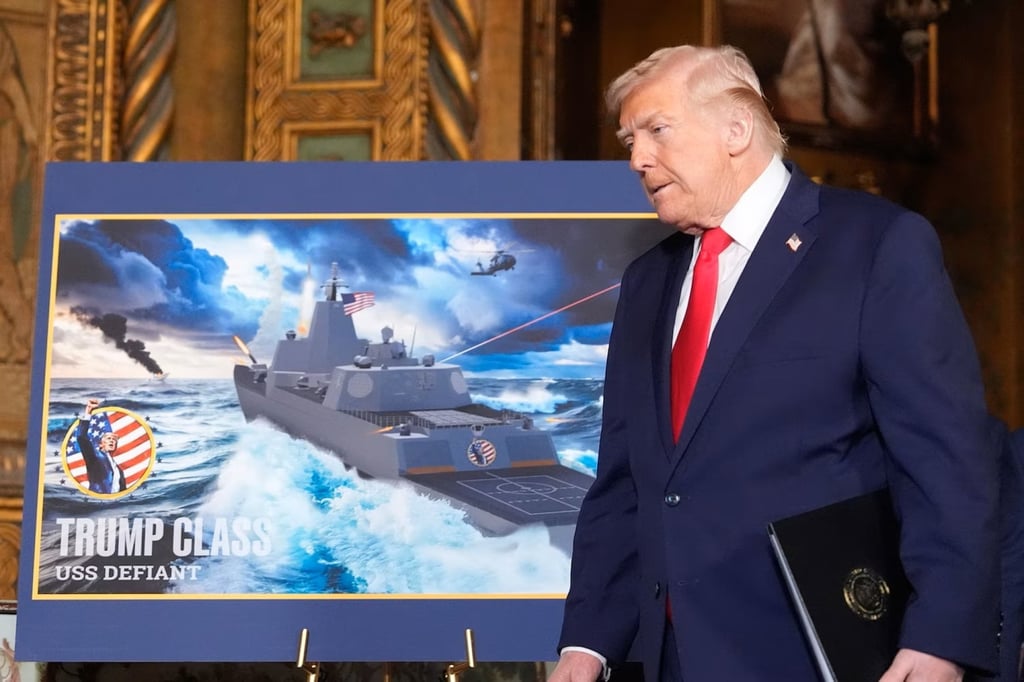
Trump’s April 2027 request proposes a massive 44 per cent increase in the US defence budget, reaching US$1.5 trillion for the year beginning October 1, and codifies a number he teased on social media in January. Congress began its discussions this month.
Congress, reconciliation rules complicate defence spending path
Advertisement
Select Voice
Select Speed
1.00x