Archaeologists use AI to reconstruct Pompeii victim’s face and final moments
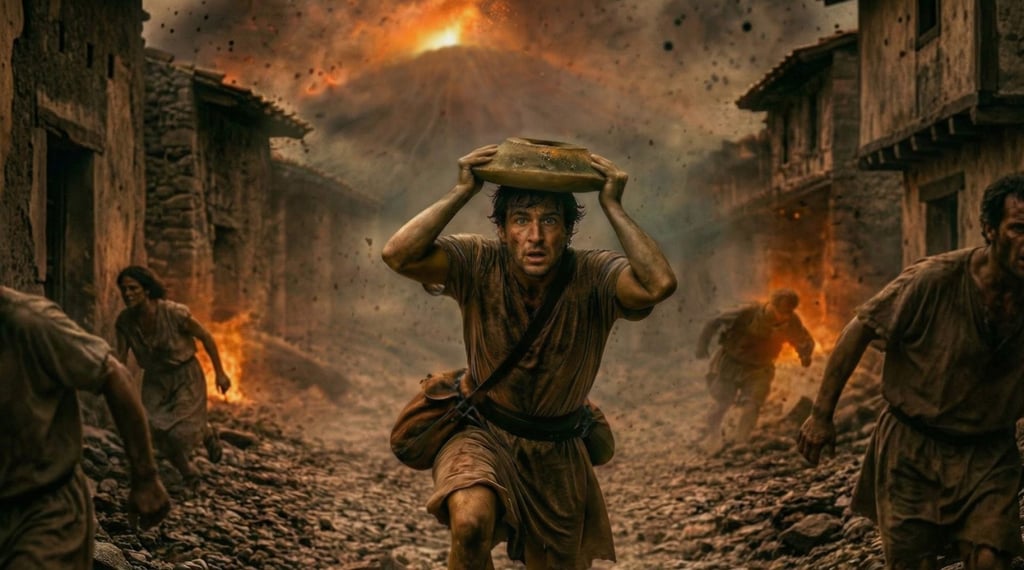
AI-generated image shows a man ducking for cover, with a flaming Mount Vesuvius in the background

Archaeologists and researchers at the ancient Roman site of Pompeii have used artificial intelligence for the first time to digitally reconstruct the face of a man killed in the AD 79 eruption of Mount Vesuvius that smothered the city, offering a new way to understand one of history’s most famous natural disasters.
The digital portrait represents a man whose remains, along with those of another person, were discovered as they attempted to flee the city towards the coast of what is now Italy during the volcanic eruption. Researchers believe the man died early in the disaster, during a heavy fall of volcanic debris.
The reconstruction was developed by the Pompeii Archaeological Park, which announced on its website that it was done in collaboration with the University of Padua and based on archaeological survey data from excavations near the Porta Stabia necropolis, just outside the walls of the ancient city.
Pompeii, a Unesco World Heritage site near Naples, was buried under ash and pumice when Vesuvius erupted nearly 2,000 years ago, preserving the city and the remains of thousands of its inhabitants in remarkable detail.