
Advertisement
Vietnam
OpinionAsia Opinion
James Borton

Opinion | Hanoi’s growing role in nuclear diplomacy is a sign of multilateral trust

After years of steady global engagement, Vietnam has emerged as a stabilising force that can effectively promote world peace

Reading Time:3 minutes
Why you can trust SCMP
Communist Party of Vietnam General Secretary To Lam attends a press conference in Hanoi on August 3, 2024. Photo: AFP

In a development that may not have made headlines but carries significant diplomatic weight, Vietnam has been nominated to preside over the 11th Review Conference of the Treaty on the Non-Proliferation of Nuclear Weapons (NPT) set for 2026. At first glance, this might seem like a routine appointment within the well-worn cycles of international diplomacy.

However, at a moment when nuclear anxieties are re-emerging – not least due to Iran’s relatively opaque atomic activities – the selection signals a subtle but powerful shift: Vietnam is no longer just a capable regional actor, but a country the international community trusts to navigate the treacherous waters of global nuclear governance.

This elevation comes as the spectre of nuclear proliferation once again casts a long shadow over international security. Iran’s enrichment capabilities have rekindled fears of a destabilised Middle East, prompting urgent calls for credible diplomatic frameworks.
Advertisement
In that context, Vietnam’s appointment reflects a collective bet that a nation with no nuclear ambitions – and a history of balancing great power relations – can help restore confidence in a non-proliferation regime under mounting strain.

The NPT review conferences are not mere ceremonial gatherings. These are high-stakes diplomatic arenas where nuclear and non-nuclear states negotiate the fragile balance between deterrence and disarmament, peaceful nuclear cooperation and proliferation risks. Presiding over such a conference demands neutrality, negotiation skills and a reputation for constructive engagement. Vietnam’s nomination, therefore, is a geopolitical endorsement.
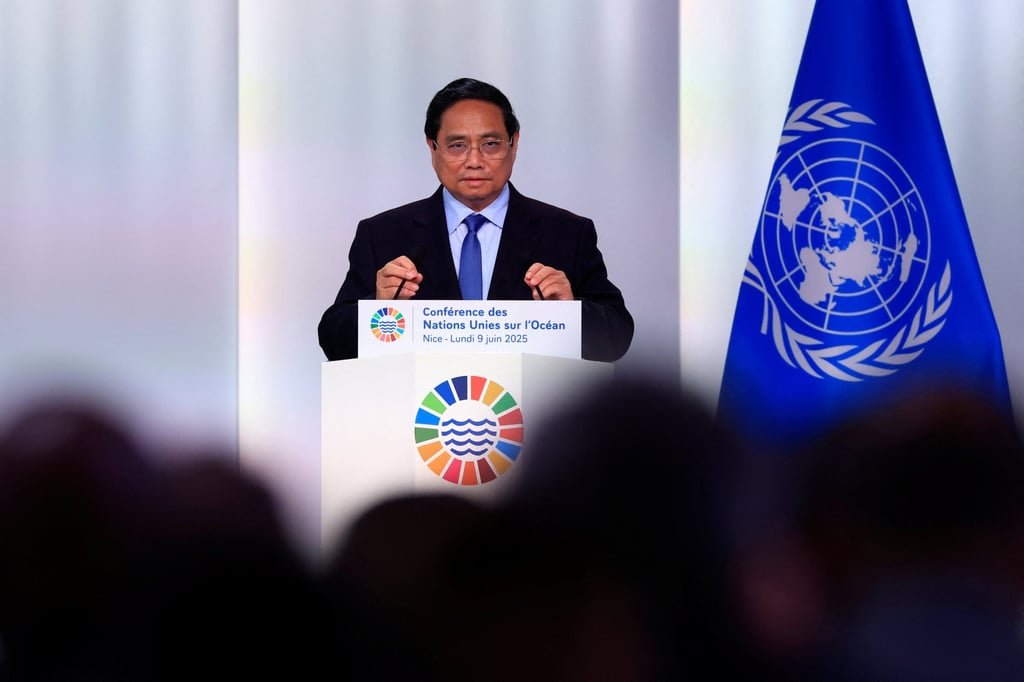
Vietnamese Prime Minister Pham Minh Chinh speaks at the third United Nations Ocean Conference in Nice, France, on June 9. Photo: Reuters
Vietnam’s journey from a war-ravaged state in the late 20th century to a confident player in the multilateral sphere is one of the most inspiring stories of post-Cold War diplomacy. Having joined the United Nations in 1977, Vietnam’s foreign policy has evolved markedly from ideological alignment to strategic diversification. Hanoi’s adherence to a doctrine of “bamboo diplomacy” – flexible yet principled engagement with all partners – has allowed it to expand its diplomatic footprint without compromising sovereignty.
Advertisement
Select Voice
Choose your listening speed
Get through articles 2x faster
1.25x
250 WPM
Slow
Average
Fast
1.25x